We help the world since 2012

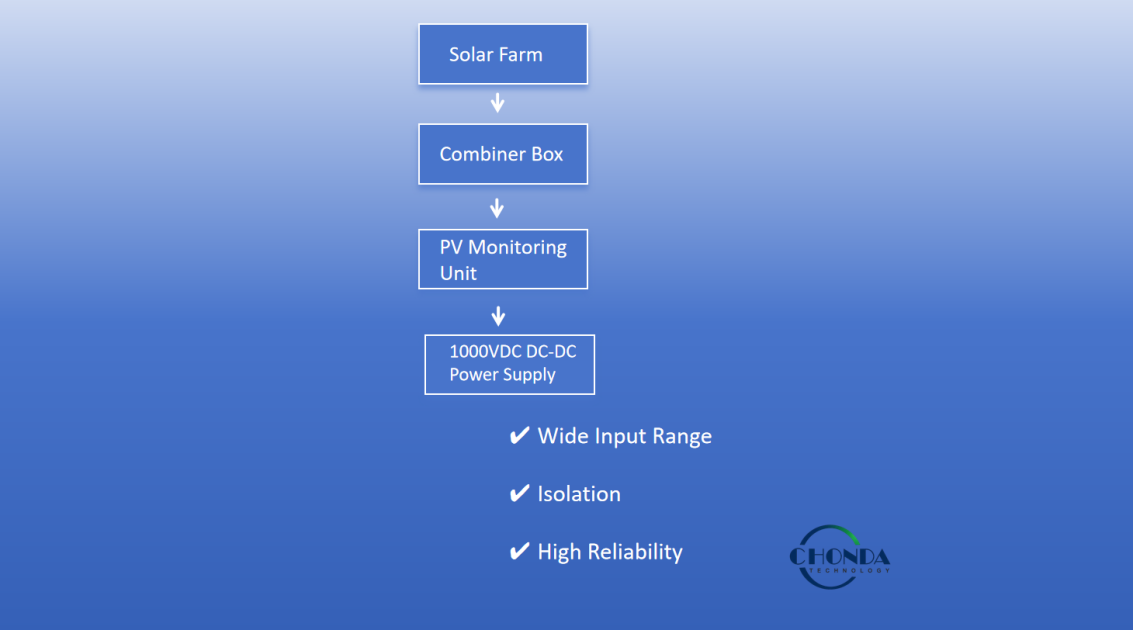
Why High Voltage DC-DC Converters Are Essential for PV Monitoring Systems
Modern photovoltaic (PV) power plants rely heavily on monitoring systems to ensure safe operation, maximize energy production, and simplify maintenance. Whether installed in combiner boxes, string monitoring units, or remote data acquisition systems, monitoring equipment requires a stable and reliable power source. However, powering electronics inside a high-voltage photovoltaic environment presents unique challenges. This is why high voltage DC-DC converters have become an essential component in modern PV monitoring systems.
Understanding the Power Environment Inside a PV System
In utility-scale solar installations, photovoltaic strings are connected in series to achieve higher system voltages. Depending on system design, the DC bus voltage may reach:
- 600VDC
- 800VDC
- 1000VDC
- 1500VDC
While these voltage levels are ideal for reducing transmission losses and improving system efficiency, they cannot be used directly to power monitoring electronics. Controllers, communication modules, sensors, and data loggers typically require low-voltage outputs such as:
- 5VDC
- 12VDC
- 24VDC
A DC-DC converter is therefore required to safely convert the high-voltage PV bus into a stable low-voltage power source.
Why Standard Power Supplies Are Often Not Suitable
Many industrial power supplies are designed for low-voltage DC inputs such as 24VDC or 48VDC. In photovoltaic monitoring applications, the situation is very different. The converter must withstand:
- High DC input voltage
- Large voltage fluctuations
- Outdoor operating conditions
- Electrical noise and surge events
- Long-term continuous operation
Using an unsuitable power supply can lead to communication failures, unstable monitoring data, or even permanent equipment damage. For this reason, dedicated high-voltage DC-DC converters are commonly used in solar monitoring systems.
Typical Power Architecture in PV Monitoring Systems
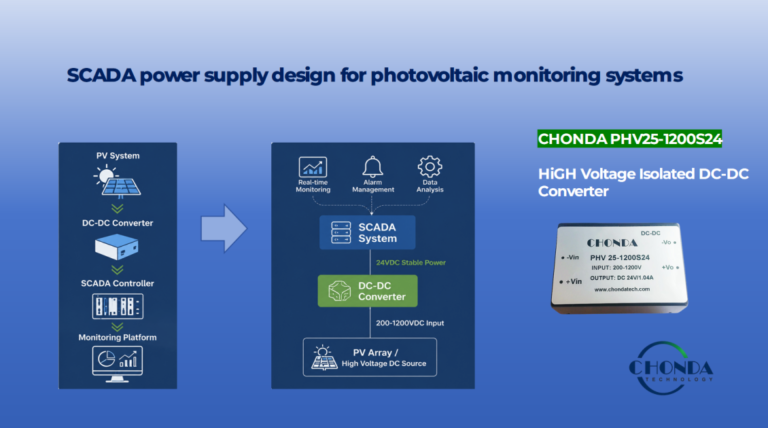
In a typical PV monitoring system, monitoring electronics are installed inside combiner boxes or monitoring cabinets and powered from the high-voltage photovoltaic bus. A high-voltage DC-DC converter converts the PV voltage into a stable low-voltage output required by controllers, communication modules, sensors, and data loggers.
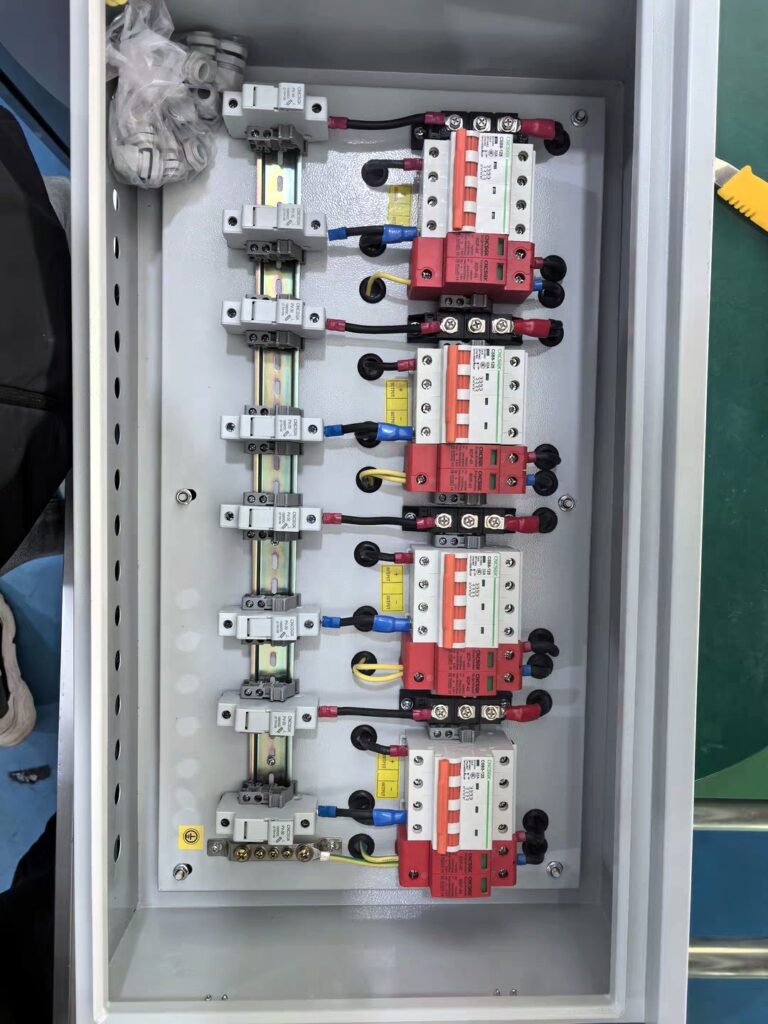
The image above shows a typical installation environment where monitoring electronics and power conversion modules may be deployed. The DC-DC converter acts as the bridge between the high-voltage photovoltaic system and the low-voltage monitoring electronics. Without reliable power conversion, the monitoring system cannot operate correctly.
The Importance of Electrical Isolation
Electrical isolation is one of the most critical factors when designing a reliable PV monitoring system. Unlike conventional low-voltage control systems, photovoltaic installations often operate at hundreds or even thousands of volts DC. Monitoring equipment installed inside combiner boxes must work continuously while being exposed to electrical disturbances generated by the solar power system itself.
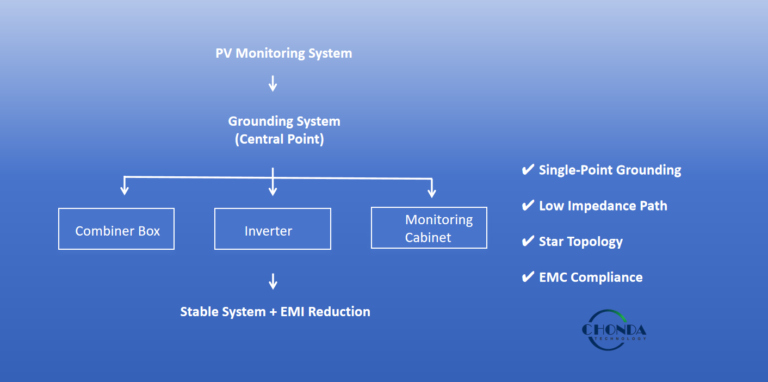
For example, voltage transients may occur during switching operations, while nearby lightning activity can introduce surge voltages into the system. In large solar farms, differences in ground potential between various equipment locations may also affect communication stability. For these reasons, most engineers prefer to use isolated DC-DC converters when powering PV monitoring devices.
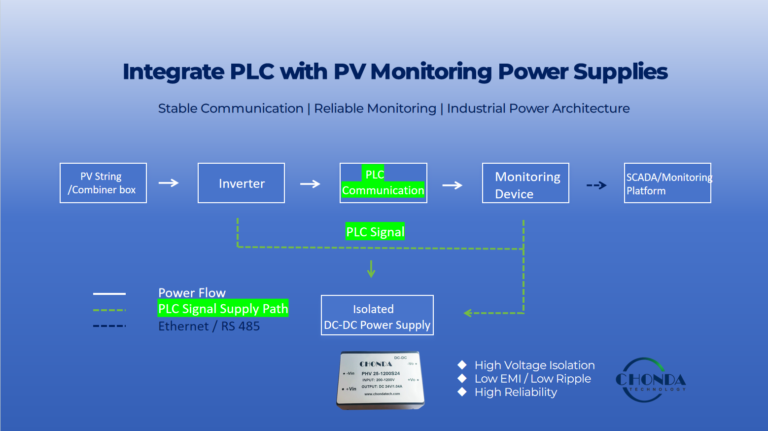
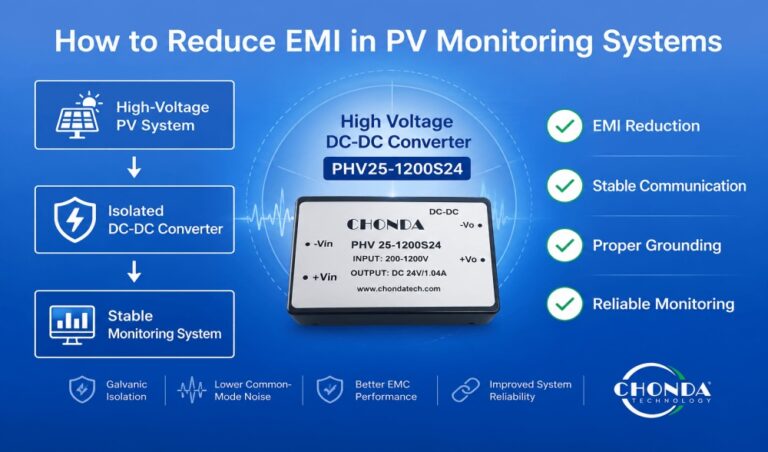
An isolated converter creates a separation barrier between the high-voltage photovoltaic bus and the low-voltage monitoring electronics. This separation helps prevent electrical disturbances from reaching sensitive circuits and improves overall system reliability. Isolation is particularly valuable when monitoring systems include communication interfaces such as RS485, Modbus, Ethernet, or wireless gateways. Without proper isolation, electrical noise can interfere with data transmission, resulting in communication errors or unstable monitoring performance.
Another important benefit is equipment protection. Monitoring controllers, sensors, and communication modules are typically designed to operate at low voltages. An isolated power architecture helps shield these components from unexpected voltage events and reduces the risk of damage caused by surges or abnormal operating conditions. In utility-scale solar installations where monitoring systems are expected to operate continuously for many years, electrical isolation is often considered a fundamental requirement rather than an optional feature.
Key Features Engineers Look For
When selecting a DC-DC converter for photovoltaic monitoring applications, several parameters are particularly important.
Wide Input Voltage Range
PV voltage varies throughout the day due to changes in sunlight and temperature.
A converter with a wide input range can maintain stable operation under varying conditions.
Typical examples include:
- 200-1000VDC
- 200-1200VDC
- 300-1500VDC
Stable Output Voltage
Monitoring equipment requires a consistent power source.
Common output voltages include:
- 5VDC
- 12VDC
- 24VDC
Stable output voltage helps ensure accurate data collection and reliable communication.
High Isolation Voltage
Isolation ratings such as:
- 1500VDC
- 3000VDC
provide additional protection between the photovoltaic system and monitoring electronics.
Industrial Reliability
PV monitoring systems are expected to operate continuously for many years.
Converters designed for industrial environments offer:
- Long service life
- Stable performance
- Resistance to temperature variations
- Reduced maintenance requirements
Common Applications of High Voltage DC-DC Converters
High-voltage DC-DC converters are used in a variety of photovoltaic monitoring and control applications. Their ability to convert high DC bus voltages into stable low-voltage outputs makes them an important component in modern solar installations.
The following are some of the most common applications.
PV String Monitoring Systems
PV string monitoring systems are designed to measure the operating status of individual solar strings within a photovoltaic installation. These systems typically collect information such as string current, voltage, and fault conditions before transmitting the data to a central monitoring platform.
A high-voltage DC-DC converter provides the stable low-voltage power required by current sensing modules, communication boards, and monitoring controllers. Without reliable power conversion, accurate data acquisition and fault detection would not be possible.
Combiner Box Monitoring
Combiner boxes play an important role in utility-scale solar projects by bringing multiple photovoltaic strings together into a common output. Modern combiner boxes often include monitoring electronics that allow operators to track string performance and identify abnormal operating conditions.
Because these monitoring devices are installed in high-voltage environments, isolated DC-DC converters are commonly used to provide safe and reliable low-voltage power while protecting sensitive electronics from electrical disturbances.
Solar Data Acquisition Systems
Data acquisition systems are responsible for collecting operational information from multiple monitoring points throughout a solar farm. The collected data is typically transmitted to SCADA platforms, cloud-based monitoring systems, or local control centers for analysis.
High-voltage DC-DC converters provide the power required by processors, communication modules, and data storage devices, ensuring continuous system operation even in demanding outdoor environments.
SCADA and Remote Communication Equipment
Large photovoltaic installations often rely on SCADA systems to provide centralized supervision and control. Communication gateways, industrial controllers, and remote transmission equipment must operate continuously to ensure that operational data remains available to maintenance teams and plant operators.
A reliable DC-DC converter helps maintain communication stability by providing isolated and regulated power to these critical devices.
Renewable Energy Control Systems
Beyond monitoring applications, high-voltage DC-DC converters are widely used in renewable energy control systems. They can be found in energy management platforms, distributed monitoring equipment, remote control devices, and other systems that require efficient conversion from a high-voltage DC source to low-voltage electronics.
As photovoltaic installations continue to increase in scale and complexity, the demand for reliable high-voltage power conversion solutions continues to grow.
Example Specification for PV Monitoring Applications
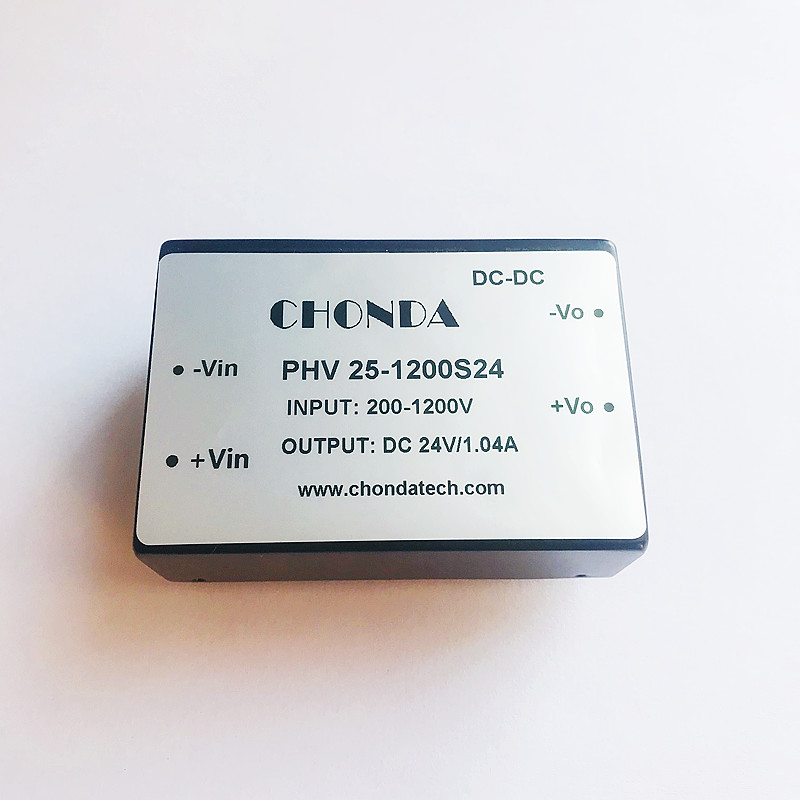
PHV25-1200S24 shows a typical high-voltage DC-DC converter used in photovoltaic monitoring applications. In many solar monitoring projects, the converter is installed inside a combiner box or monitoring cabinet and converts the high-voltage PV bus into a stable low-voltage output required by controllers, communication modules, and data acquisition equipment. Depending on the system architecture, engineers may select different input ranges, output voltages, and isolation levels to match project requirements.
The exact requirements depend on the project, but a typical converter may include the following characteristics:
| Parameter | Typical Value |
|---|---|
| Input Voltage | 200-1200VDC |
| Output Voltage | 24VDC |
| Output Power | 25W |
| Isolation Voltage | 1500VDC |
| Efficiency | High Efficiency Design |
| Installation | DIN Rail or PCB Mount |
These specifications are commonly found in monitoring systems used in utility-scale photovoltaic installations.
How to Select the Right Converter
We are afraid to make a decision as we are worried about the mistakes ,so just be caution. Before selecting a converter, engineers should evaluate below list:
Input Voltage Requirements
The input voltage range is often the first parameter engineers evaluate when selecting a DC-DC converter for PV monitoring applications.
Unlike conventional industrial systems, photovoltaic string voltage is not fixed. The voltage changes throughout the day according to solar irradiation, temperature, and system operating conditions. For example, a PV monitoring system designed for a 1000VDC solar installation may experience significant voltage variations between early morning, peak sunlight conditions, and low-temperature environments.
Selecting a converter with insufficient input range can result in unstable operation or unexpected shutdowns. For this reason, engineers typically choose converters that provide sufficient margin above the expected operating voltage range.
Output Power Requirements
Calculate the total consumption of monitoring electronics.
Isolation Requirements
Determine whether the application requires electrical isolation and what isolation level is necessary. Isolation Requirements. Monitoring electronics are frequently connected to communication networks, sensors, controllers, and remote monitoring equipment. Electrical disturbances originating from the photovoltaic side can negatively affect these devices if proper isolation is not provided.
In large solar farms, ground potential differences and surge events may also occur. An isolated DC-DC converter helps reduce these risks by separating the high-voltage PV bus from the low-voltage monitoring circuitry. The required isolation level depends on the application, but many PV monitoring systems use converters with isolation ratings of 1500VDC or higher.
Installation Space
Space limitations are common inside combiner boxes and monitoring cabinets. Engineers often need to install surge protection devices, terminal blocks, communication modules, current sensors, and power conversion equipment within a limited enclosure. A compact DC-DC converter can simplify installation and improve thermal management while reducing wiring complexity.
Selecting a converter that matches the available installation space can help avoid redesign work later in the project.
Environmental Conditions
PV monitoring equipment is frequently exposed to challenging environmental conditions. Outdoor installations may experience high temperatures during summer, low temperatures during winter, dust, humidity, and continuous operation for many years. A converter designed specifically for industrial and renewable energy applications should maintain stable performance across a wide operating temperature range while providing long-term reliability.
Environmental considerations are often overlooked during the design stage but can significantly affect system performance over the lifetime of the installation.
Frequently Asked Questions
Can a monitoring device be powered directly from a 1000V PV bus?
No. Monitoring electronics require a dedicated power conversion stage to reduce voltage and provide protection.
Why is isolation recommended for PV monitoring systems?
Isolation improves safety, reduces noise, and helps protect communication equipment from electrical disturbances.
What output voltage is most common?
24VDC is widely used, although 12VDC and 5VDC are also common depending on the equipment.
Are high-voltage DC-DC converters only used in solar applications?
No. They are also used in industrial automation, energy storage systems, transportation equipment, and other high-voltage applications.
Conclusion
PV monitoring systems operate in a challenging electrical environment where high DC voltages, outdoor conditions, and long-term reliability requirements must all be considered.
A properly designed high-voltage DC-DC converter provides the stable low-voltage power required by monitoring electronics while offering isolation, protection, and reliable operation.
As solar installations continue to grow in size and complexity, high-voltage DC-DC converters remain a key building block in modern PV monitoring systems.
🔵 Related Technical Articles
Power Supply Design for PV Combiner Box Monitoring Systems
Why PV Monitoring Systems Need Isolated Power Supplies
How to Select a DC-DC Converter for PV Monitoring Applications
PV String Monitoring vs Inverter Monitoring: What’s the Difference?