We help the world since 2012

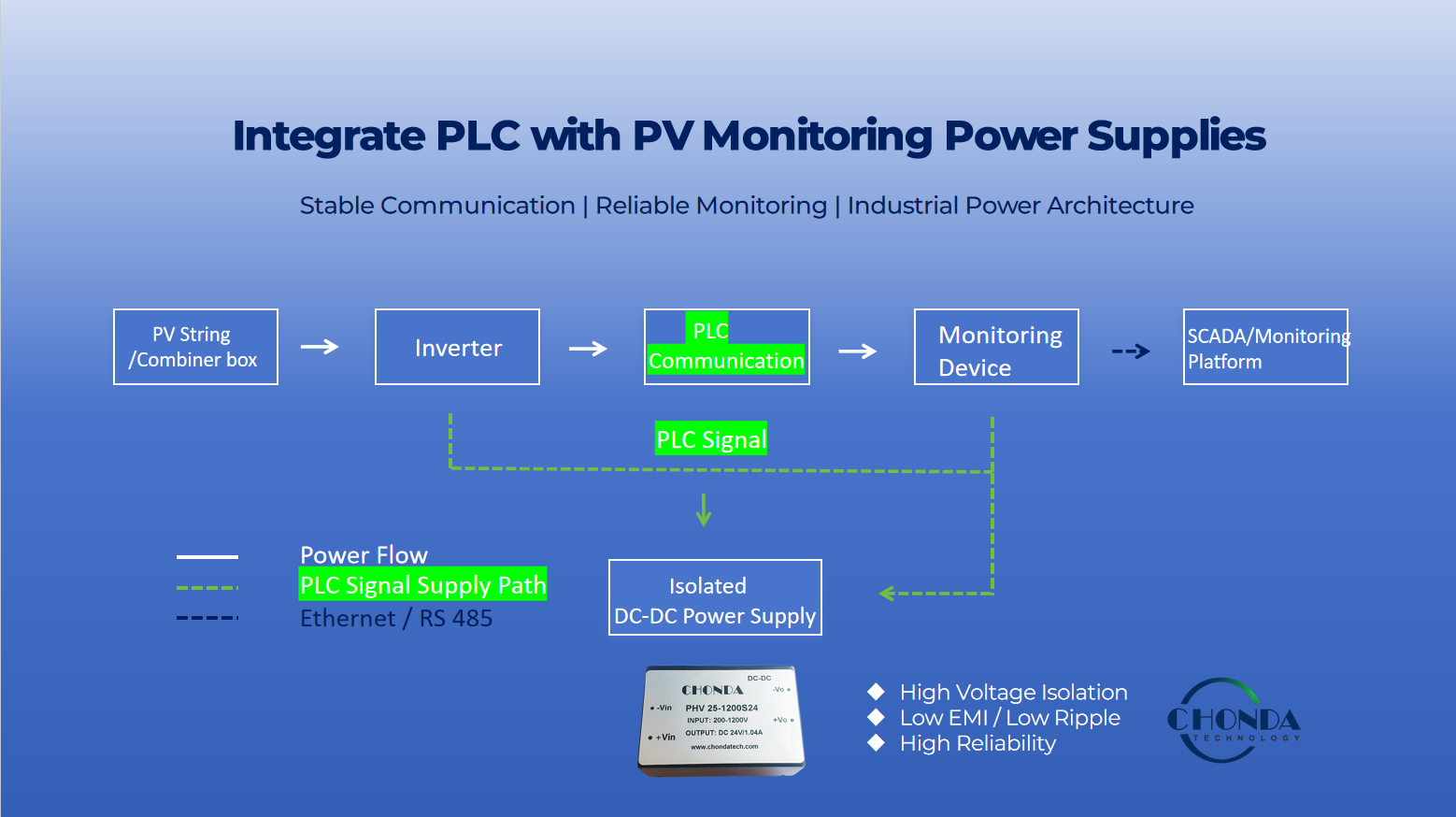
How to Integrate PLC with PV Monitoring Power Supplies
Integrating PLC (Power Line Communication) with PV monitoring power supplies is becoming increasingly important in modern photovoltaic systems. As solar installations grow in size and complexity, reliable data transmission between monitoring devices and control systems is essential for efficient operation and maintenance.
However, PLC signals are highly sensitive to electrical noise, voltage fluctuations, and grounding conditions. Without proper integration design, communication errors, data loss, or unstable system performance may occur. Therefore, selecting suitable power supplies and implementing correct system architecture are key to ensuring stable PLC communication in PV monitoring applications.
1. What Is PLC in PV Monitoring Systems?
PLC (Power Line Communication) is a technology that enables data transmission through existing power cables instead of using separate communication lines. In photovoltaic (PV) monitoring systems, PLC allows monitoring devices, inverters, and control units to exchange information over the same electrical infrastructure used for power delivery.
This approach reduces the need for additional communication wiring, making system installation more cost-effective and easier to manage, especially in large-scale solar power plants. However, because PLC signals travel along power lines, they are highly affected by electrical noise, load variations, and system grounding conditions, which must be carefully considered during system design.
2. Why PLC Communication Is Sensitive to Electrical Noise
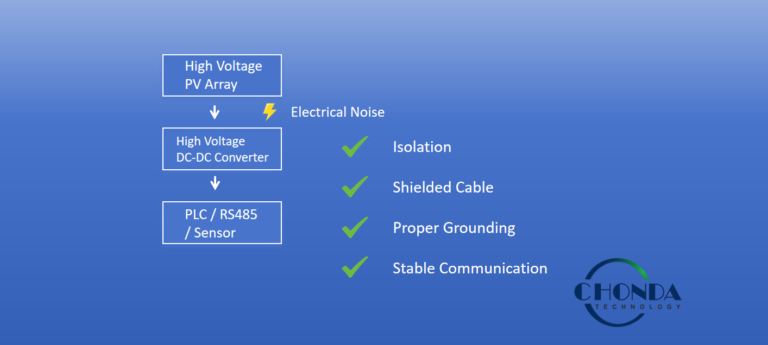
PLC communication in PV monitoring systems is highly sensitive to electrical noise because it relies on transmitting high-frequency data signals over power cables that also carry high-voltage energy. This shared transmission medium makes PLC signals vulnerable to interference from switching operations, inverter activity, and fluctuating electrical loads. The main EMI sources in PV monitoring systems are shown below:
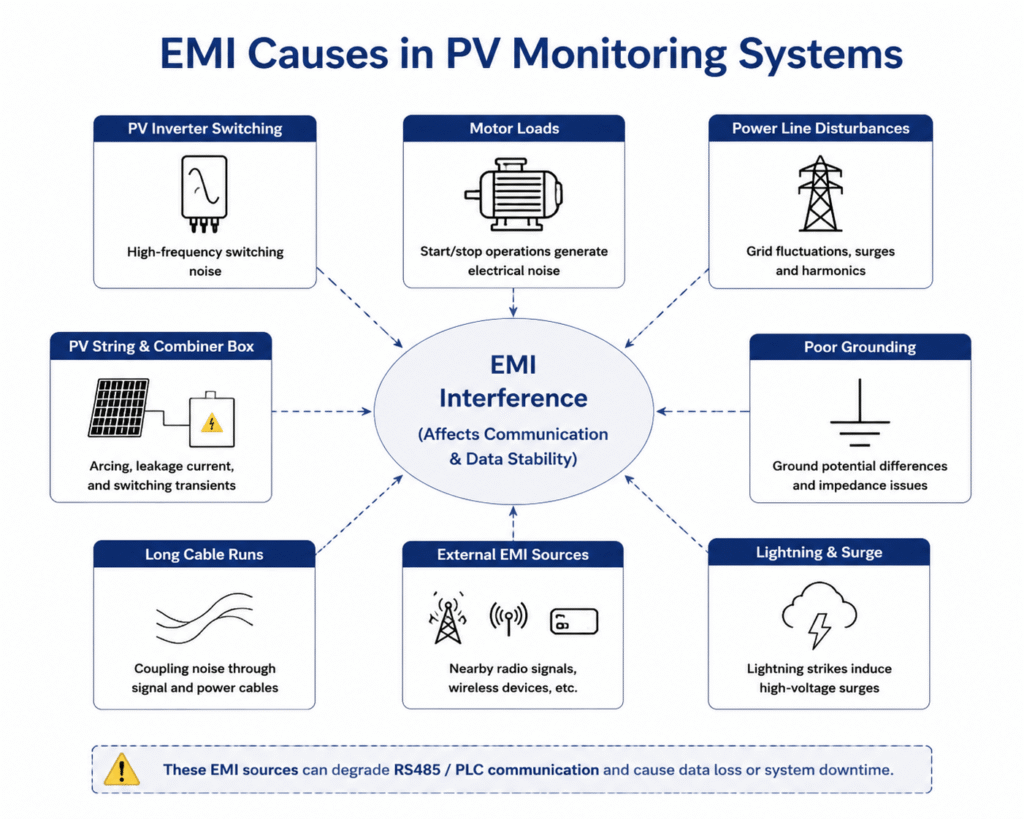
In photovoltaic environments, power electronics such as DC-DC converters and inverters generate continuous switching noise, which can overlap with PLC signal frequencies. In addition, long cable distances and inconsistent grounding conditions can introduce signal attenuation and electromagnetic interference (EMI), leading to reduced communication reliability.
As a result, PLC systems require carefully designed power supply architecture and noise reduction strategies to ensure stable and accurate data transmission in PV monitoring applications.
3. Key Requirements for Power Supplies in PLC Systems
Power supplies used in PLC-based PV monitoring systems must meet strict electrical and communication stability requirements to ensure reliable data transmission. Unlike standard power applications, PLC systems require a low-noise power environment where switching interference and ripple are minimized.
One of the most important requirements is low electromagnetic interference (EMI). Since PLC signals share the same power lines, any noise generated by the power supply can directly interfere with communication quality. Therefore, high-frequency switching noise must be effectively suppressed through proper converter design and filtering.
Another key requirement is electrical isolation. Isolated DC-DC power supplies help separate the high-voltage PV bus from sensitive communication circuits, preventing noise propagation and improving system stability.
In addition, wide input voltage tolerance is essential due to fluctuating solar power conditions. A stable output voltage ensures that PLC modules and monitoring devices operate consistently even under variable sunlight and load conditions.
4. How DC-DC Converters Improve PLC Communication Stability
DC-DC converters play a critical role in improving PLC communication stability in photovoltaic monitoring systems by providing clean, regulated, and isolated power to sensitive communication circuits. Since PLC signals are transmitted over power lines, any electrical noise from the power supply can directly affect signal integrity and reduce communication reliability.
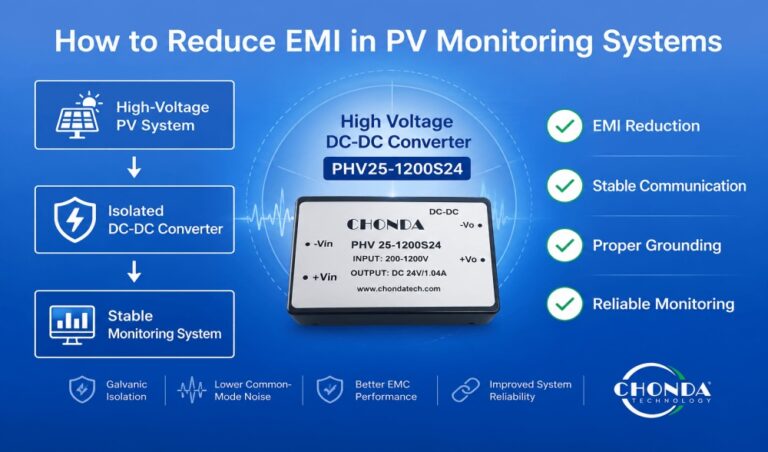
An isolated high-voltage DC-DC converter helps eliminate ground loop interference between the high-voltage PV bus and low-voltage control electronics. This electrical separation significantly reduces common-mode noise, ensuring that PLC signals remain stable even in harsh electromagnetic environments.
In addition, high-quality DC-DC converters with low ripple and low switching noise help minimize internal interference within the monitoring system. This is especially important in large-scale PV installations where multiple power modules and long cable runs increase the risk of electromagnetic coupling.
By integrating a properly designed isolated DC-DC power supply, system designers can significantly enhance PLC communication accuracy, reduce data loss, and improve overall system reliability.
5. Recommended High Voltage Isolated DC-DC Converter
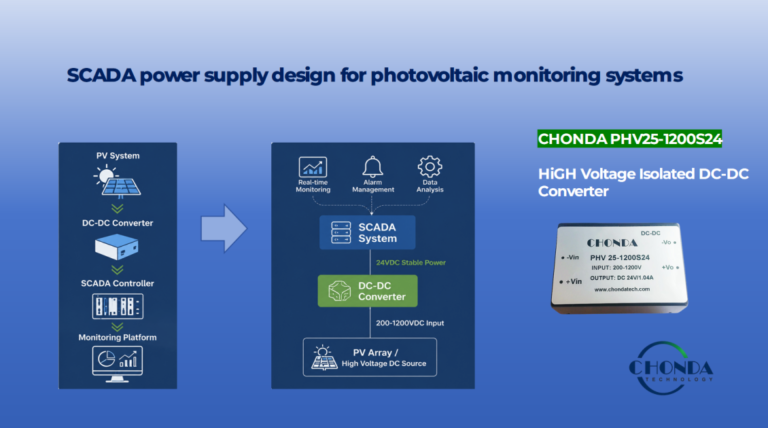
To ensure stable PLC communication and reliable PV monitoring performance, using a high-quality isolated DC-DC converter is essential. These power modules are specifically designed to provide low-noise, high-efficiency power conversion while maintaining strong electrical isolation between the high-voltage PV bus and low-voltage monitoring circuits.
Our high-voltage DC-DC converter series supports wide input voltage ranges (100–1000VDC), making it suitable for various photovoltaic system architectures. With reinforced isolation design and optimized EMI suppression, these modules help ensure stable PLC communication, accurate data acquisition, and long-term system reliability even in harsh electrical environments.
This makes them an ideal power solution for PV monitoring systems, combiner boxes, PLC-based communication nodes, and industrial solar applications requiring high stability and low interference performance.
👉 Learn more about our product series here:
High Voltage Isolated DC-DC Converter Solutions
6. Conclusion
Effective PLC communication in photovoltaic monitoring systems depends heavily on the stability and quality of the underlying power supply architecture. Electrical noise, grounding issues, and switching interference are among the most common factors that disrupt data transmission and reduce system reliability.
By implementing proper EMI reduction strategies, selecting isolated DC-DC converters, and ensuring optimized system design, engineers can significantly improve communication stability and measurement accuracy. A well-designed power supply not only protects sensitive monitoring equipment but also enhances overall system performance in demanding PV environments.
🟢 Related Articles
To better understand PV monitoring system design and improve communication stability, you may also find the following articles helpful:
- 👉 How to Reduce Electrical Noise in PV Monitoring Systems
Learn the key sources of electrical noise and practical EMI reduction methods in photovoltaic monitoring applications. - 👉 Grounding Design for PV Monitoring Systems
Understand how proper grounding improves system stability, reduces interference, and ensures safe operation in high-voltage environments. - 👉 How to Integrate PLC with PV Monitoring Power Supplies
Discover how PLC communication works in PV systems and how to design power architectures for stable data transmission. - 👉 How SCADA Systems Improve PV Monitoring Efficiency
Explore how SCADA integration enhances data visualization, remote control, and system-level monitoring in solar power plants. - 👉 BESS Monitoring in Renewable Energy Systems
Learn how battery energy storage systems are monitored and integrated into modern photovoltaic energy networks.