We help the world since 2012

How to Reduce Electrical Noise in PV Monitoring Systems
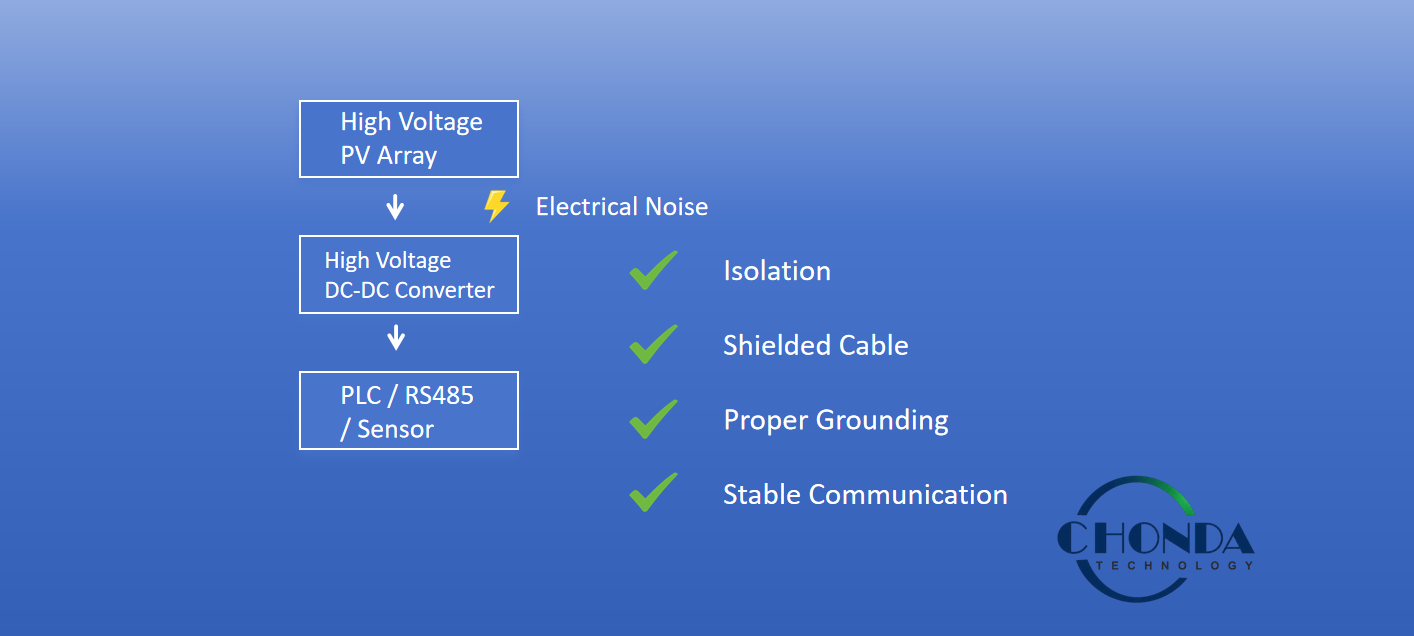
Electrical noise is a common challenge in photovoltaic monitoring systems, particularly in installations operating with high-voltage DC strings and long communication cables. If not properly controlled, electrical interference can affect monitoring accuracy, reduce communication reliability, and increase the likelihood of unexpected system faults.
Noise may originate from switching power supplies, nearby electrical equipment, cable routing, or electromagnetic interference (EMI) within the installation. During system design, reducing electrical noise is just as important as selecting the correct power supply voltage and ensuring sufficient electrical isolation.
This article explains the common sources of electrical noise in PV monitoring systems and discusses practical engineering methods to improve signal quality, communication stability, and long-term system reliability.
1. What Causes Electrical Noise in PV Monitoring Systems?
Electrical noise can originate from several sources within a photovoltaic installation. Understanding where the interference comes from is the first step toward improving communication reliability and overall system performance.
Switching Power Supplies
Modern DC-DC converters operate by high-frequency switching, which is an efficient method of power conversion but can also generate electromagnetic noise. Without appropriate filtering or isolation, switching noise may couple into nearby signal circuits and communication lines.
Long Cable Runs
PV monitoring systems often use long cables to connect combiner boxes, sensors, PLCs, and remote monitoring equipment. These cables can act as antennas, picking up electromagnetic interference from surrounding equipment or transmitting unwanted noise between different parts of the system.
High-Voltage Environment
Photovoltaic strings typically operate at several hundred volts DC and may reach 1000VDC or 1200VDC in large-scale installations. Fast voltage transitions and high-energy switching events increase the possibility of electrical interference affecting nearby low-voltage monitoring circuits.
Electromagnetic Interference (EMI)
In addition to the power supply itself, nearby inverters, motor drives, relays, and switching devices can all generate electromagnetic interference. If the monitoring system is not designed with proper grounding, shielding, and electrical isolation, EMI may degrade communication quality and reduce measurement accuracy.
2. How Electrical Noise Affects Monitoring Equipment
Electrical noise does not always result in immediate equipment failure. More often, it causes intermittent communication problems, unstable measurements, and unreliable system operation, making troubleshooting more difficult.
RS485 Communication Errors
RS485 is widely used in PV monitoring systems because of its long communication distance and good noise immunity. However, excessive electrical noise can still introduce transmission errors, resulting in unstable communication, repeated retries, or occasional loss of connection between monitoring devices.
PLC Malfunction
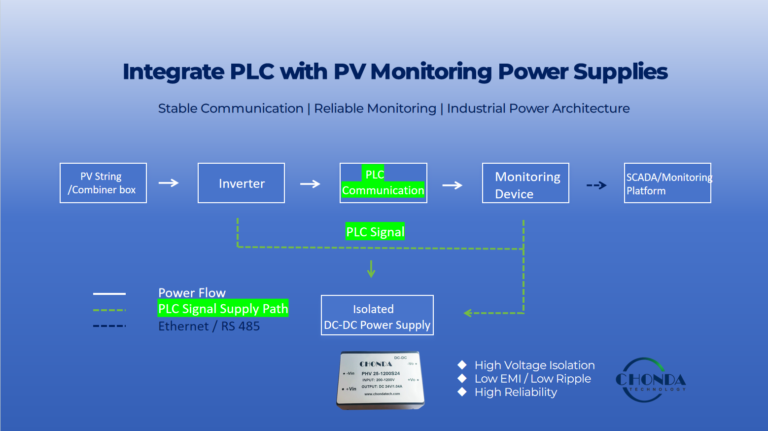
Programmable Logic Controllers (PLCs) rely on stable power and clean communication signals to execute monitoring and control functions. Electrical interference may cause incorrect input readings, unexpected program behavior, or temporary communication interruptions with remote monitoring equipment.
Sensor Instability
Voltage, current, temperature, and other field sensors often generate low-level analog or digital signals. Electrical noise superimposed on these signals may produce fluctuating measurements, false alarms, or inaccurate monitoring data, reducing overall system reliability.
Data Loss and Unreliable Monitoring
When communication errors, unstable sensors, and controller interruptions occur simultaneously, monitoring data may become incomplete or inconsistent. Although the power system itself may continue operating normally, engineers may lose visibility into system performance, making fault diagnosis and preventive maintenance significantly more difficult.
3. Methods to Reduce Electrical Noise
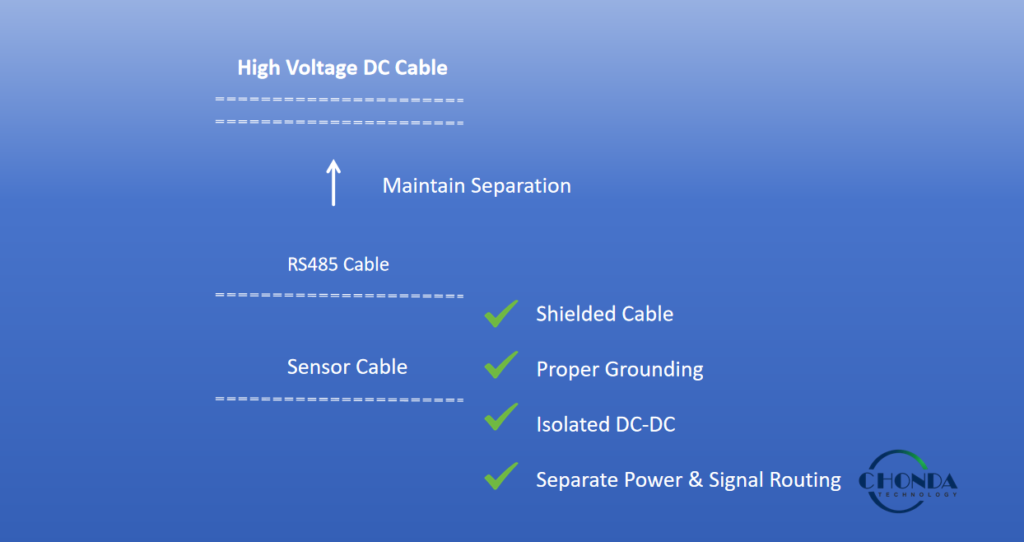
Reducing electrical noise requires a combination of proper power supply design, cable management, and installation practices. The following engineering practices are widely adopted to improve communication stability, measurement accuracy, and long-term reliability in photovoltaic monitoring systems.
Proper Grounding
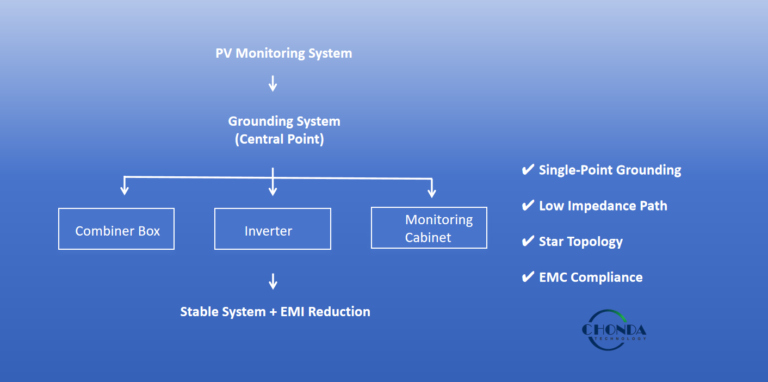
A properly designed grounding system provides a stable electrical reference and is one of the most effective methods for reducing common-mode noise. Poor grounding may create ground loops that introduce unwanted interference into communication circuits and measurement signals. During system design, grounding should follow a consistent strategy, ensuring that all equipment shares an appropriate reference potential while avoiding unnecessary multiple grounding points. Correct grounding not only improves communication reliability but also enhances the overall electromagnetic compatibility (EMC) of the monitoring system.
Use Shielded Communication Cables
Communication interfaces such as RS485 should use shielded twisted-pair cables, particularly in large photovoltaic installations where communication distances may exceed several hundred meters. The twisted-pair structure helps reduce differential noise, while the cable shield minimizes the influence of external electromagnetic fields generated by nearby power equipment. Communication cables should also be routed separately from high-voltage power cables whenever possible to prevent unwanted electromagnetic coupling and maintain stable data transmission.
Select an Isolated DC-DC Converter
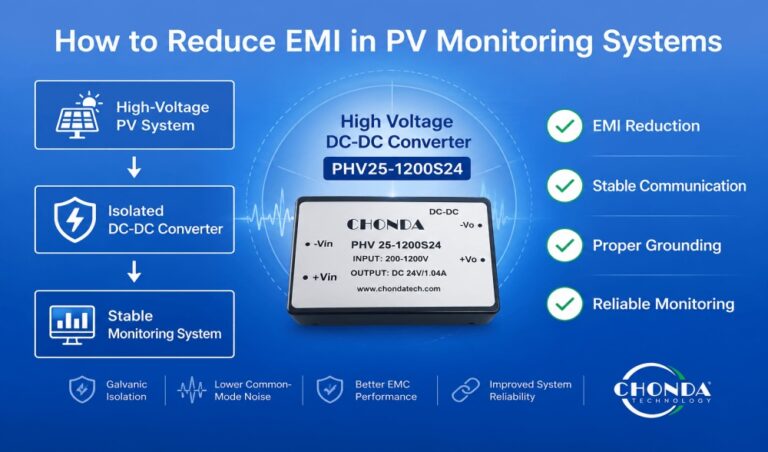
Electrical isolation is essential not only for operator safety but also for noise suppression. An isolated DC-DC converter prevents high-frequency switching noise and common-mode interference from propagating between the high-voltage photovoltaic bus and the low-voltage monitoring electronics. In addition to improving signal quality, isolation helps protect sensitive communication modules, PLCs, and measurement circuits from electrical disturbances commonly found in high-voltage PV installations.
Optimize Equipment Layout
System layout has a significant influence on electrical noise performance. High-voltage power cables should be routed separately from communication and sensor wiring, with sufficient spacing maintained throughout the installation. Where cable crossings are unavoidable, crossing at approximately 90 degrees helps reduce electromagnetic coupling. Keeping cable loops as small as possible and avoiding long parallel cable runs further minimizes induced interference, resulting in more stable communication and improved measurement accuracy.
4. Use an Isolated DC-DC Converter
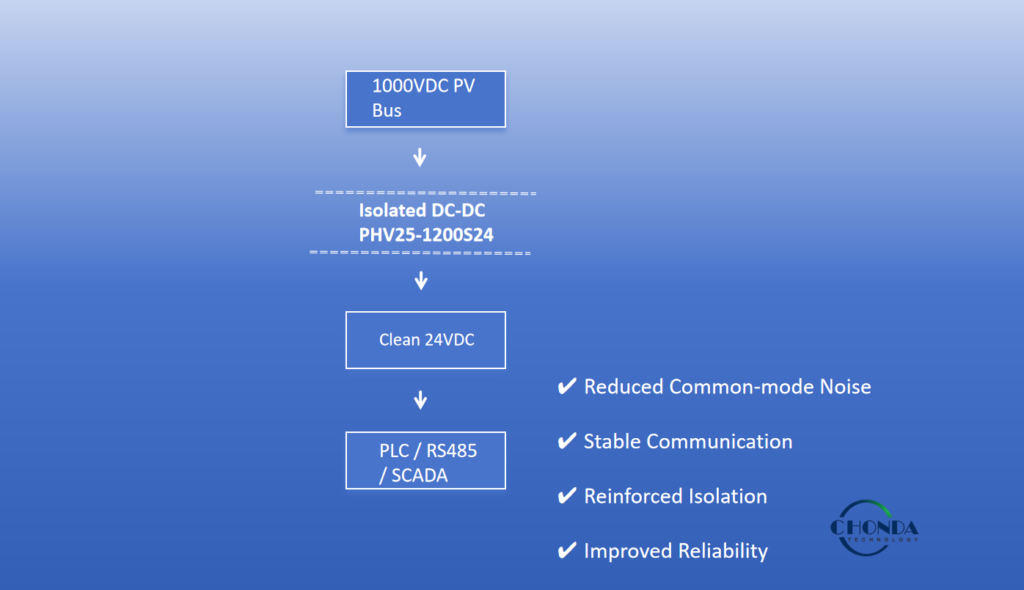
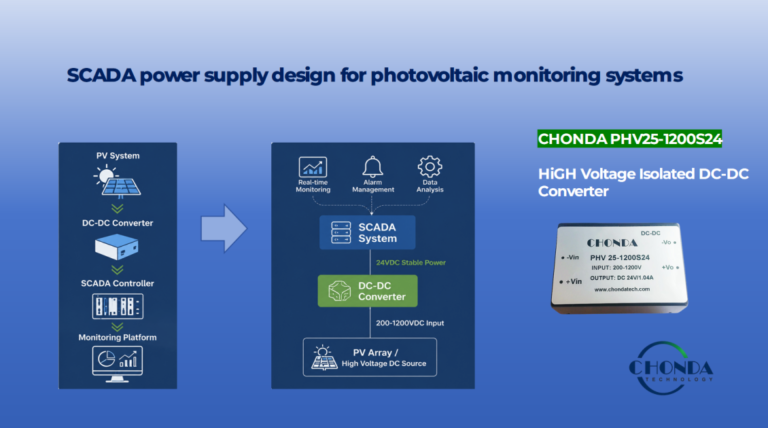
Electrical isolation is one of the most effective methods for reducing electrical noise in photovoltaic monitoring systems. By separating the high-voltage DC bus from the low-voltage monitoring circuit, an isolated DC-DC converter helps minimize common-mode noise and prevents electrical interference from propagating through the power supply.
In addition to improving communication stability, isolation enhances measurement accuracy and protects sensitive electronic components from electrical disturbances commonly found in high-voltage PV installations. This is particularly important for PLCs, RS485 communication modules, sensors, and SCADA interfaces that require clean and stable power.
To learn more about the benefits of isolation in photovoltaic monitoring systems, see our articles How Isolated DC-DC Converters Improve PV Monitoring Reliability and Why PV Monitoring Systems Need Isolated Power Supplies.
For projects requiring reliable operation in high-voltage photovoltaic applications, our High Voltage DC-DC Converter Modules provide wide input ranges of 100–1000VDC and 200–1200VDC, reinforced isolation, and stable regulated outputs for monitoring and communication equipment.
5.Conclusion
Electrical noise is an unavoidable challenge in many photovoltaic monitoring systems, particularly in high-voltage installations with long communication distances. However, its impact can be significantly reduced through proper engineering practices, including effective grounding, shielded communication cables, optimized equipment layout, and the use of isolated DC-DC converters.
By addressing electrical noise during the design stage rather than after installation, engineers can improve communication reliability, maintain accurate monitoring data, and enhance the long-term stability of the entire PV monitoring system.
🔵 Related Technical Articles
How Isolated DC-DC Converters Improve PV Monitoring Reliability
Why PV Monitoring Systems Need Isolated Power Supplies
How to Prevent Power Supply Failure in PV Monitoring Systems
How to Select the Right Input Voltage for PV Monitoring DC-DC Converters