We help the world since 2012

How to Prevent Power Supply Failure in PV Monitoring Systems
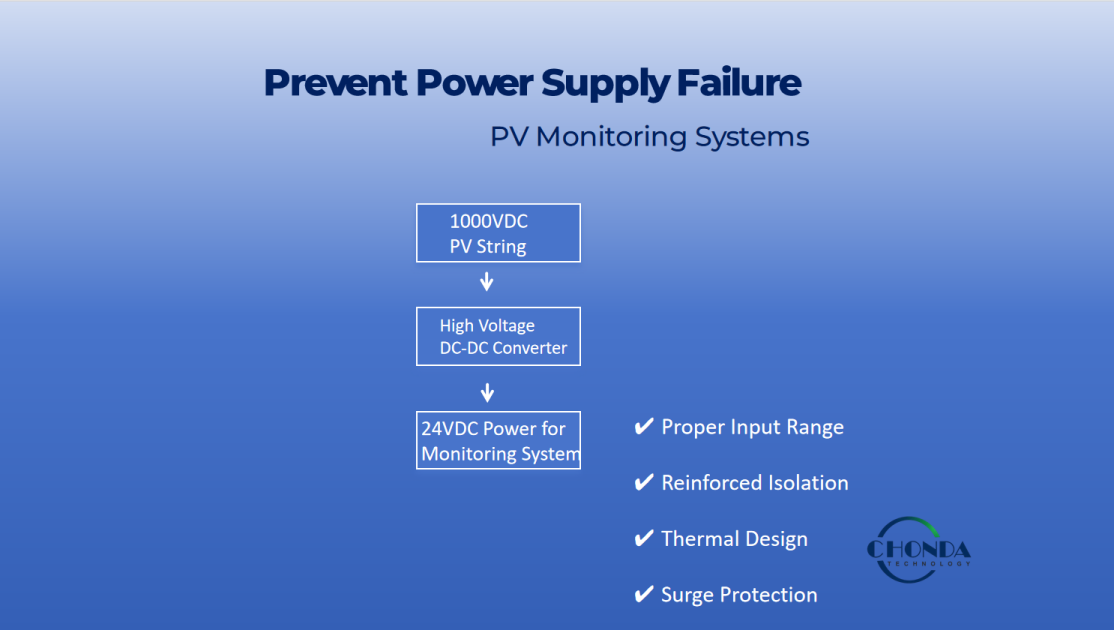
Power supply failure is one of the most common causes of downtime in photovoltaic (PV) monitoring systems. Unstable input voltage, insufficient electrical isolation, thermal stress, and improper power supply selection can all lead to communication interruptions, inaccurate monitoring data, and unexpected system shutdowns.
By understanding the main causes of power supply failure and applying proper design practices, engineers can significantly improve the long-term stability and reliability of PV string monitoring systems. This article explains the key preventive measures and recommends suitable high-voltage DC-DC converter solutions for photovoltaic monitoring applications.
Common Power Supply Problems in PV Monitoring Systems
Power supply failures in PV monitoring systems are rarely caused by a single component. In most cases, failures result from improper system design, unsuitable power conversion solutions, or harsh operating environments.
Some of the most common causes include:
- Wide input voltage fluctuations caused by changing solar irradiance and string operating conditions.
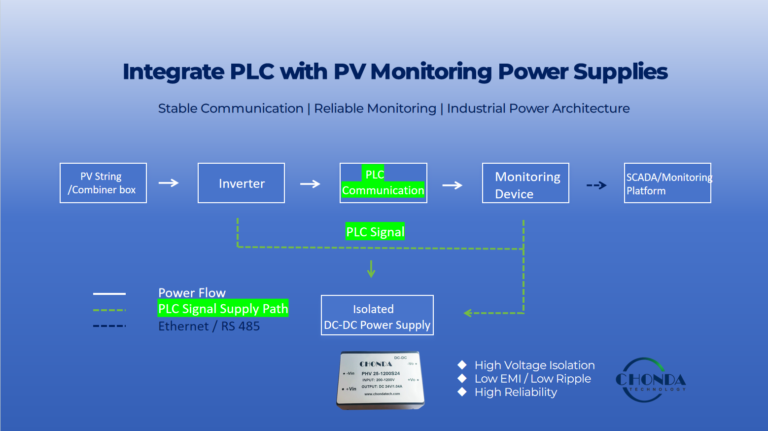
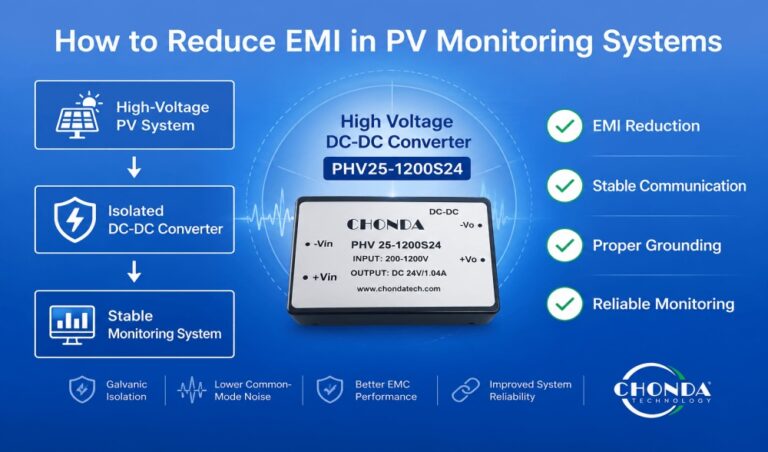
- Insufficient electrical isolation, allowing high-voltage disturbances to affect low-voltage monitoring electronics.
- Thermal stress inside outdoor combiner boxes with limited ventilation.
- Voltage surges and transient events generated by lightning or switching operations.
- Incorrect DC-DC converter selection, where the input range, output capacity, or protection features do not match the application requirements.
Many of these issues can be avoided during the design stage by selecting the appropriate isolated high-voltage DC-DC converter and following good power supply design practices.
To learn more about common operational symptoms and troubleshooting methods, see our article Common Power Supply Problems in PV Monitoring Systems.
Choose the Correct Input Voltage Range
Selecting the correct input voltage range is one of the most important steps in preventing power supply failures in PV monitoring systems. Photovoltaic string voltage changes continuously with solar irradiance, temperature, and system operating conditions. A DC-DC converter with an insufficient input range may shut down or operate outside its specified limits, leading to unstable monitoring performance.
When selecting a high-voltage DC-DC converter, engineers should ensure that the converter’s input range fully covers the expected operating voltage of the photovoltaic system. Typical options include:
- 100–1000VDC for standard photovoltaic string monitoring applications
- 200–1200VDC for higher-voltage industrial and utility-scale photovoltaic systems
Choosing a converter with an appropriate input voltage range provides stable power conversion, reduces the risk of input overvoltage or undervoltage conditions, and helps ensure reliable operation throughout changing environmental conditions.
Ensure Proper Thermal Design
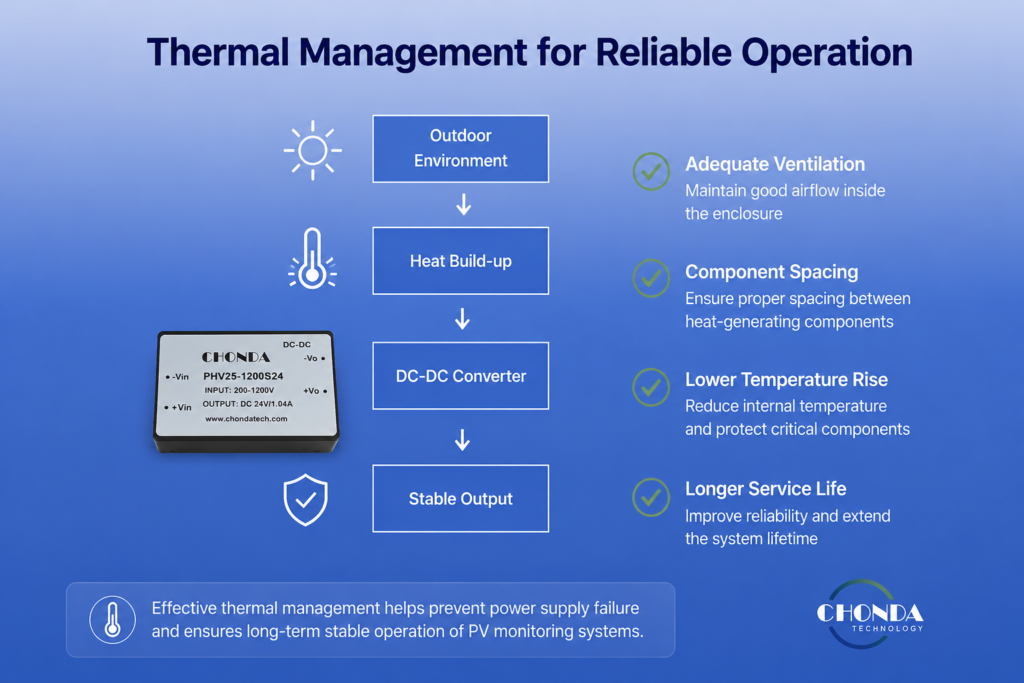
Heat is often overlooked during the design stage, but it is one of the main factors affecting the long-term reliability of power supplies in PV monitoring systems. High ambient temperatures, direct sunlight, and limited airflow inside outdoor combiner boxes can significantly increase the operating temperature of DC-DC converters.
To improve thermal performance, consider the following design practices:
- Provide adequate ventilation inside the enclosure whenever possible.
- Avoid mounting the converter directly next to heat-generating components such as contactors, surge protection devices, or power resistors.
- Maintain sufficient spacing around the converter to allow natural air circulation.
- Verify that the expected operating temperature remains within the converter’s specified limits under full-load conditions.
In applications where the enclosure is completely sealed, additional thermal analysis may be required to ensure that the temperature rise does not reduce converter performance or shorten component lifetime. Proper thermal management helps maintain stable output characteristics and improves the overall reliability of the PV monitoring system.
Protect Against Voltage Surges
PV monitoring equipment is often installed in outdoor environments where the DC bus is exposed to switching transients and surge events. Although these events may last only a few microseconds, repeated exposure can gradually reduce the reliability of the power supply and connected monitoring electronics.
When designing the power supply section of a PV monitoring system, the following practices are commonly recommended:
- Select a DC-DC converter with a sufficient input voltage margin for the intended PV system.
- Install surge protection devices (SPDs) according to the system design requirements, especially in areas with frequent lightning activity.
- Keep high-voltage input wiring as short as practical to reduce induced transient voltages.
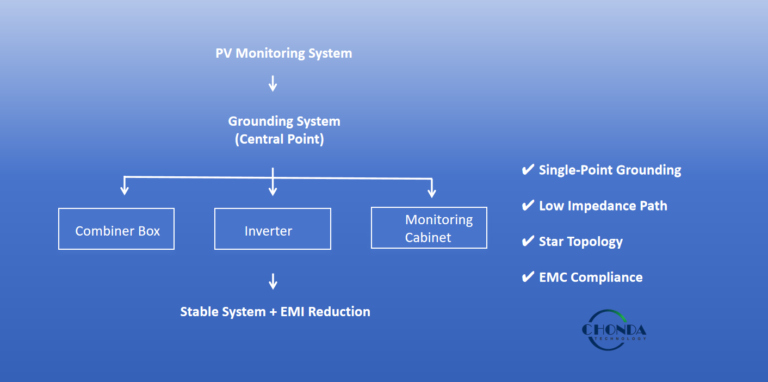
- Separate high-voltage power cables from communication wiring whenever possible to minimize electrical interference.
Surge protection should be considered as part of the overall system design rather than relying on a single component. Combining proper converter selection, electrical isolation, and external surge protection devices helps improve long-term system stability and reduces the risk of unexpected power supply failures.
Recommended High Voltage DC-DC Converter
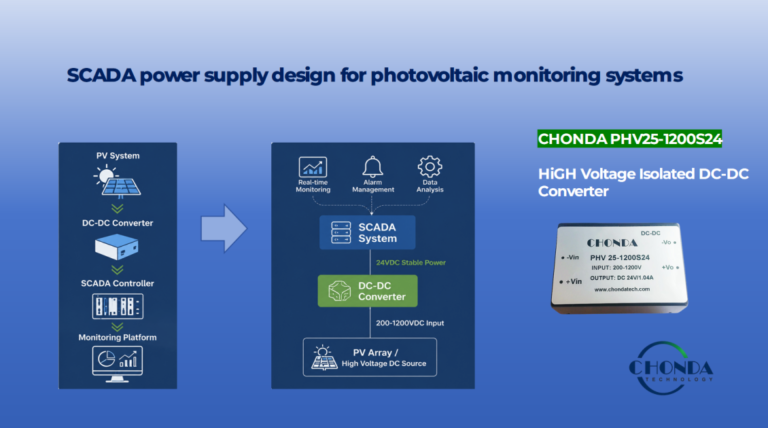
Preventing power supply failure begins with selecting the right converter for the application. In PV monitoring systems, the DC-DC converter should not only match the required input and output voltages but also provide stable regulation, reinforced isolation, and reliable operation under long-term outdoor conditions.
For photovoltaic monitoring applications, the PHV Series high-voltage DC-DC converters are designed to support:
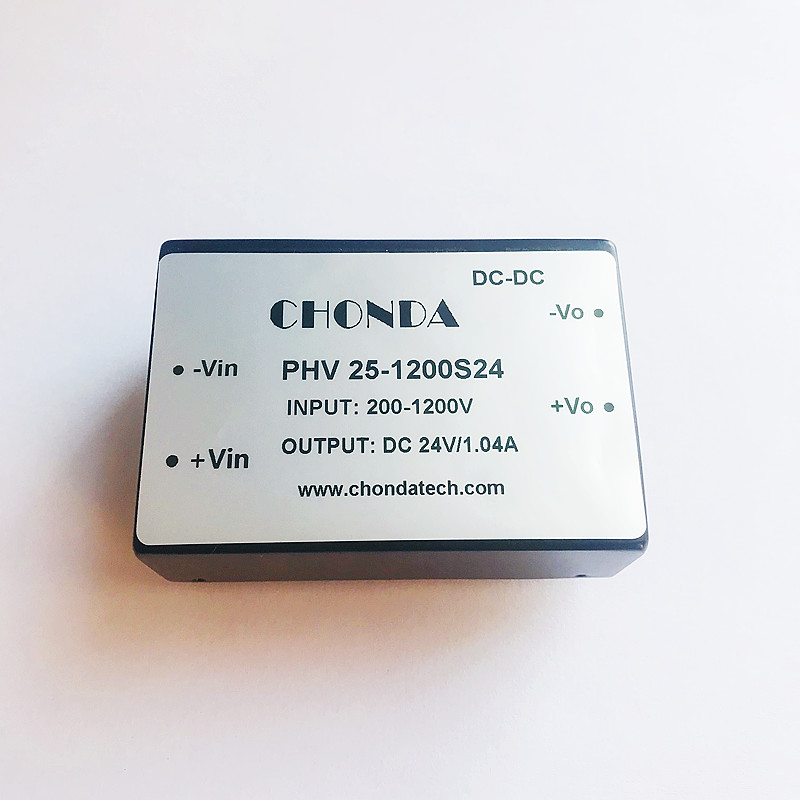
- Wide input voltage ranges from 100–1000VDC and 200–1200VDC
- Multiple regulated outputs including 5VDC, 12VDC, 24VDC, 36VDC and 48VDC
- Power ratings from 5W to 50W
- Reinforced electrical isolation
- Compact construction for combiner boxes and monitoring equipment
Engineers requiring standard or customized high-voltage DC-DC solutions can explore our complete High Voltage DC-DC Modules series for photovoltaic and industrial applications.
Conclusion
Preventing power supply failure is an important part of designing reliable PV monitoring systems. Selecting the correct input voltage range, providing adequate electrical isolation, managing thermal conditions, and protecting against voltage surges all contribute to stable long-term operation.
By applying these design practices and selecting an appropriate isolated high-voltage DC-DC converter, engineers can reduce unexpected downtime, improve monitoring accuracy, and enhance the overall reliability of photovoltaic monitoring systems.
🔵 Related Technical Articles
Common Power Supply Problems in PV Monitoring Systems
How to Select a DC-DC Converter for PV Monitoring Applications