We help the world since 2012

How to Select a DC-DC Converter for PV Monitoring Applications
Reliable power delivery is essential for photovoltaic monitoring systems. Sensors, monitoring controllers, communication interfaces, and data loggers all depend on stable DC power to operate correctly.
Selecting the right DC-DC converter is therefore an important part of PV monitoring system design. Engineers must consider not only voltage requirements but also isolation, environmental conditions, EMC performance, and long-term reliability.
This article explains the key factors to consider when selecting a DC-DC converter for PV monitoring applications.
1. Why PV Monitoring Systems Require Reliable Power Supplies
PV monitoring systems rely on multiple electronic devices working together to collect, process, and transmit operational data from solar installations.
Reliable power supplies are essential because:
• Sensors require stable voltage for accurate current and voltage measurements.
• Controllers must operate continuously to collect and process monitoring data without interruption.
• Communication interfaces such as RS485, Ethernet, or wireless modules depend on clean and stable power for reliable data transmission.
• Outdoor installations are exposed to temperature variations, electrical noise, lightning-induced surges, and other harsh environmental conditions.
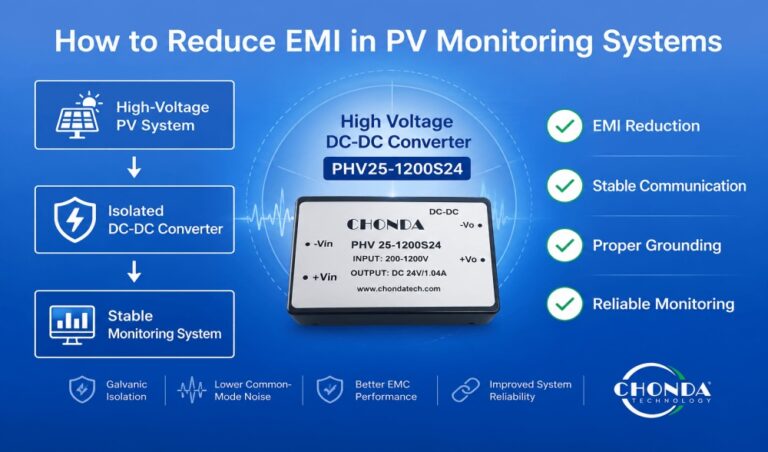
For these reasons, isolated DC-DC converters are commonly used in PV monitoring systems to provide stable power while protecting sensitive monitoring electronics from high-voltage disturbances.
Learn more about why PV monitoring systems need isolated power supplies.
2. Key Parameters When Selecting a DC-DC Converter
Selecting a DC-DC converter for photovoltaic monitoring systems requires evaluating several technical parameters. The converter must operate reliably in high-voltage solar environments while providing stable power for monitoring electronics.
Input Voltage Range
PV monitoring systems may operate in environments where DC bus voltages reach 600VDC, 1000VDC, or even 1500VDC.
The DC-DC converter should support the expected operating voltage range while maintaining stable performance under varying solar conditions.
A wide input voltage range can simplify system design, reduce the number of converter variants required, and improve compatibility across different photovoltaic installations.
Isolation Voltage
Isolation is one of the most important requirements in PV monitoring applications.
Monitoring electronics are often connected to high-voltage photovoltaic strings where significant ground potential differences may exist.
An isolated DC-DC converter helps:
- Protect low-voltage electronics
- Reduce the impact of transient disturbances
- Improve operator safety
- Increase overall system reliability
For many photovoltaic monitoring systems, isolation ratings of 1500VDC or higher are commonly used.
Output Voltage Requirements
The output voltage must match the requirements of the monitoring equipment.
Common output voltages include:
- 12VDC
- 24VDC
- 48VDC
The required output depends on the monitoring controller, current sensors, communication modules, and data acquisition devices used within the system.
Choosing the correct output voltage helps ensure stable operation and minimizes unnecessary power conversion stages.
Operating Temperature
PV combiner boxes and outdoor monitoring equipment are often exposed to harsh environmental conditions.
Depending on the installation location, ambient temperatures may vary significantly throughout the year.
Industrial-grade DC-DC converters should maintain stable performance across a wide operating temperature range to prevent unexpected shutdowns or measurement errors.
Reliable thermal design is especially important in enclosed combiner box installations where heat accumulation can occur.
EMC Performance
Electromagnetic compatibility (EMC) plays a critical role in monitoring accuracy.
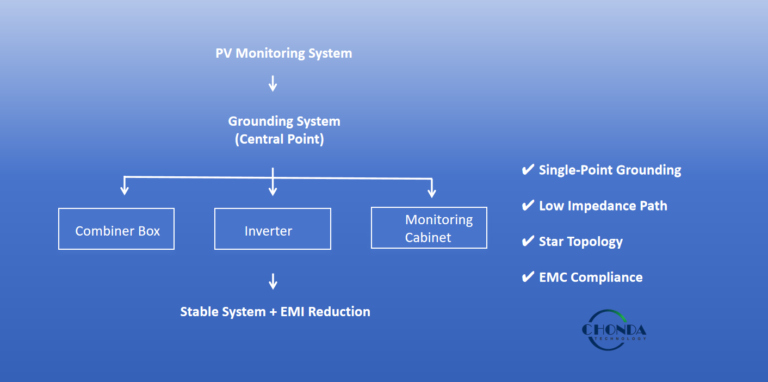
Electrical noise generated by switching devices, inverters, and nearby equipment can interfere with measurement signals and communication networks.
A converter with good EMC performance helps:
- Improve measurement accuracy
- Reduce communication errors
- Enhance system stability
- Meet regulatory compliance requirements
Proper EMC design becomes increasingly important in large-scale photovoltaic power plants where multiple electronic devices operate simultaneously.
3. Typical Power Architecture for PV Monitoring Systems
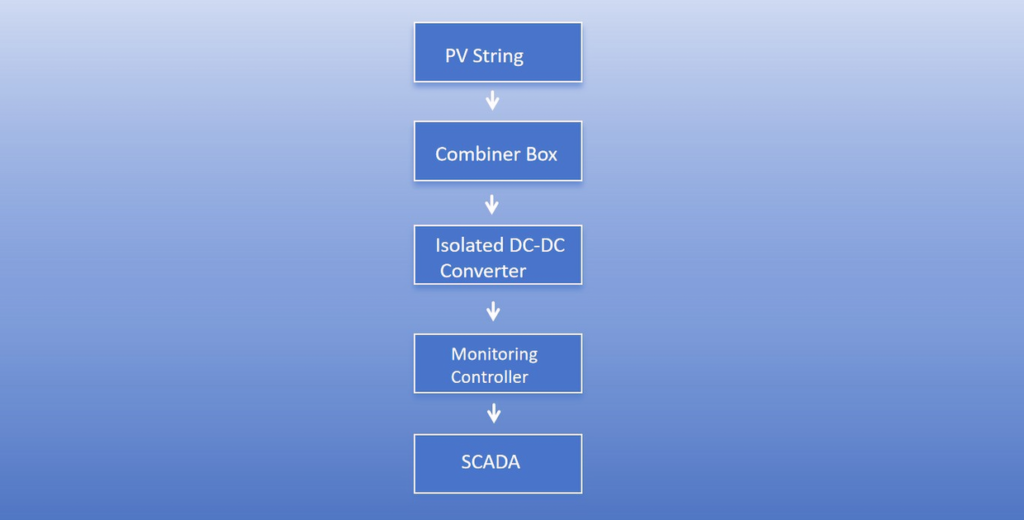
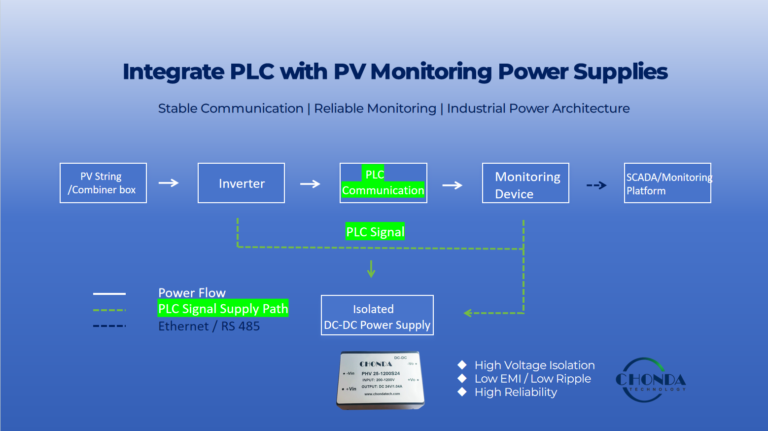
Figure 1 illustrates a typical PV monitoring system architecture. Monitoring devices collect current, voltage, and status information from individual PV strings and transmit the data to the monitoring controller.
The controller processes the information and forwards operational data to SCADA or remote monitoring platforms for analysis and performance management.
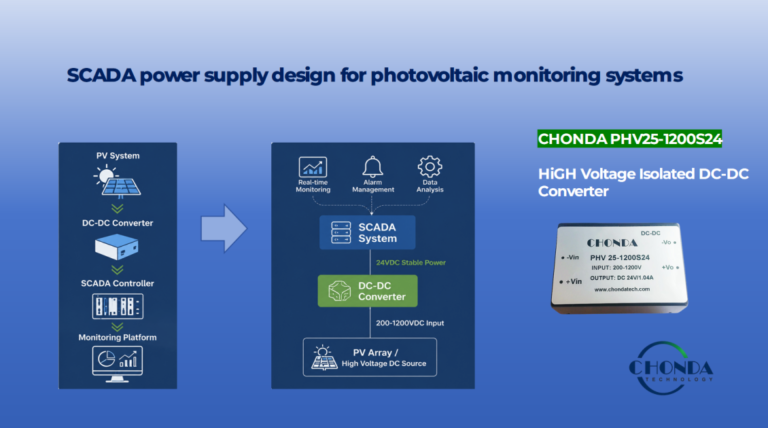
At the same time, an isolated DC-DC converter provides stable power to sensors, controllers, and communication modules. The converter isolates the monitoring electronics from the high-voltage PV side, helping improve system reliability and measurement accuracy.
4. Recommended DC-DC Converter Features for PV Monitoring
For photovoltaic monitoring applications, engineers typically look for:
• Wide input voltage range
• High isolation voltage
• Stable regulated output
• Industrial temperature performance
• EMC compliance
• Long-term reliability
CHONDA’s PHV series high-voltage DC-DC converters are designed for photovoltaic monitoring systems and provide isolated power for monitoring controllers, communication interfaces, and data acquisition devices installed in combiner boxes and remote monitoring stations.
5. Conclusion
Selecting the right DC-DC converter is an important step in designing reliable PV monitoring systems.
Engineers should evaluate input voltage range, isolation performance, output requirements, operating temperature, and EMC characteristics when choosing a power solution.
A properly selected isolated DC-DC converter helps improve monitoring reliability, measurement accuracy, and long-term system performance in demanding photovoltaic environments.
🔵 Related Technical Articles
👉 What Is PV String Monitoring?
👉 How PV String Monitoring Works in Solar Power Systems
👉 PV String Monitoring System Architecture Explained
👉 Why PV Monitoring Systems Need Isolated Power Supplies
👉 PV String Monitoring vs Inverter Monitoring: What’s the Difference?
👉 Explore Our High Voltage DC-DC Converters for PV Monitoring Applications