We help the world since 2012

PV String Monitoring vs Inverter Monitoring: What’s the Difference?
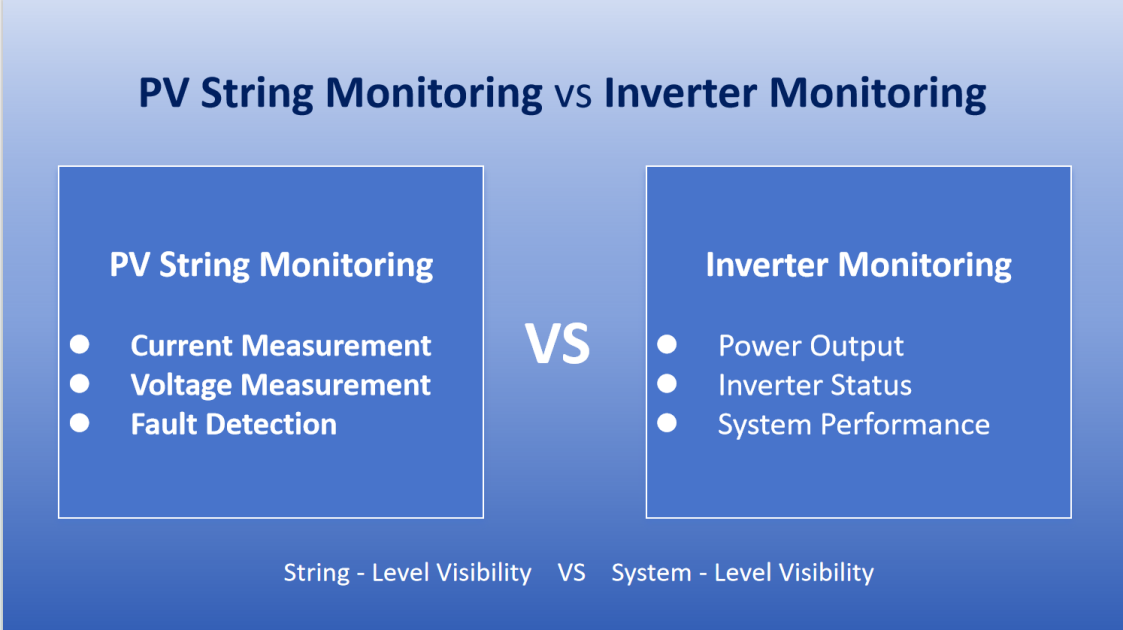
Solar plants can be monitored at different levels. Two of the most common approaches are PV string monitoring and inverter monitoring.
While both methods provide valuable operational data, they differ significantly in measurement granularity, fault detection capability, and system architecture.
Understanding these differences helps engineers select the most appropriate monitoring strategy for utility-scale and commercial photovoltaic installations.
What Is PV String Monitoring?
PV string monitoring measures electrical parameters at the individual string level.
Typical monitored parameters include:
- String current
- String voltage
- Fuse status
- Surge protection status
- Fault alarms
This approach enables operators to identify underperforming strings and detect faults before significant energy losses occur.
To understand the complete monitoring process, read our guide on How PV String Monitoring Works in Solar Power Systems
What Is Inverter Monitoring?
Inverter monitoring focuses on inverter-level operational data.
Typical parameters include:
- AC power output
- DC input power
- Inverter temperature
- Efficiency
- Fault codes
While inverter monitoring provides useful system information, it cannot identify problems occurring within individual PV strings.
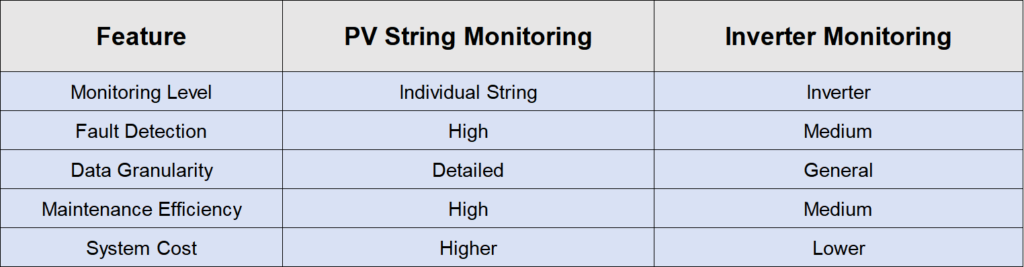
PV String Monitoring vs Inverter Monitoring
When Should PV String Monitoring Be Used?
PV string monitoring is typically recommended for:
- Utility-scale solar farms
- Large commercial PV installations
- High-value solar assets
- Remote monitoring applications
The ability to identify underperforming strings often results in improved energy yield and faster fault diagnosis.
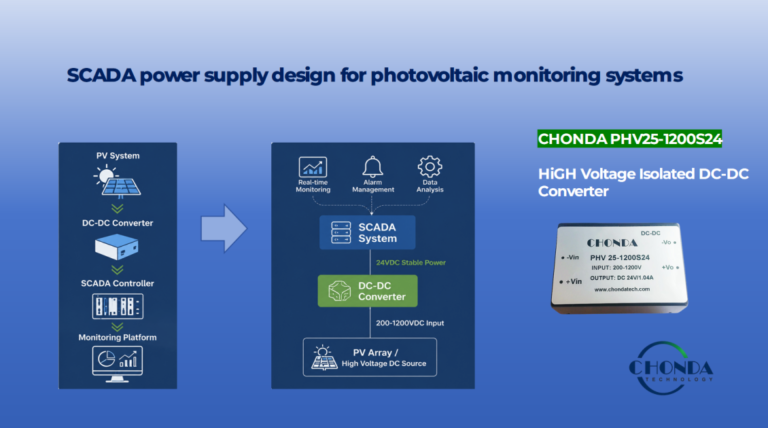
The Role of Power Supply in PV Monitoring Systems
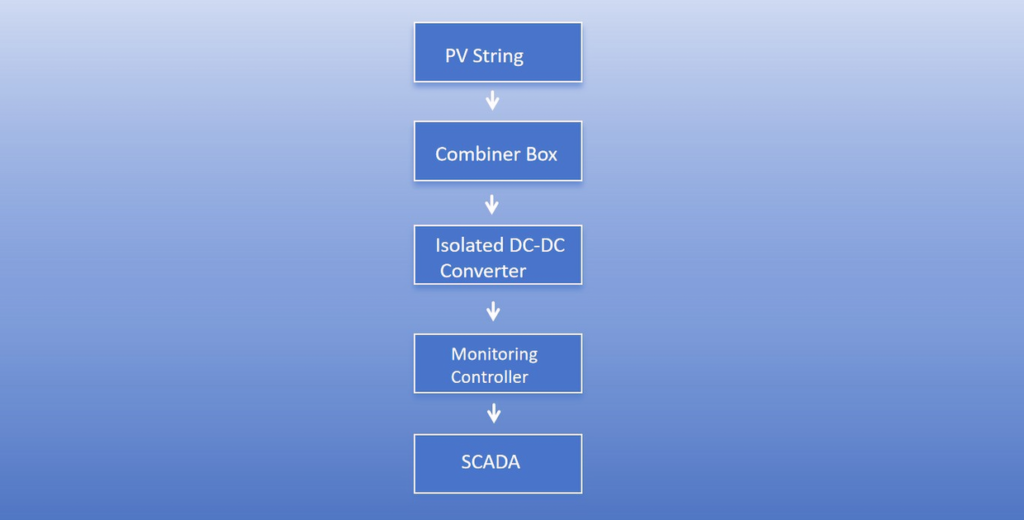
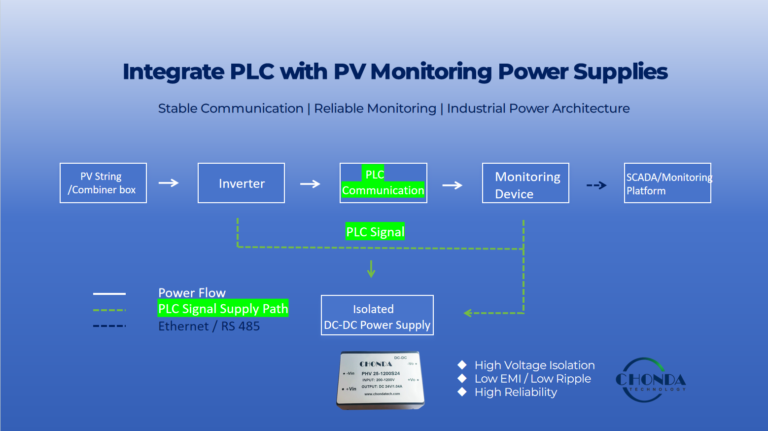
Reliable string monitoring requires stable power for sensors, controllers, and communication interfaces.
Industrial isolated DC-DC converters help ensure reliable operation in high-voltage photovoltaic environments.
Reliable power delivery is critical for accurate monitoring performance.
Learn more about Why PV Monitoring Systems Need Isolated Power Supplies.
Why Power Supply Reliability Matters in PV String Monitoring
PV string monitoring systems are typically installed inside combiner boxes and operate in high-voltage solar environments.
Unlike inverter monitoring, string-level monitoring requires multiple sensing and communication devices distributed across the solar field.
These devices depend on reliable isolated DC-DC power supplies to ensure stable operation and accurate data collection.
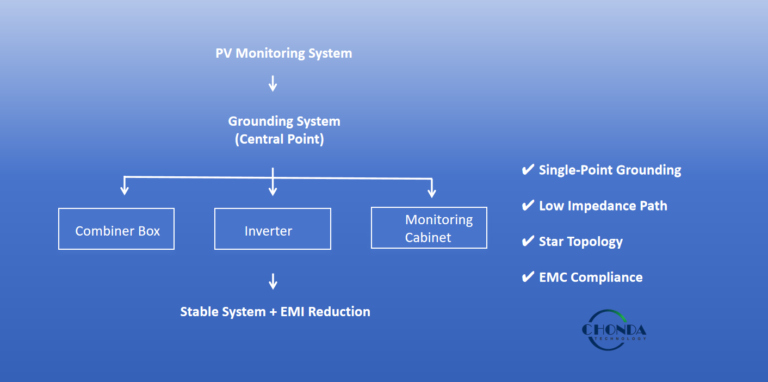
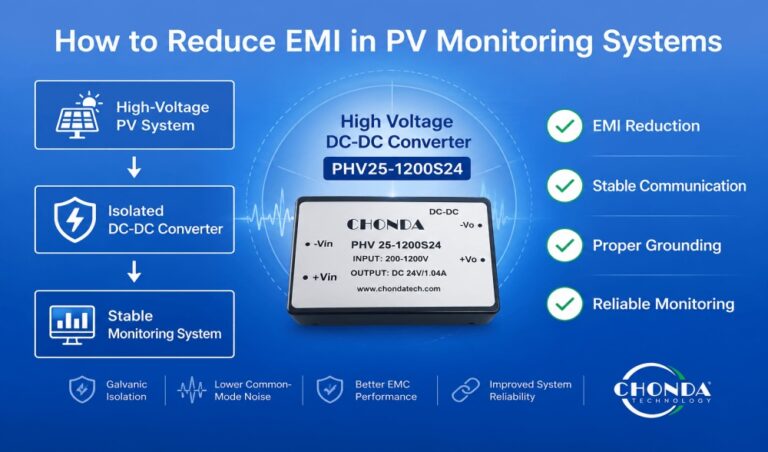
A well-designed isolated converter helps protect monitoring electronics from voltage transients, ground potential differences, and electrical noise.
Recommended Power Solution for PV Monitoring Systems
For high-voltage PV monitoring applications, isolated DC-DC converters with wide input voltage ranges are commonly used.
CHONDA’s PHV series provides:
- 200-1200VDC ultra-wide input range
- 24VDC regulated output
- 1500VDC isolation
- Compact design for combiner box integration
These features make the converter suitable for PV string monitoring systems operating in demanding outdoor environments.
Learn more about our DC-DC converters for PV monitoring systems
Conclusion
PV String Monitoring and Inverter Monitoring serve different purposes within a solar monitoring architecture.
Inverter monitoring provides valuable system-level information, while PV string monitoring offers detailed visibility into individual string performance and fault conditions.
For utility-scale and large commercial photovoltaic installations, string-level monitoring often provides significant advantages in fault detection, maintenance efficiency, and performance optimization.
When implementing PV monitoring systems, engineers should also consider the reliability of the supporting power architecture. Reliable isolated DC-DC converters help ensure accurate data collection and stable long-term operation.
🔵 Related Technical Articles
PV String Monitoring System Architecture Explained
How Isolated DC-DC Converters Improve PV Monitoring Reliability