We help the world since 2012

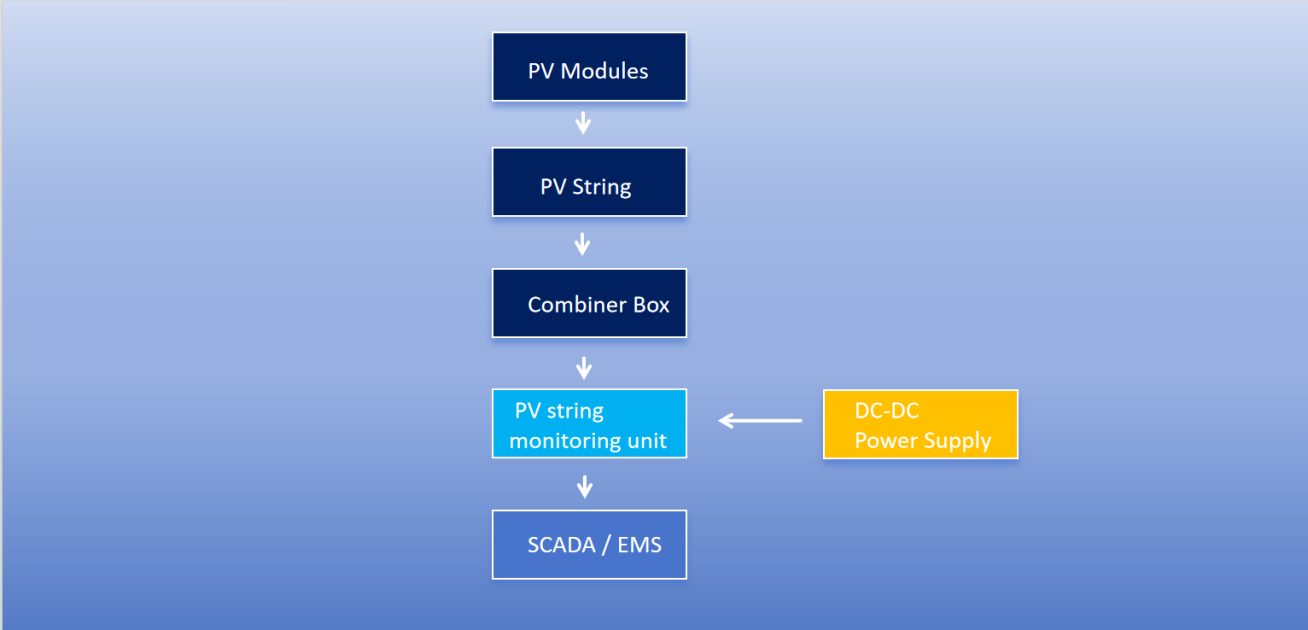
How PV String Monitoring Works in Solar Power Systems
As solar power plants continue to scale into utility-grade installations, accurate PV string monitoring becomes essential for system reliability and energy optimization. PV string monitoring enables real-time tracking of electrical performance at string level, helping operators detect faults early and improve overall system efficiency. This article explains how PV string monitoring works from an engineering perspective, including measurement methods, combiner box architecture, and SCADA-level data communication.
1. What Happens Inside a PV String Monitoring System ?
A PV string monitoring system continuously collects and processes electrical data from multiple photovoltaic strings within a solar power plant.
Each PV string operates under varying environmental and electrical conditions such as:
- Irradiance fluctuations
- Temperature variation
- Module mismatch
- Partial shading effects
These physical variations directly affect electrical output, which the monitoring system converts into measurable data signals.
👉 Core engineering function:
Detect real-time performance deviation between PV strings.
.png)
2. How Current and Voltage Are Measured in Each PV String ?
PV string monitoring is based on precise electrical measurement at DC level.
✔ Current measurement
- Hall-effect sensors or shunt-based sensors
- Isolated DC current detection
- Real-time signal output to monitoring unit
✔ Voltage measurement
- Direct string voltage sampling
- High-voltage isolation design
- Integrated measurement circuits inside monitoring module
✔ Key calculated parameters:
- String current (A)
- String voltage (V)
- Power output (W = V × I)
👉 Engineering outcome:
- Detect underperforming strings
- Identify open circuit faults
- Monitor module degradation trends
3. Why the Combiner Box Is Critical in Monitoring Design ?
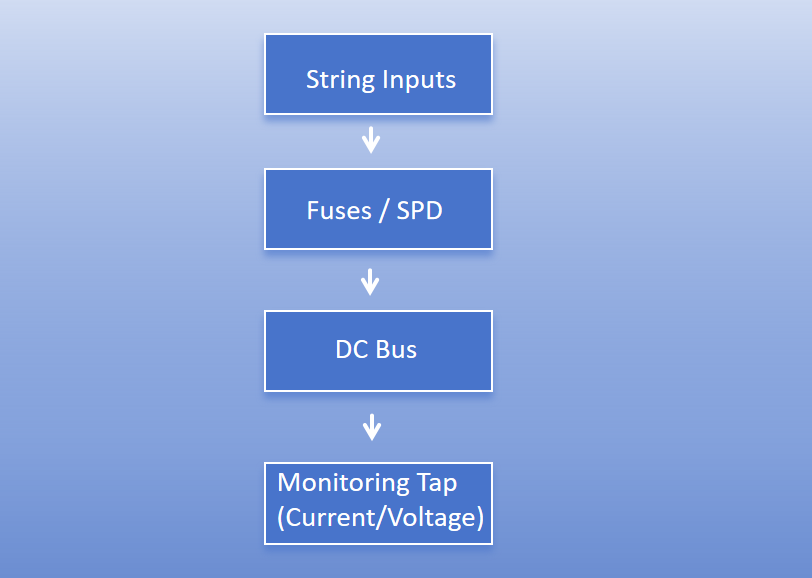
The combiner box is the central aggregation point in PV array architecture.
It connects multiple PV strings into a unified DC output while integrating protection and monitoring functions.
Key engineering roles:
- Combine multiple DC string inputs
- Provide protection (fuses / SPD / breakers)
- Host string monitoring interface
- Enable centralized wiring architecture
👉 Engineering insight:
Without combiner box-based architecture, PV string monitoring becomes significantly more complex and costly in utility-scale systems.
4. How Monitoring Data Is Transmitted to SCADA or EMS ?
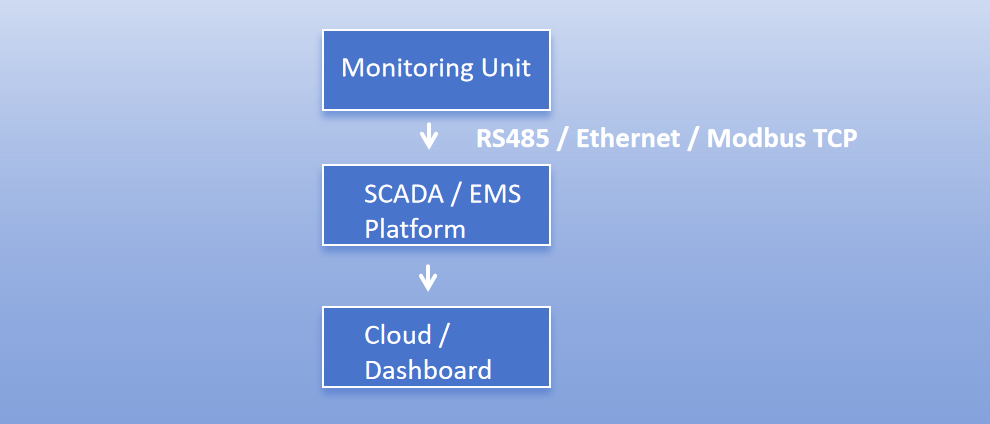
After data acquisition, information must be transmitted to higher-level control systems.
✔ SCADA (Supervisory Control and Data Acquisition)
- Real-time plant monitoring
- Fault alarm management
- Remote operational control
✔ EMS (Energy Management System)
- Energy optimization
- Performance analytics
- Grid interaction control
✔ Communication protocols:
- RS485 / Modbus RTU
- Ethernet / Modbus TCP
- Wireless gateway (large-scale plants)
👉 Data flow architecture:
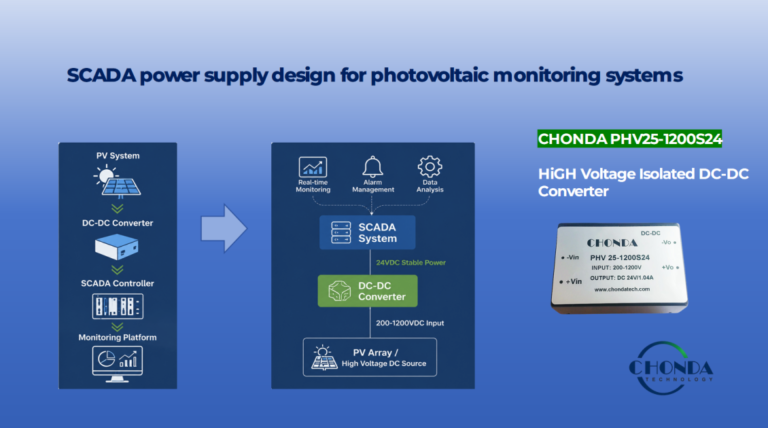
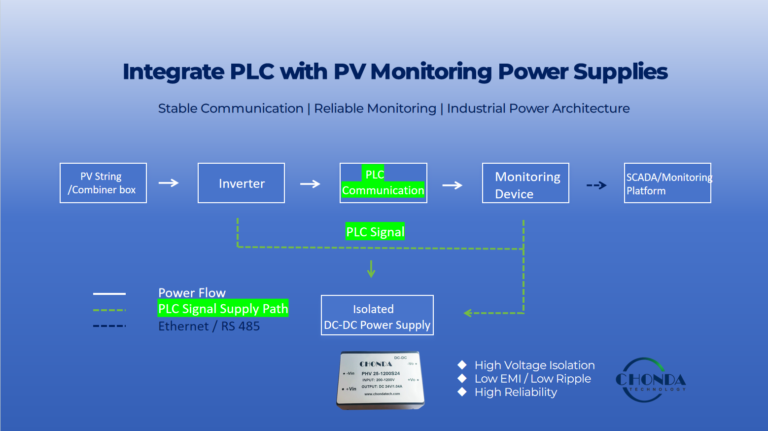
PV String → Monitoring Unit → Communication Gateway → SCADA / EMS Platform
5. Benefits of PV String Monitoring in Large Solar Plants
PV string monitoring provides critical advantages in utility-scale solar systems:
✔ Early fault detection
Identify underperforming strings before energy loss occurs.
✔ Higher system efficiency
Ensure all strings operate at optimal power output.
✔ Reduced maintenance cost
Pinpoint exact fault location instead of full-array inspection.
✔ Improved system reliability
Real-time system health visibility across entire plant.
✔ Better asset management
SCADA integration enables long-term performance tracking.
Need a High-Performance PV String Monitoring Solution?
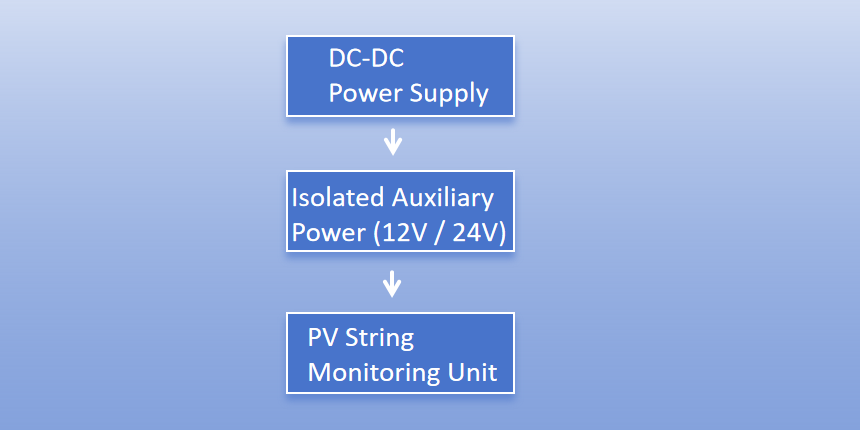
CHONDA provides industrial-grade DC-DC power modules designed for:
- PV string monitoring units
- Combiner box systems
- SCADA-integrated solar monitoring devices
👉 Request a Quote
👉 Download Datasheet
👉 PV String Monitoring Power Supply Solutions
🔵 Continue Learning PV Monitoring Systems
Next recommended articles:
👉 PV Monitoring System Architecture
Understand how all monitoring components are connected in a complete system.
👉 Role of Isolated DC-DC Power Supply in PV Monitoring Systems
Learn why power stability is essential for accurate data acquisition.
👉 Power Design for Smart Combiner Boxes
Explore how sensors and communication systems are powered inside combiner boxes.
👉 Back to Overview
Return to the full PV monitoring system introduction.