We help the world since 2012

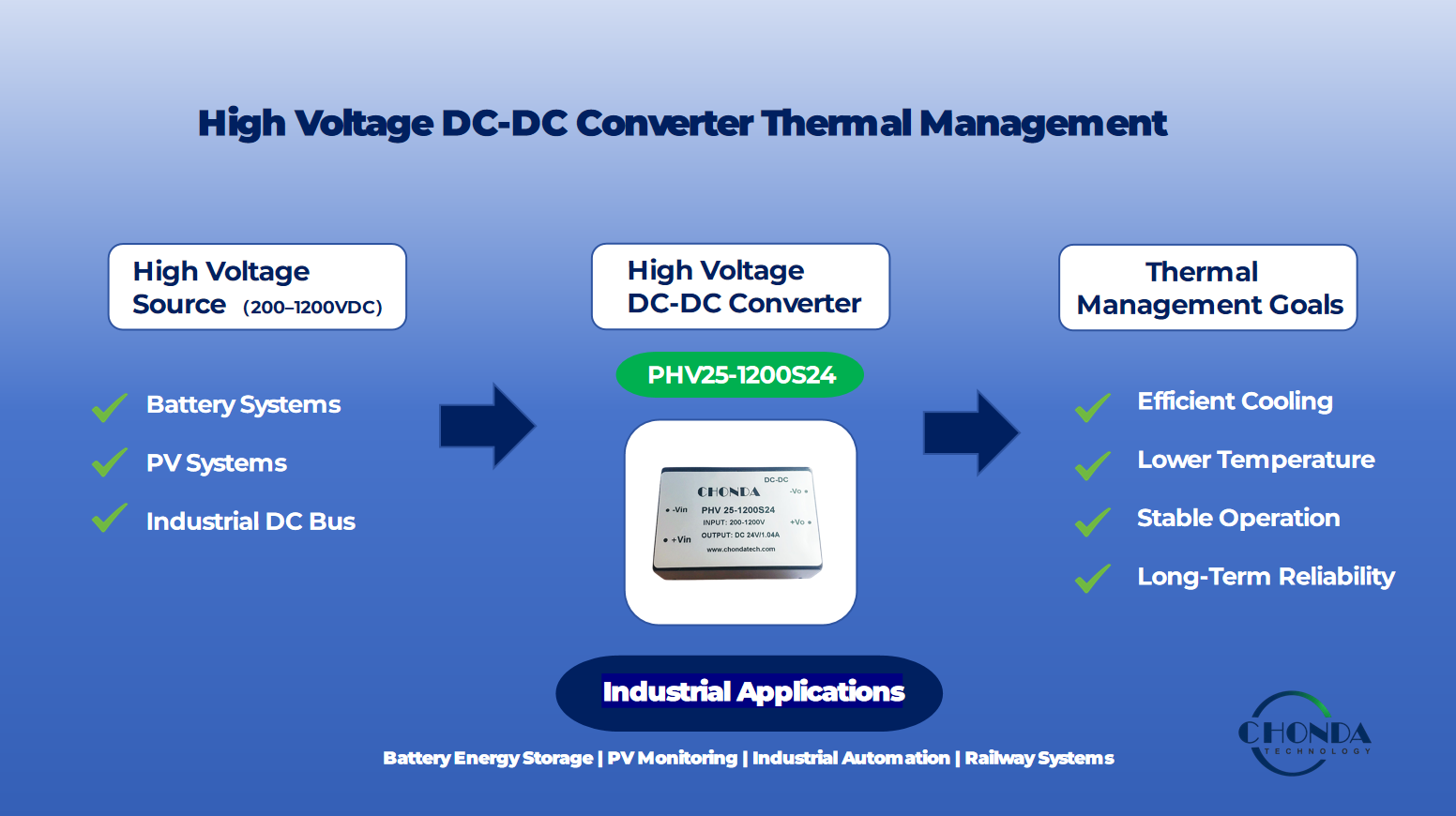
High Voltage DC-DC Converter Thermal Management: Design Principles for Reliable Industrial Power Systems
High voltage DC-DC converters are widely used in industrial automation, battery energy storage systems (BESS), photovoltaic monitoring equipment, railway electronics, and high-voltage DC power systems.
While electrical performance is often the primary concern during converter selection, thermal management plays an equally important role in determining long-term reliability and operational stability.
During power conversion, switching devices, magnetic components, transformers, and other internal circuits generate heat. If this heat is not properly controlled, excessive operating temperatures can reduce efficiency, shorten component lifespan, increase failure rates, and negatively affect overall system reliability.
A well-designed thermal management strategy helps maintain stable operating temperatures, improve conversion efficiency, extend product lifetime, and ensure continuous operation under demanding industrial environments.
This article explains the key principles of high voltage DC-DC converter thermal management, common cooling methods, design considerations, and practical selection guidelines for industrial applications.
1. Why Thermal Management Matters in High Voltage DC-DC Converters
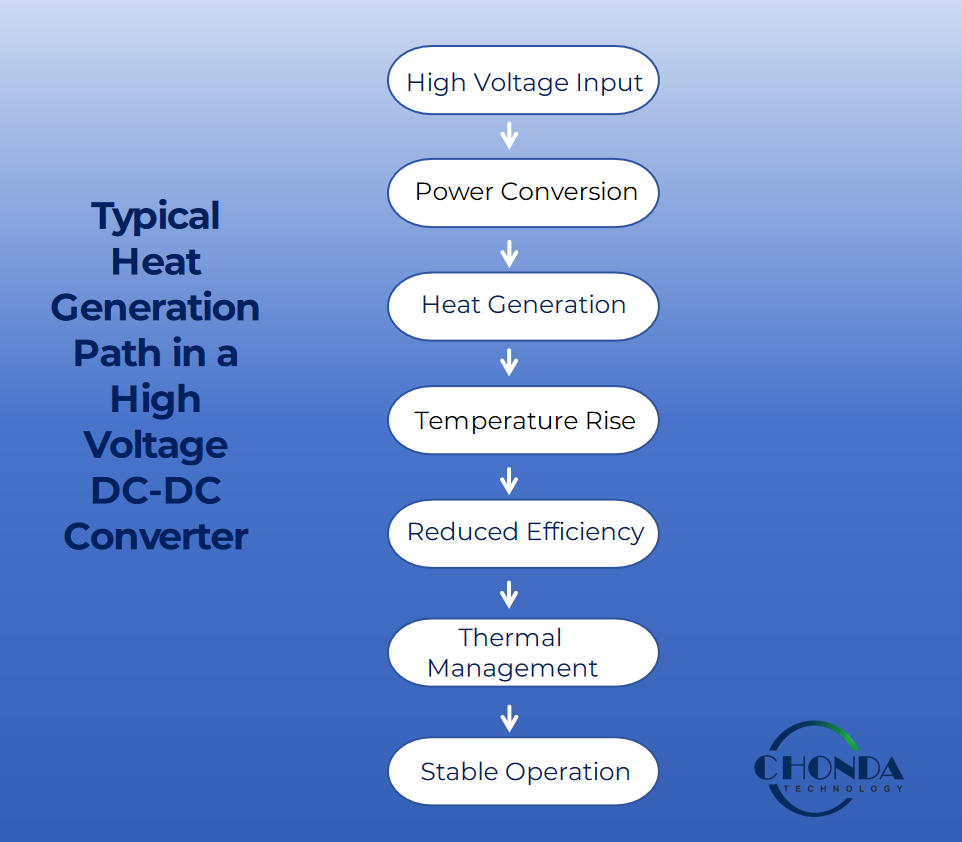
Efficient thermal management is one of the most important factors affecting the long-term performance of a high voltage DC-DC converter. During power conversion, electrical energy is never converted with 100% efficiency. A portion of the energy is inevitably dissipated as heat by switching devices, magnetic components, transformers, and other internal circuits.
If this heat cannot be effectively removed, internal temperatures continue to rise, accelerating component aging, reducing conversion efficiency, shortening product lifetime, and increasing the risk of unexpected failures. Excessive temperature also affects output voltage stability and overall system reliability, especially in industrial environments where converters often operate continuously for thousands of hours.
A well-designed thermal management system keeps critical components within their recommended operating temperature range, ensuring stable electrical performance, higher efficiency, improved reliability, and longer service life.
1.1.Heat Generation During Power Conversion
Heat generation is a natural by-product of every DC-DC power conversion process. Although modern high voltage DC-DC converter modules achieve high conversion efficiency, some energy is always lost during switching, magnetic coupling, and current conduction.
The primary sources of heat include:
- Power MOSFETs or IGBTs used for high-frequency switching
- Isolation transformers
- Output rectifiers
- Magnetic components such as inductors
- Internal PCB copper losses
As switching frequency increases, switching losses become more significant. Higher input voltages and larger output power levels also increase thermal stress on the converter.
Without sufficient heat dissipation, these components may operate beyond their recommended temperature limits, reducing efficiency and affecting long-term reliability.
1.2.Impact on Reliability
Temperature has a direct influence on the reliability of electronic components. Elevated operating temperatures accelerate material aging, increase electrical stress, and reduce the expected lifetime of semiconductor devices, capacitors, and magnetic components.
Typical problems caused by poor thermal management include:
- Reduced component lifetime
- Increased failure rate
- Output voltage instability
- Thermal shutdown events
- Lower system availability
For industrial applications such as battery energy storage systems (BESS), photovoltaic monitoring systems, railway electronics, and industrial automation equipment, converters often operate continuously in enclosed control cabinets or outdoor environments. Maintaining acceptable operating temperatures is therefore essential for ensuring reliable long-term operation.
A properly designed thermal management system helps minimize temperature rise and improves overall system reliability throughout the product lifecycle.
1.3.Effect on Efficiency
Thermal management also has a significant impact on conversion efficiency. As operating temperature increases, the electrical characteristics of semiconductor devices change. Higher temperatures generally increase conduction losses and switching losses, resulting in lower overall efficiency.
Reduced efficiency creates a negative cycle:
Higher temperature → Higher power loss → More heat generation → Further temperature rise
If this thermal cycle continues, converter performance gradually deteriorates and system stability may be affected.
By controlling internal temperatures through effective thermal design, engineers can:
- Maintain stable conversion efficiency
- Reduce unnecessary power losses
- Improve energy utilization
- Lower cooling requirements
- Extend converter service life
For high voltage DC-DC converter modules used in industrial power systems, efficient thermal management contributes directly to both operational efficiency and long-term system stability.
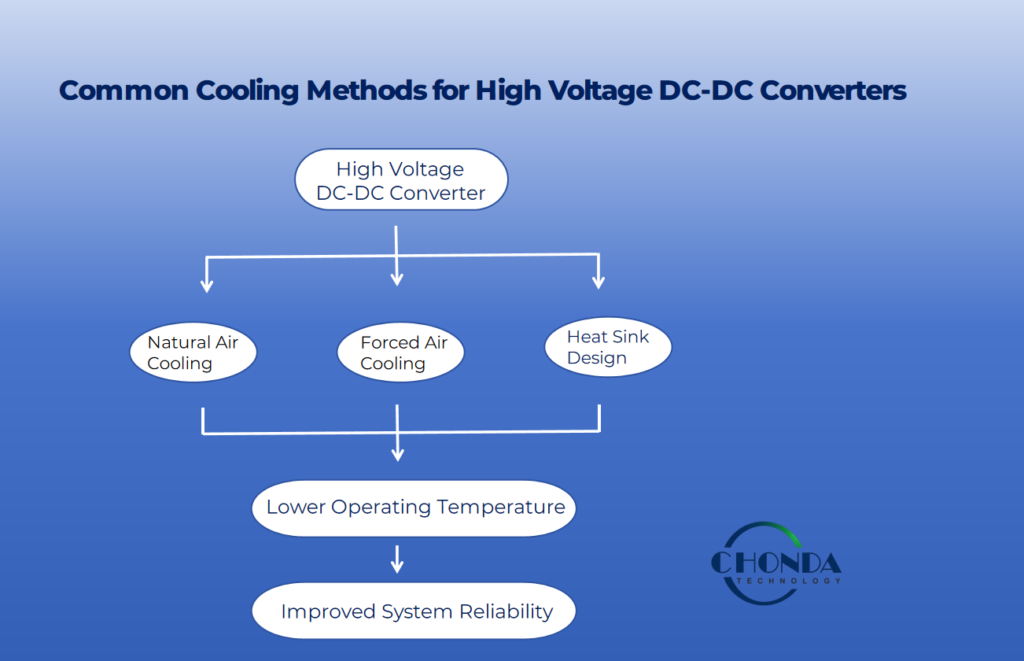
2. Common Cooling Methods for High Voltage DC-DC Converters
Different industrial applications require different thermal management solutions. The appropriate cooling method depends on factors such as output power, installation environment, ambient temperature, enclosure design, and long-term operating conditions.
For high voltage DC-DC converter modules, engineers typically select cooling methods that provide sufficient heat dissipation while maintaining system reliability and minimizing maintenance requirements.
The following cooling methods are commonly used in industrial power conversion systems.
2.1.Natural Air Cooling
Natural air cooling, also known as passive cooling, relies on natural convection to dissipate heat without the use of cooling fans.
This method is commonly used in low-power or medium-power high voltage DC-DC converter modules where heat generation is relatively limited.
Advantages include:
- Simple mechanical structure
- High reliability
- No moving parts
- Low maintenance requirements
- Reduced acoustic noise
However, passive cooling performance depends heavily on the surrounding environment. Poor ventilation or high ambient temperatures may reduce cooling effectiveness.
Natural air cooling is widely used in industrial monitoring equipment, photovoltaic monitoring systems, and compact control cabinets where maintenance-free operation is preferred.
2.2.Forced Air Cooling
Forced air cooling improves heat dissipation by using cooling fans to increase airflow across the converter surface.
Compared with natural convection, forced air cooling provides significantly higher cooling capacity and is suitable for converters operating at higher power levels or in enclosed industrial cabinets.
Typical advantages include:
- Higher cooling efficiency
- Lower operating temperature
- Increased power density
- Improved continuous operating capability
Engineers should also consider fan reliability, dust accumulation, and maintenance requirements when selecting forced air cooling solutions.
Proper airflow direction and ventilation design are equally important for achieving optimal thermal performance.
2.3.Heat Sink Design
Heat sinks are one of the most important components in converter thermal management.
A heat sink increases the surface area available for heat transfer, allowing thermal energy generated by semiconductor devices and magnetic components to dissipate more efficiently.
Heat sink performance depends on several factors, including:
- Material selection (typically aluminum)
- Surface area
- Fin geometry
- Airflow conditions
- Thermal interface materials
Proper heat sink design helps reduce junction temperature, improves converter efficiency, and extends component lifetime.
For industrial high voltage DC-DC converter modules, optimized heat sink design is often combined with natural or forced air cooling to achieve reliable long-term operation.
3. Key Thermal Design Considerations
Thermal management is not determined by a single cooling method. Instead, it requires a combination of proper component selection, mechanical design, airflow planning, and installation environment.
When designing or selecting a high voltage DC-DC converter module, engineers should evaluate several thermal factors to ensure stable operation under real industrial conditions.
The following design considerations have a significant impact on long-term thermal performance.
3.1.Ambient Temperature
Ambient temperature is one of the most important factors affecting converter thermal performance.
High voltage DC-DC converters installed in industrial control cabinets, battery energy storage systems (BESS), photovoltaic power stations, or railway equipment often operate in environments where ambient temperatures vary significantly.
Higher ambient temperatures reduce the temperature difference between the converter and the surrounding air, making heat dissipation less effective.
Engineers should therefore evaluate:
- Maximum operating ambient temperature
- Cabinet ventilation conditions
- Outdoor or indoor installation
- Continuous operating duration
Selecting a converter with sufficient thermal margin helps maintain stable performance even under elevated environmental temperatures.
3.2.Component Placement
The internal arrangement of power components directly influences heat distribution inside a high voltage DC-DC converter.
Heat-generating components such as switching devices, transformers, inductors, and output rectifiers should be positioned to minimize localized hot spots and improve airflow.
Typical thermal design practices include:
- Separating high-power components from temperature-sensitive circuits
- Reducing thermal coupling between heat sources
- Optimizing airflow paths inside the enclosure
- Keeping temperature-sensitive control circuits away from power devices
Proper component placement improves temperature uniformity while reducing thermal stress on individual components.
3.3.Thermal Interface Materials
Efficient heat transfer requires good thermal contact between heat-generating components and the heat sink.
Thermal interface materials (TIMs), such as thermal pads, thermal grease, or phase-change materials, help reduce thermal resistance by filling microscopic air gaps between contacting surfaces.
Proper selection of thermal interface materials provides several benefits:
- Improved heat transfer efficiency
- Lower component junction temperatures
- More uniform temperature distribution
- Enhanced long-term reliability
When selecting thermal interface materials, engineers should consider thermal conductivity, long-term stability, mechanical durability, and compatibility with the operating environment.
For industrial high voltage DC-DC converter modules operating continuously over long periods, high-quality thermal interface materials contribute significantly to reliable thermal performance.
4. CHONDA High Voltage DC-DC Converter Thermal Solution
Industrial applications require high voltage DC-DC converter modules that maintain stable electrical performance even under continuous operation and varying environmental conditions. Effective thermal management is therefore an essential part of converter design rather than an optional feature.
CHONDA develops high voltage DC-DC converter modules optimized for industrial environments where long operating hours, high ambient temperatures, and demanding reliability requirements are common.
Typical design features include:
- Wide input voltage range up to 200–1200VDC
- Stable regulated 24VDC output
- Optimized thermal design
- High electrical isolation
- Compact industrial module structure
- Reliable continuous operation
These design characteristics help reduce thermal stress while supporting stable power conversion in high-voltage industrial applications.
4.1.Example: PHV25-1200S24
The PHV25-1200S24 high voltage DC-DC converter module combines a 200–1200VDC ultra-wide input range with a regulated 24VDC / 25W output, making it suitable for applications that require stable low-voltage power from high-voltage DC sources.
Its optimized thermal design supports reliable operation during continuous industrial use while helping maintain stable electrical performance under varying operating conditions.
Typical applications include:
- Battery Energy Storage Systems (BESS)
- PV String Monitoring Systems
- Industrial Automation Equipment
- Railway Electronics
- High Voltage DC Control Systems
By combining efficient power conversion, proper thermal management, and reliable electrical isolation, the PHV25-1200S24 provides dependable DC power for industrial monitoring, communication, and control equipment.
4.2.Custom Thermal Solutions for Industrial Applications
Different industrial projects often require unique thermal, electrical, or mechanical specifications. Installation space, ambient temperature, enclosure structure, and operating duty cycles can all influence thermal management requirements.
To support these applications, CHONDA also provides custom high voltage DC-DC converter solutions tailored to customer-specific industrial projects, including customized input ranges, output voltages, mechanical dimensions, thermal optimization, and application-specific design requirements.
5. Conclusion
High voltage DC-DC converter thermal management is a key factor affecting long-term converter performance, efficiency, and reliability. Proper thermal design helps maintain safe operating temperatures, improve conversion efficiency, reduce component stress, and extend product lifetime in demanding industrial environments.
Engineers should evaluate thermal management together with electrical isolation, EMI performance, input voltage range, and output requirements when selecting a high voltage DC-DC converter for industrial applications.
For engineers seeking additional guidance, our article High Voltage DC-DC Converter EMI Design Considerations explains how EMI optimization works together with thermal management to improve overall converter reliability.