We help the world since 2012

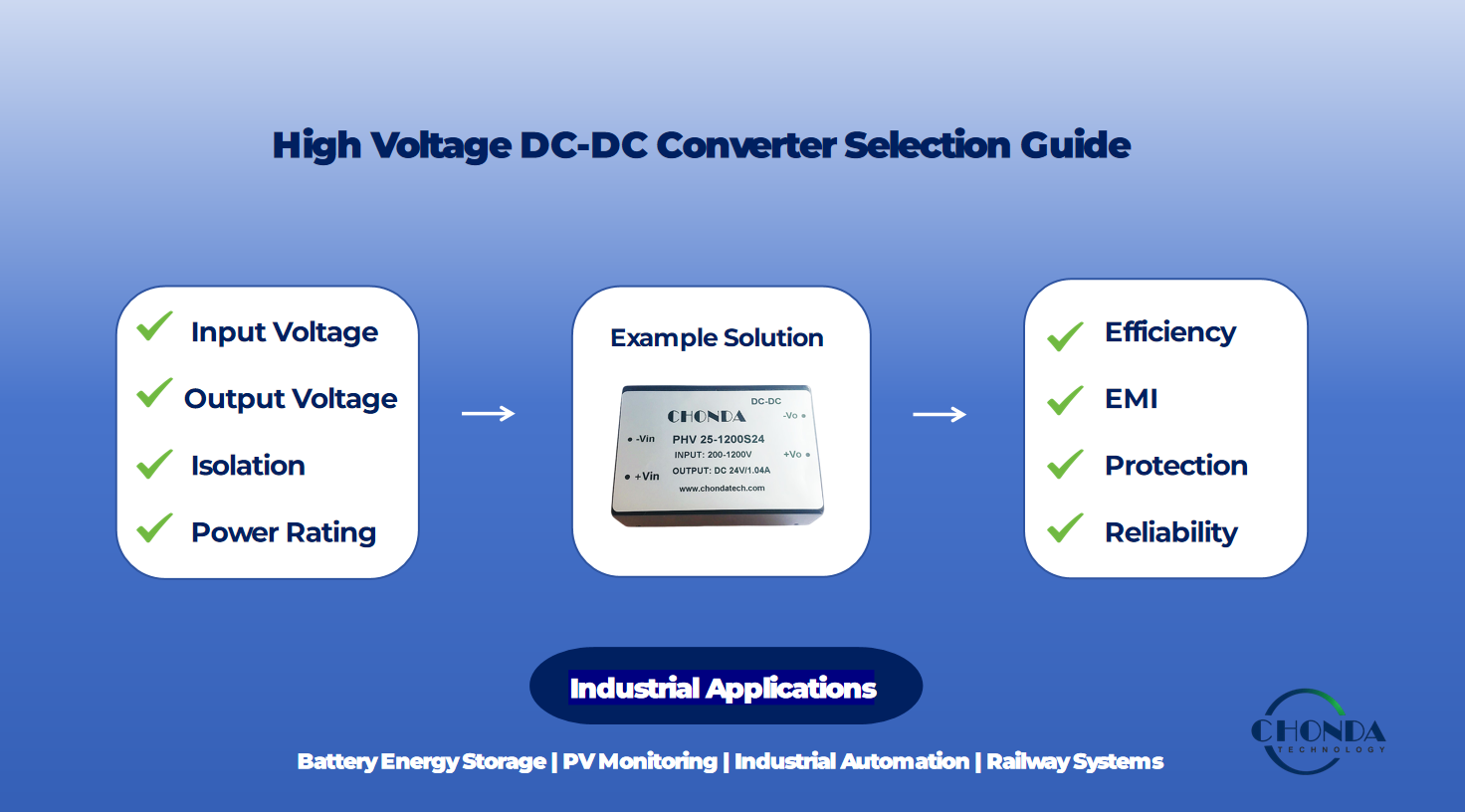
DC-DC Converter Selection Guide: Key Parameters for High Voltage Applications
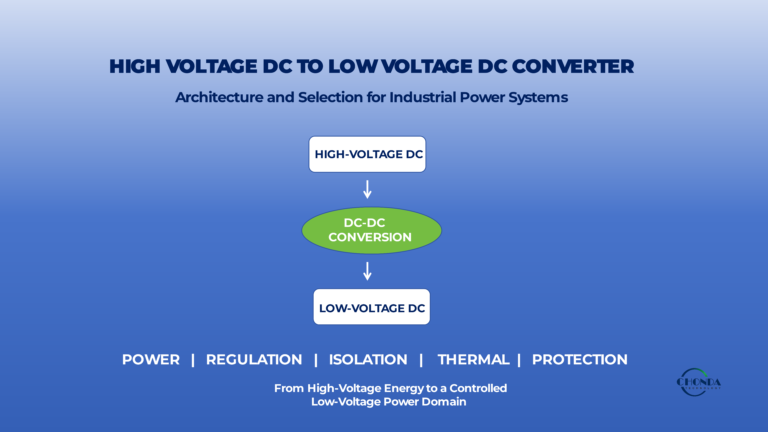
Modern industrial systems increasingly rely on high-voltage DC power sources such as battery energy storage systems (BESS), photovoltaic (PV) installations, industrial DC buses, and transportation power systems. At the same time, control electronics, communication equipment, sensors, and monitoring devices require stable, isolated, and regulated low-voltage DC power.
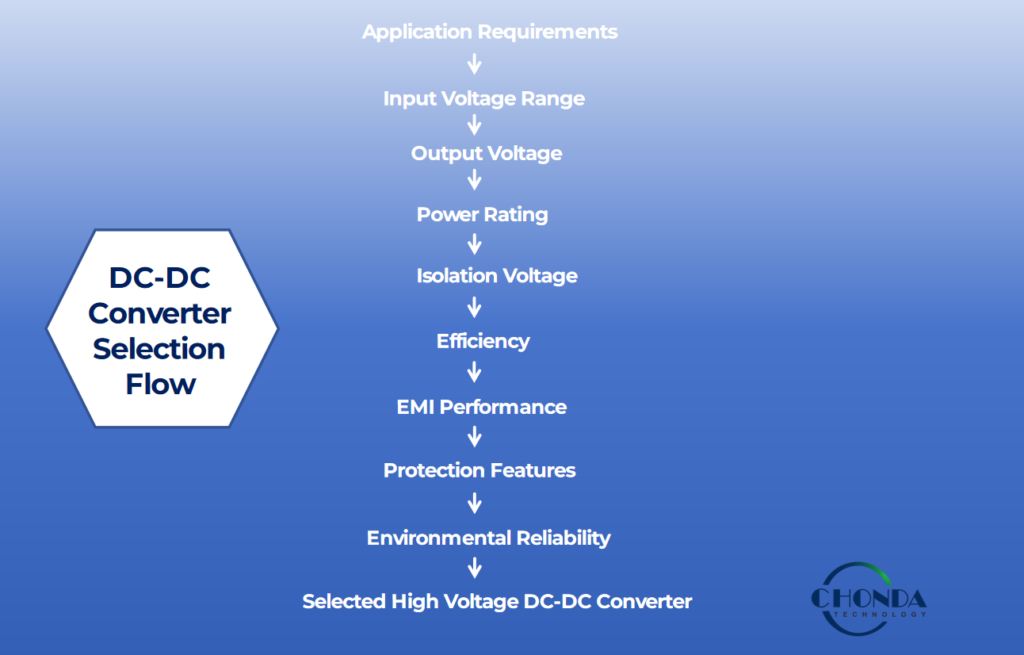
Selecting the right high voltage DC-DC converter is therefore much more than choosing an input and output voltage. Engineers must evaluate multiple technical parameters including input voltage range, output regulation, isolation performance, efficiency, electromagnetic compatibility (EMI), protection functions, and environmental reliability.
A properly selected DC-DC converter not only improves system stability and operational safety but also reduces maintenance costs and extends equipment lifetime in demanding industrial environments.
This selection guide explains the most important parameters engineers should consider when choosing a high voltage DC-DC converter for industrial applications, renewable energy systems, battery monitoring, and industrial automation.
1. Why Proper DC-DC Converter Selection Matters
Selecting the appropriate high voltage DC-DC converter is one of the most important decisions in industrial power system design. A converter is not simply a voltage conversion device—it directly affects system stability, electrical safety, operational efficiency, and long-term equipment reliability.
An unsuitable converter may lead to unstable output voltage, excessive heat generation, electromagnetic interference (EMI), premature component failure, or even complete system shutdown. For industrial applications operating under high voltage conditions, selecting the correct DC-DC converter is essential for ensuring safe and continuous operation.
The following sections explain why proper DC-DC converter selection is critical for modern high-voltage industrial applications.
1.1.System Reliability
Industrial equipment is expected to operate continuously for long periods under demanding environmental conditions. The performance of the DC-DC converter directly influences the reliability of the entire power system.
A properly selected converter provides:
- Stable output voltage under varying load conditions
- Reliable operation across wide input voltage ranges
- Consistent performance in harsh industrial environments
- Reduced maintenance requirements and system downtime
For applications such as battery energy storage systems (BESS), photovoltaic monitoring, and industrial automation, stable power conversion is essential to ensure uninterrupted operation of controllers, communication modules, and monitoring equipment.
1.2.Electrical Safety
High-voltage DC systems require careful consideration of electrical safety throughout the power conversion process.
A high-quality DC-DC converter should provide adequate electrical isolation between the high-voltage input and the low-voltage output, preventing dangerous voltages from reaching sensitive electronic equipment or personnel.
Proper converter selection helps achieve:
- Safe isolation between input and output circuits
- Reduced risk of electrical shock
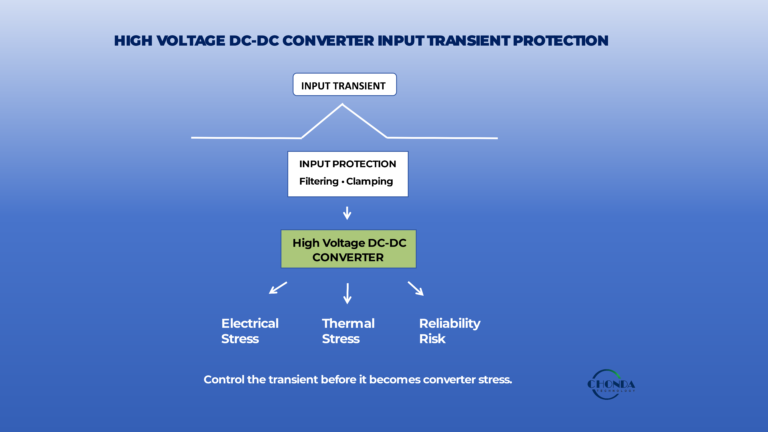
- Protection against voltage surges and transient events
- Compliance with industrial safety requirements
For systems operating at several hundred volts or above, electrical safety is not optional—it is a fundamental design requirement.
1.3.Long-Term Performance
Industrial power systems are often expected to operate reliably for many years with minimal maintenance. Selecting a converter designed for long-term operation helps reduce lifecycle costs and improves overall system availability.
Important factors affecting long-term performance include:
- High conversion efficiency
- Low thermal stress
- Robust protection functions
- Stable electrical characteristics over time
- Industrial-grade component quality
A well-designed high voltage DC-DC converter maintains stable performance throughout its service life, helping industrial equipment achieve higher reliability and lower operating costs.
2. Input Voltage Range
The input voltage range is one of the most important specifications when selecting a high voltage DC-DC converter. It determines whether the converter can operate reliably under normal operating conditions as well as during voltage fluctuations.
Industrial high-voltage DC sources rarely provide a perfectly constant voltage. Battery systems, photovoltaic arrays, industrial DC buses, and renewable energy applications all experience voltage variations caused by charging, discharging, environmental conditions, and load changes.
If the converter’s supported input range is too narrow, unstable operation or unexpected shutdowns may occur when the input voltage exceeds the allowable operating window.
Therefore, engineers should always select a converter whose input voltage range fully covers the expected operating conditions of the application.
2.1.Wide Input Voltage Capability
A wide input voltage range provides greater flexibility and improves system reliability by allowing the converter to continue operating during normal voltage fluctuations.
For example, battery energy storage systems and photovoltaic installations often experience significant changes in DC bus voltage during charging and discharging cycles.
Typical industrial input ranges include:
- 200–1200VDC
- 100–1000VDC
- 300–1500VDC (customized applications)
Selecting a converter with sufficient voltage margin helps prevent power interruptions while simplifying overall system design.
2.2.Matching the Actual Operating Voltage
Engineers should evaluate the actual voltage profile of the application instead of selecting a converter solely based on the nominal system voltage.
Factors that should be considered include:
- Maximum operating voltage
- Minimum operating voltage
- Voltage fluctuations during startup
- Battery charging and discharging conditions
- Safety margins required by the system
For example, a photovoltaic monitoring system may operate around 1000VDC under normal conditions but experience higher or lower voltages depending on solar irradiation and system operating status.
A converter that supports the complete operating voltage range provides more stable and reliable power for downstream electronic equipment.
2.3.Example: CHONDA PHV25-1200S24
The CHONDA PHV25-1200S24 high voltage DC-DC converter module supports an ultra-wide 200–1200VDC input range, making it suitable for a variety of industrial applications including battery energy storage systems, photovoltaic monitoring equipment, industrial automation, and high-voltage DC power systems.
Its wide input capability reduces the need for multiple converter models while providing stable and regulated 24VDC output across varying operating conditions.
3. Output Voltage and Power Rating
Selecting the correct output voltage and power rating is another essential step when choosing a high voltage DC-DC converter for industrial applications.
The converter must provide a stable DC output that matches the requirements of the connected electronic equipment while delivering sufficient power under both normal and peak operating conditions.
Choosing an output voltage that is too low, too high, or an insufficient power rating may result in unstable operation, reduced efficiency, overheating, or unexpected system failures.
Engineers should therefore evaluate both voltage compatibility and total power consumption before selecting a DC-DC converter module.
3.1.Selecting the Correct Output Voltage
Most industrial electronic equipment operates on standardized low-voltage DC power rails.
Common output voltages include:
- 12VDC
- 24VDC
- 48VDC
Among these, 24VDC has become the most widely used industrial control voltage because it provides an excellent balance between safety, efficiency, and compatibility with industrial equipment.
Typical 24VDC loads include:
- PLC controllers
- Industrial sensors
- Communication modules
- Monitoring equipment
- Relay control circuits
Selecting the correct output voltage ensures stable operation of downstream electronic devices while simplifying overall system integration.
3.2.Determining the Required Power Rating
The converter’s power rating should be selected based on the total power consumption of all connected loads rather than the average operating power alone.
Engineers should consider:
- Continuous operating power
- Peak startup current
- Future system expansion
- Safety margin
As a general engineering practice, selecting a converter with approximately 20–30% additional power capacity helps improve long-term reliability and reduces thermal stress during operation.
For example, if the total load requires approximately 18W, selecting a 25W DC-DC converter provides additional operating margin and improves system stability.
3.3.Example: PHV25-1200S24
The PHV25-1200S24 delivers a regulated 24VDC output with a 25W power rating, making it suitable for powering industrial monitoring equipment, PLC controllers, communication devices, and battery monitoring systems.
Its combination of a wide 200–1200VDC input range and stable 24VDC output allows the module to support applications such as:
- PV monitoring systems
- Battery energy storage systems (BESS)
- Industrial automation
- High-voltage DC control systems
By matching both the required output voltage and sufficient power capacity, engineers can improve system reliability while reducing the risk of overload and unexpected downtime.
4. Isolation Voltage
Electrical isolation is one of the most critical specifications when selecting a high voltage DC-DC converter for industrial applications.
Isolation voltage defines the maximum voltage that the converter can safely withstand between its input and output circuits while maintaining complete electrical separation.
In industrial high-voltage systems, proper isolation helps protect low-voltage electronic equipment from dangerous voltage levels, electrical faults, and transient events.
Selecting a converter with an appropriate isolation voltage rating improves both system safety and long-term operational reliability.
4.1.Choosing the Right Isolation Voltage
The required isolation voltage depends on several factors, including:
- Maximum system operating voltage
- Application environment
- Industry safety requirements
- Expected surge and transient conditions
Typical isolation voltage ratings include:
- 1000VAC
- 1500VAC
- 3000VAC
Higher isolation ratings generally provide greater protection for industrial applications operating under demanding electrical conditions.
Engineers should always select an isolation voltage that meets both the electrical characteristics of the system and applicable safety standards.
4.2.Why Isolation Voltage Matters
Selecting an insufficient isolation voltage may increase the risk of insulation breakdown, electrical faults, and equipment damage.
A properly rated isolation barrier helps:
- Improve operator safety
- Protect sensitive electronic circuits
- Reduce electrical fault propagation
- Increase long-term system reliability
For applications such as battery energy storage systems (BESS), photovoltaic monitoring platforms, and industrial automation equipment, isolation voltage is often one of the first parameters evaluated during converter selection.
4.3.Learn More About Isolation Design
Isolation voltage is only one part of a complete electrical isolation design.
Other important factors—including galvanic isolation, isolation transformer design, creepage distance, and insulation performance—also influence converter safety and reliability.
👉 Learn more in our article High Voltage DC-DC Converter Isolation Design: Principles and Applications.
5. Efficiency and Thermal Performance
Power conversion efficiency is another key factor when selecting a high voltage DC-DC converter for industrial applications.
During the conversion process, a portion of the input energy is inevitably lost as heat. The higher the converter efficiency, the less energy is dissipated, resulting in lower operating temperatures and improved overall system performance.
For industrial equipment that operates continuously, even a small improvement in conversion efficiency can significantly reduce heat generation and extend the service life of both the converter and surrounding electronic components.
5.1.Why High Efficiency Matters
A high-efficiency DC-DC converter offers several important advantages:
- Reduced power loss
- Lower operating temperature
- Improved energy utilization
- Higher overall system reliability
- Reduced cooling requirements
These benefits become especially important in applications such as battery energy storage systems, photovoltaic monitoring equipment, industrial automation, and railway electronics where equipment often operates continuously for many years.
5.2.Thermal Management
Heat is one of the primary factors affecting the long-term reliability of electronic equipment.
If a DC-DC converter operates continuously at elevated temperatures, excessive thermal stress may reduce component lifetime and increase the probability of unexpected failures.
When selecting a converter, engineers should evaluate:
- Operating ambient temperature
- Available cooling conditions
- Installation location
- Airflow inside the equipment enclosure
- Continuous operating load
Proper thermal management allows the converter to maintain stable performance while reducing maintenance requirements over its operational lifetime.
5.3.Power Derating Considerations
Industrial DC-DC converters are often required to operate under varying environmental conditions.
As ambient temperature increases, many converters gradually reduce their maximum available output power in order to protect internal components. This behavior is commonly referred to as power derating.
Engineers should therefore avoid operating a converter continuously at its maximum rated output.
Selecting a converter with an appropriate power margin helps:
- Reduce thermal stress
- Improve long-term reliability
- Increase operational stability
- Extend equipment lifetime
For many industrial applications, maintaining approximately 20–30% power margin is considered good engineering practice.
5.4.Example: PHV25-1200S24
The PHV25-1200S24 is designed for continuous industrial operation with efficient power conversion and optimized thermal performance.
Its efficient design helps reduce heat generation while maintaining a stable 24VDC output under high-voltage operating conditions.
When combined with proper thermal management and sufficient power margin, the PHV25-1200S24 supports long-term, reliable operation in demanding industrial environments.
6. EMI Performance
Electromagnetic interference (EMI) is an important consideration when selecting a high voltage DC-DC converter for industrial applications.
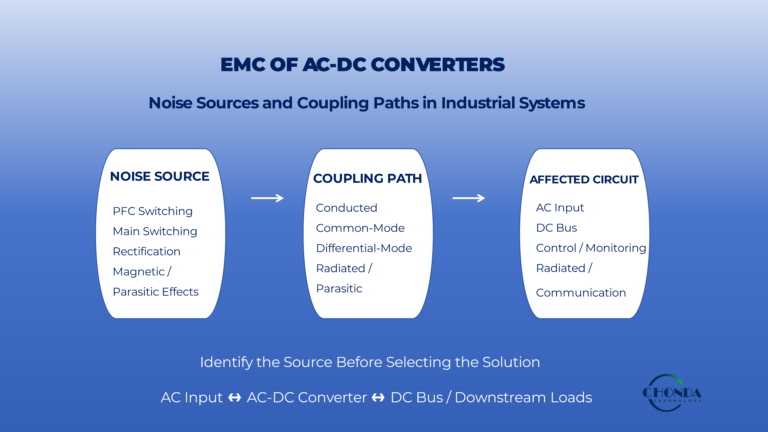
During high-frequency switching, DC-DC converters generate electrical noise that may interfere with nearby electronic equipment, communication systems, and sensitive measurement devices.
If EMI is not properly controlled, it can reduce system stability, affect signal integrity, and lead to communication errors or unexpected equipment behavior.
Selecting a converter with good EMI performance helps ensure reliable operation in complex industrial environments where multiple electronic systems operate simultaneously.
6.1.Why EMI Matters
Modern industrial systems often integrate multiple electronic devices that operate simultaneously, including PLC controllers, communication modules, sensors, monitoring equipment, and industrial control systems.
If excessive electromagnetic interference is generated by the power supply, it may result in:
- Communication failures
- Sensor signal distortion
- Unstable controller operation
- Reduced system accuracy
- Unexpected equipment shutdown
For applications such as battery energy storage systems (BESS), photovoltaic monitoring systems, and industrial automation, maintaining low EMI levels is essential for ensuring reliable communication and accurate data acquisition.
6.2.Selecting a Low EMI DC-DC Converter
When selecting a high voltage DC-DC converter, engineers should evaluate its electromagnetic compatibility (EMC) performance rather than considering output voltage and efficiency alone.
A converter with good EMI characteristics typically includes:
- Optimized switching topology
- Effective input and output filtering
- Proper PCB layout design
- Stable isolation structure
- Compliance with relevant EMC standards
These design features help minimize conducted and radiated emissions while improving overall system stability.
For industrial environments containing multiple electronic devices, selecting a converter with low EMI performance can significantly reduce troubleshooting and maintenance costs.
6.3.Example: PHV25-1200S24
The PHV25-1200S24 is designed with industrial applications in mind, combining stable power conversion with optimized electromagnetic performance.
Its converter architecture and isolation design help reduce electrical noise coupling between the high-voltage input and low-voltage control circuits, supporting stable operation of PLC controllers, communication modules, sensors, and monitoring equipment.
For applications requiring additional EMC optimization, external filtering and proper grounding practices can further improve overall system performance.
Learn more about practical EMI reduction methods in our article How to Reduce EMI in PV Monitoring Systems.
7. Protection Features
Protection features are essential for ensuring the safe and reliable operation of high voltage DC-DC converters in industrial environments.
Unexpected electrical faults such as voltage surges, overloads, short circuits, or excessive temperatures can damage electronic components and interrupt system operation.
Selecting a converter with comprehensive protection functions helps improve equipment safety, reduce maintenance costs, and increase long-term system reliability.
When evaluating a high voltage DC-DC converter, engineers should review the available protection mechanisms as carefully as they evaluate electrical performance.
7.1.Over-Voltage Protection (OVP)
Over-voltage protection (OVP) prevents excessive output voltage from damaging downstream electronic equipment.
If the output voltage exceeds the specified operating range due to abnormal operating conditions or internal faults, the protection circuit automatically limits or shuts down the converter to protect connected devices.
OVP is particularly important for industrial controllers, communication modules, and monitoring equipment that require stable low-voltage DC power.
7.2.Over-Current Protection (OCP)
Over-current protection (OCP) monitors the output current and prevents excessive current from damaging the converter or connected loads.
When the output current exceeds the designed operating limit, the converter automatically limits or interrupts the current to protect internal power components.
Effective over-current protection helps reduce the risk of overheating and improves the overall reliability of industrial power systems.
7.3.Short-Circuit Protection
Short-circuit conditions may occur because of wiring faults, equipment failures, or unexpected installation errors.
A high-quality DC-DC converter should be capable of detecting short-circuit conditions and protecting both the converter and connected equipment by automatically limiting output current or temporarily shutting down the output.
This feature significantly reduces the risk of permanent equipment damage and simplifies maintenance after fault recovery.
7.4.Over-Temperature Protection (OTP)
Continuous operation under heavy loads or high ambient temperatures may increase the internal temperature of the converter.
Over-temperature protection (OTP) continuously monitors thermal conditions and automatically reduces power or shuts down the converter if the temperature exceeds safe operating limits.
Combined with proper thermal management, OTP helps extend component lifetime and ensures reliable operation in demanding industrial environments.
Example: PHV25-1200S24
The PHV25-1200S24 is designed for reliable industrial operation and incorporates protection mechanisms that help improve operational safety under high-voltage conditions.
When integrated into properly designed industrial systems, the module supports stable power conversion while helping reduce the risks associated with overload, abnormal operating conditions, and long-term continuous operation.
Engineers should always combine converter protection features with appropriate system-level protection devices and installation practices to achieve maximum reliability.
8. Environmental Reliability
Industrial applications often operate under harsh environmental conditions where temperature, humidity, vibration, dust, and continuous operation place significant demands on power conversion equipment.
A high voltage DC-DC converter should not only provide stable electrical performance but also maintain reliable operation throughout its service life under these challenging conditions.
When selecting a converter, engineers should carefully evaluate its environmental specifications to ensure compatibility with the intended application.
8.1.Operating Temperature Range
Operating temperature is one of the most important environmental specifications for industrial DC-DC converters.
Industrial equipment may be installed inside electrical cabinets, outdoor enclosures, renewable energy systems, or transportation equipment where ambient temperatures vary considerably.
A converter designed for industrial applications should maintain stable output performance throughout its specified operating temperature range without compromising reliability or efficiency.
Engineers should also consider internal cabinet temperatures, which are often significantly higher than the surrounding environment.
8.2.Humidity and Mechanical Stress
Industrial environments frequently expose electronic equipment to high humidity, vibration, and mechanical shock.
Applications such as battery energy storage systems, railway equipment, and industrial automation may experience continuous vibration during normal operation.
Selecting a converter designed for industrial environments helps improve resistance to:
- High humidity
- Mechanical vibration
- Electrical cabinet movement
- Long-term continuous operation
These characteristics contribute to greater system stability and reduced maintenance requirements.
8.3.Long-Term Industrial Reliability
A high voltage DC-DC converter is often expected to operate continuously for many years with minimal maintenance.
Long-term reliability depends not only on electrical performance but also on component quality, thermal design, environmental protection, and manufacturing consistency.
When evaluating industrial DC-DC converters, engineers should consider:
- Industrial-grade components
- Stable long-term performance
- Reliable manufacturing quality
- Consistent electrical characteristics
- Suitable environmental specifications
Selecting a converter designed specifically for industrial applications helps reduce lifecycle costs while improving overall system availability.
8.4.Example: PHV25-1200S24
The PHV25-1200S24 is developed for industrial applications requiring reliable operation under demanding environmental conditions.
Its industrial-oriented design combines stable power conversion, electrical isolation, optimized thermal performance, and robust protection features to support long-term operation in high-voltage power systems.
When properly integrated into industrial equipment, the PHV25-1200S24 provides dependable DC power for control, monitoring, and communication systems while helping improve overall system reliability.
9. CHONDA High Voltage DC-DC Converter Solution
Selecting the right high voltage DC-DC converter requires balancing multiple technical factors, including input voltage range, output stability, isolation performance, conversion efficiency, EMI characteristics, protection functions, and long-term environmental reliability.
Based on these engineering requirements, CHONDA provides a range of high voltage DC-DC converter modules designed for industrial applications that require stable, isolated, and efficient power conversion.
Our high voltage DC-DC converter solutions support a wide range of applications, including:
- Battery Energy Storage Systems (BESS)
- Photovoltaic (PV) Monitoring Systems
- Industrial Automation
- High-Voltage DC Control Systems
- Smart Energy Monitoring Equipment
9.1.PHV25-1200S24 High Voltage DC-DC Converter Module
One representative solution is the PHV25-1200S24, which is designed for industrial systems requiring reliable DC power conversion from high-voltage DC sources.
Key features include:
- Ultra-wide 200–1200VDC input range
- Stable 24VDC regulated output
- 25W output power
- Electrical isolation for industrial safety
- Optimized efficiency and thermal performance
- Industrial-grade reliability for long-term operation
These features make the PHV25-1200S24 suitable for engineers seeking a dependable power solution for demanding industrial environments.
👉 Explore the PHV25-1200S24 product details
9.2.Custom High Voltage DC-DC Converter Solutions
Every industrial application has unique power requirements. In addition to our standard product series, CHONDA also provides customized high voltage DC-DC converter solutions to meet specific project needs.
Customization options include:
- Input voltage range
- Output voltage
- Output power
- Isolation requirements
- Mechanical dimensions
- Connector configuration
- Protection functions
Whether your application involves renewable energy, industrial control, battery monitoring, or other high-voltage systems, our engineering team can support customized power conversion solutions based on your project requirements.
👉 Learn more about our Custom High Voltage DC-DC Converter solutions
10. Conclusion
Selecting the right high voltage DC-DC converter is essential for building safe, reliable, and efficient industrial power systems.
Engineers should evaluate multiple factors—including input voltage range, output voltage, power rating, isolation performance, efficiency, EMI characteristics, protection functions, and environmental reliability—rather than focusing on a single specification.
A well-selected DC-DC converter not only improves overall system performance but also reduces maintenance costs and extends equipment lifetime in demanding industrial applications.
Whether your project involves battery energy storage systems (BESS), photovoltaic monitoring, industrial automation, or other high-voltage DC applications, choosing the appropriate converter helps ensure long-term operational stability.
If you are looking for industrial-grade high voltage DC-DC converter solutions or require customized power conversion modules, CHONDA offers a wide range of standard and custom products to support your project requirements.