We help the world since 2012

How to Select a High Voltage DC-DC Converter Module for Industrial Applications
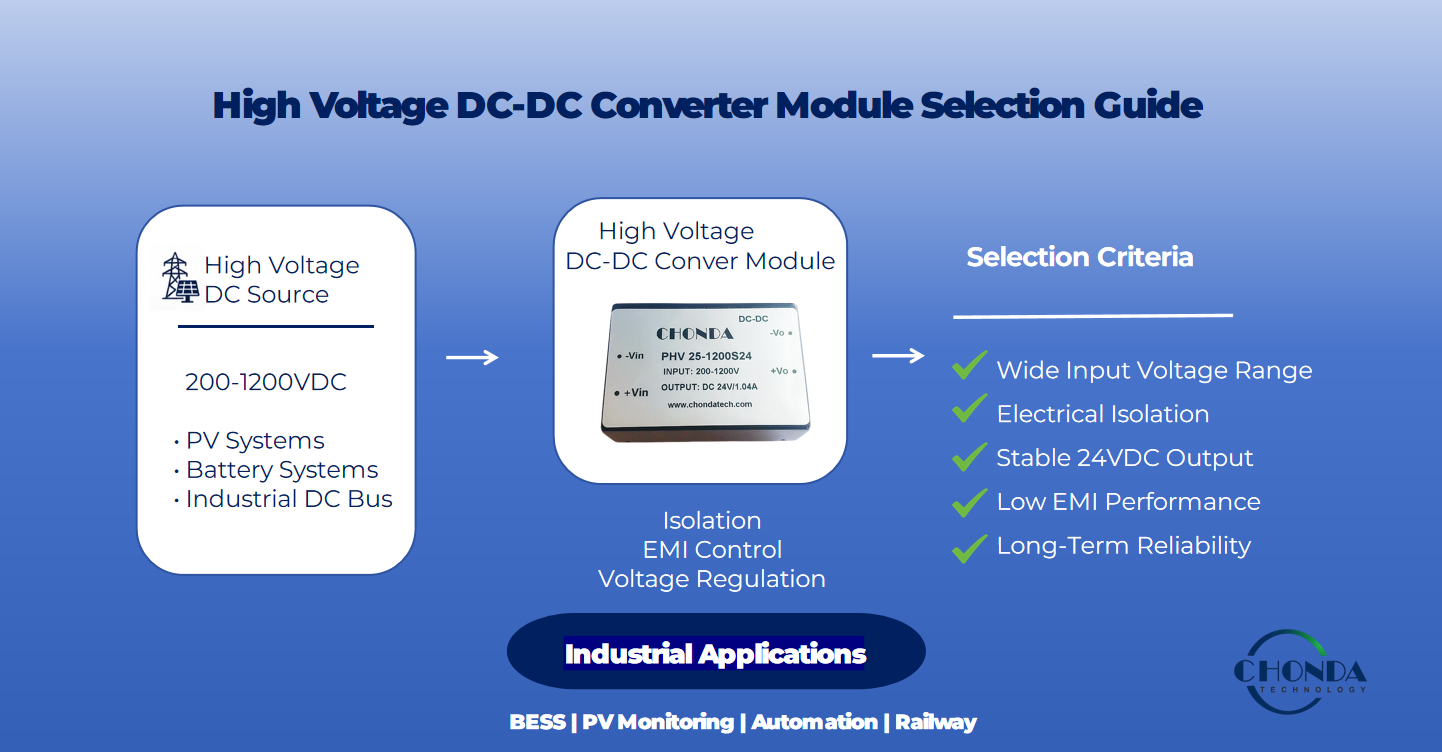
Selecting the right high voltage DC-DC converter module is a critical step in designing reliable industrial power systems. Modern industrial equipment increasingly relies on high voltage DC sources, including battery systems, renewable energy platforms, industrial DC buses, and transportation applications. However, many control systems, sensors, communication devices, and monitoring equipment require stable low voltage DC power supplies, such as 12VDC or 24VDC.
A high voltage DC-DC converter module provides the essential power conversion interface between high voltage DC sources and low voltage electronic loads. The selected converter directly affects system reliability, electrical safety, electromagnetic compatibility, and long-term operating performance.
When choosing a high voltage DC-DC converter module for industrial applications, engineers need to evaluate multiple factors, including input voltage range, isolation capability, output stability, EMI performance, efficiency, thermal management, and environmental reliability. This article explains the key selection criteria for high voltage DC-DC converter module
1. What Is a High Voltage DC-DC Converter Module?
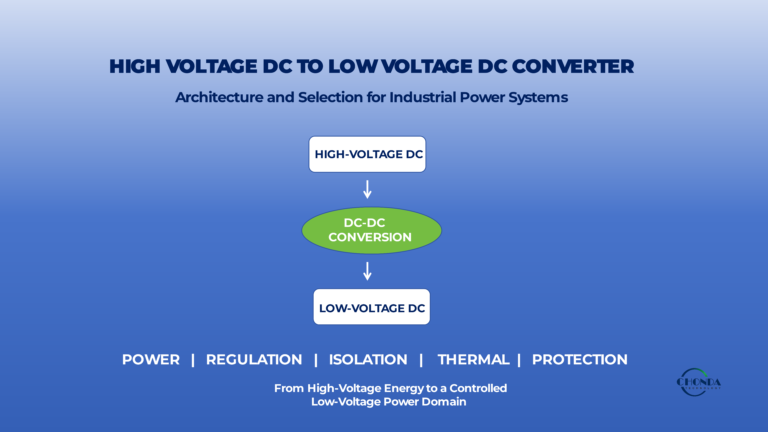
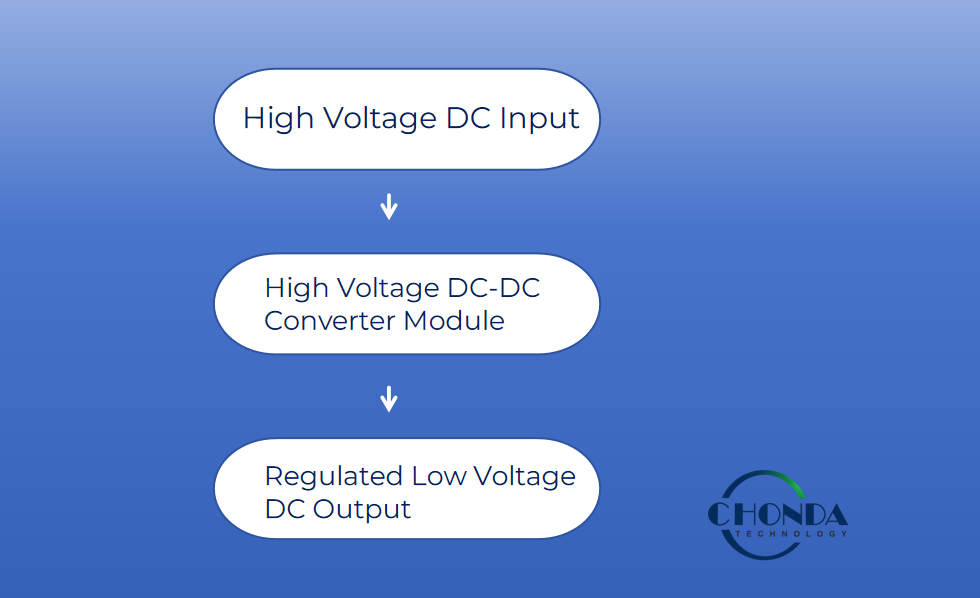
A high voltage DC-DC converter module is a compact power conversion device designed to convert high-voltage DC input into a regulated low-voltage DC output for electronic control, monitoring, and communication systems.
Unlike conventional DC-DC converters, high voltage DC-DC converter modules are specifically engineered to operate with higher input voltage levels, typically ranging from several hundred volts to over 1000VDC.
These modules are commonly used as an isolated power interface between high-voltage energy systems and low-voltage electronic circuits. They integrate power conversion, voltage regulation, protection functions, and electrical isolation into a compact industrial-grade solution.
For industrial applications, selecting the right converter module is important because the power supply directly influences system safety, reliability, electromagnetic compatibility (EMI), and long-term operating stability.
A typical high voltage DC-DC converter module performs three essential functions:
1.1. High Voltage Input Conversion
The first function of a high voltage DC-DC converter module is to accept power from high-voltage DC sources and convert it into a usable voltage level for electronic systems.
Industrial applications may include:
- High voltage battery packs
- Photovoltaic systems
- Energy storage systems
- Industrial DC buses
- Railway power systems
These power sources often operate at hundreds of volts or higher, while control electronics usually require much lower DC voltages.
A suitable converter module provides an efficient interface between the high-voltage power source and low-voltage control circuits.
1.2. Stable Voltage Regulation
High voltage DC sources do not always provide a constant voltage level.
Voltage variations may occur due to:
- Battery charging and discharging conditions
- Solar irradiation changes
- Load switching operations
- Industrial operating conditions
A high voltage DC-DC converter module regulates the output voltage to ensure stable power for sensitive electronic devices.
Typical outputs include:
- 12VDC
- 24VDC
- 48VDC
- Customized DC voltages
Stable output power helps maintain continuous operation of:
- PLC controllers
- BMS systems
- Sensors
- Communication modules
- Monitoring equipment
1.3. Electrical Isolation and Protection
Electrical isolation is one of the most important requirements in high voltage DC applications.
A high voltage DC-DC converter module separates the high-voltage input side from the low-voltage output side through isolation technology, improving system safety and protecting connected electronics.
Industrial-grade modules may include protection features such as:
- Over-voltage protection
- Over-current protection
- Short-circuit protection
- Thermal protection
- EMI suppression design
These functions help ensure reliable operation in demanding industrial environments.
2. Key Factors When Selecting a High Voltage DC-DC Converter Module
Selecting a high voltage DC-DC converter module requires careful evaluation of electrical performance, system requirements, and environmental conditions.
A suitable converter module should not only provide the required voltage conversion but also ensure stable operation under high voltage, variable load, and demanding industrial environments.
The following factors are essential when selecting a high voltage DC-DC converter module for industrial applications.
2.1. Input Voltage Range
A wide and suitable input voltage range is one of the most important factors when selecting a high voltage DC-DC converter module.
Industrial power systems often experience voltage variations due to battery charging conditions, load changes, or operating fluctuations. Therefore, the converter should be able to maintain stable performance across the expected input voltage range.
For example, applications using high voltage battery systems or renewable energy sources may require converters supporting hundreds of volts or even over 1000VDC input.
A properly selected input voltage range improves system flexibility and prevents converter failure caused by voltage instability.
2.2. Output Voltage Requirements
The output voltage of a DC-DC converter module must match the requirements of the connected electronic devices.
Many industrial control and monitoring systems require stable low voltage DC outputs, such as:
- 12VDC
- 24VDC
- 48VDC
Typical loads include:
- PLC controllers
- Sensors
- Communication modules
- Monitoring devices
Choosing the correct output voltage ensures reliable operation of downstream electronics and avoids additional voltage regulation stages.
2.3. Isolation Performance
Electrical isolation is critical in high voltage DC applications where safety and signal integrity are important.
An isolated high voltage DC-DC converter module separates the high voltage input side from the low voltage output side, reducing safety risks and protecting sensitive electronic components.
Isolation performance helps improve:
- Electrical safety
- Noise immunity
- System reliability
For industrial environments with high voltage battery systems or power electronics, appropriate isolation capability is an essential design requirement.
2.4. EMI Performance
Electromagnetic interference (EMI) performance is an important consideration when selecting a high voltage DC-DC converter module for industrial applications.
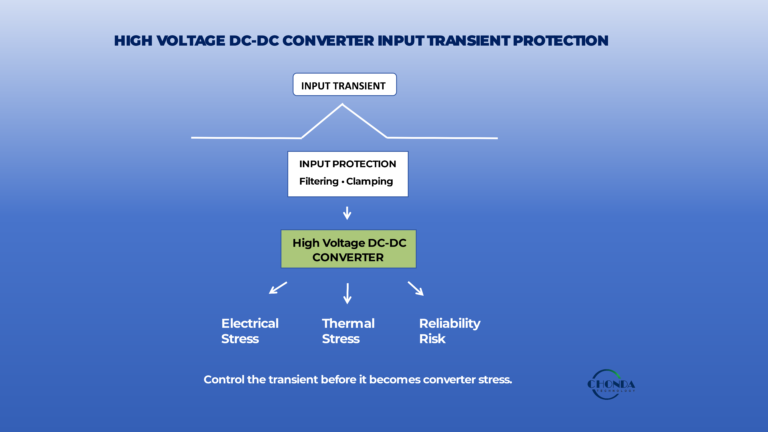
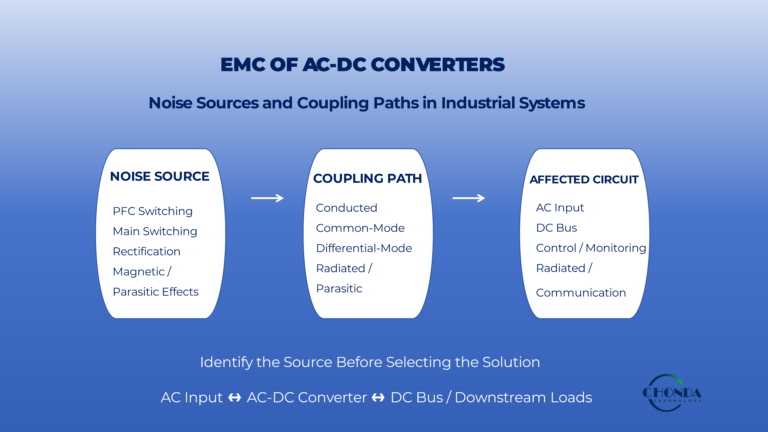
High voltage systems often contain power electronics such as converters, inverters, and switching devices that generate electrical noise during operation. Without proper EMI control, this noise may affect communication signals, sensors, and control systems.
A well-designed DC-DC converter module should include effective EMI suppression features to minimize interference and maintain stable system operation.
Good EMI performance helps improve:
- Communication reliability
- Signal integrity
- System stability
- Compatibility with sensitive electronic equipment
For applications involving PLC communication, monitoring systems, or industrial automation, low EMI design is especially important.
For PV monitoring applications, EMI reduction strategies are discussed in detail in our article How to Reduce EMI in PV Monitoring Systems.
2.5. Efficiency and Thermal Management
Efficiency and thermal management are critical factors for the long-term performance of high voltage DC-DC converter modules.
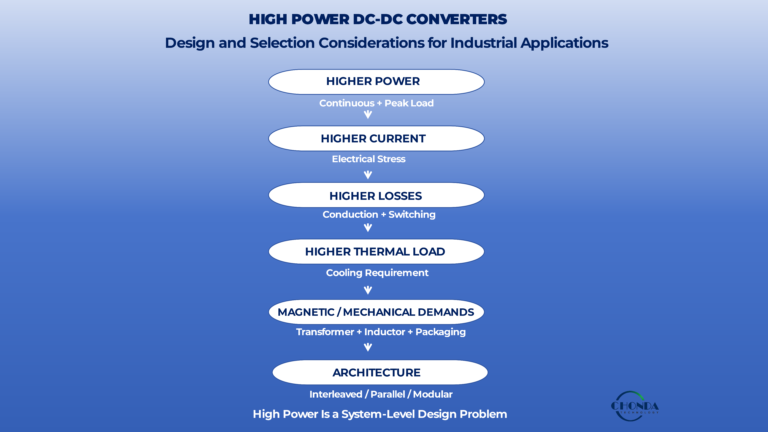
During power conversion, a certain amount of energy is lost as heat. In industrial environments, excessive heat generation may reduce efficiency, shorten component lifetime, and affect system reliability.
When selecting a converter module, engineers should consider:
- Conversion efficiency
- Operating temperature range
- Thermal design
- Cooling requirements
A high-efficiency DC-DC converter module reduces power losses and helps maintain stable operation in continuous-duty applications.
For industrial systems operating in harsh environments, proper thermal management is essential to ensure reliable performance over the entire product lifetime.
2.6. Protection Features and Long-Term Reliability
Industrial power systems require DC-DC converter modules that can operate reliably under changing electrical and environmental conditions.
A suitable high voltage DC-DC converter module should include protection functions to prevent damage caused by abnormal operating conditions.
Common protection features include:
- Over-voltage protection
- Over-current protection
- Short-circuit protection
- Over-temperature protection
In addition to electrical protection, engineers should also evaluate long-term reliability factors such as:
- Component quality
- Operating temperature capability
- Mechanical design
- Environmental resistance
Selecting a reliable converter module reduces maintenance requirements and improves the overall availability of industrial systems.
3. Applications of High Voltage DC-DC Converter Modules
High voltage DC-DC converter modules are widely used in industrial systems where high voltage DC sources need to supply stable power for control, monitoring, and communication electronics.
From renewable energy systems to industrial automation and transportation applications, these converter modules provide an essential interface between high voltage power sources and low voltage electronic loads.
Typical applications include:
3.1.Industrial Automation
Industrial automation systems often include PLC controllers, sensors, communication modules, and control devices that require stable low voltage DC power.
However, many industrial machines and equipment operate with high voltage DC buses or battery-based power systems. A high voltage DC-DC converter module enables reliable power conversion from these high voltage sources to regulated DC outputs required by control electronics.
Key requirements in industrial automation applications include:
- Stable output voltage
- Low EMI interference
- High reliability
- Compact integration
Reliable DC power helps maintain continuous operation of industrial control systems and improves overall equipment availability.
3.2.Battery Energy Storage Systems (BESS)
Battery Energy Storage Systems typically operate with high voltage battery packs that require multiple monitoring and control components.
Devices such as:
- Battery Management Systems (BMS)
- Monitoring controllers
- Communication modules
- Safety monitoring devices
often require isolated low voltage DC power supplies.
A high voltage DC-DC converter module provides the necessary power conversion between high voltage battery systems and low voltage control electronics.
Important considerations for BESS applications include:
- Wide input voltage capability
- Electrical isolation
- Long-term reliability
- Protection against voltage fluctuations
Learn more about power supply considerations for battery monitoring applications in our article Power Supply Design for BESS Monitoring Systems.
3.3.PV Monitoring Systems
Photovoltaic monitoring systems often require reliable power supplies for communication, measurement, and control devices installed in high voltage solar environments.
Components such as:
- String monitoring units
- Combiner box monitoring systems
- Data acquisition equipment
may operate alongside high voltage PV arrays.
A high voltage DC-DC converter module converts energy from high voltage DC sources into stable low voltage power for monitoring electronics, helping maintain accurate data collection and system communication.
Key requirements include:
- Wide DC input range
- Low EMI performance
- Stable 24VDC output
- High isolation capability
3.4.Railway Systems
Railway and transportation systems often use high voltage DC power networks and require reliable auxiliary power supplies for control and monitoring equipment.
High voltage DC-DC converter modules are used to provide regulated power for:
- Control systems
- Communication equipment
- Monitoring devices
- Auxiliary electronics
In railway environments, converter modules must withstand demanding conditions, including:
- Voltage variations
- Electrical noise
- Temperature changes
- Long operating periods
High reliability and robust protection design are essential for continuous railway operation.
For more information about DC-DC power supply design in PV monitoring applications, see our guide on How to Select a DC-DC Converter for PV Monitoring Applications.
4. CHONDA High Voltage DC-DC Converter Module Solution
After understanding the basic principles of high voltage DC-DC converters, engineers can evaluate module selection criteria for specific applications. Based on the requirements of industrial high voltage power systems, CHONDA provides high voltage DC-DC converter modules designed for applications requiring wide input voltage capability, electrical isolation, low EMI performance, and stable DC output.
The PHV series is developed to support high voltage DC applications where reliable power conversion is required for monitoring, control, and communication electronics.
For systems using high voltage DC sources, the converter module acts as a reliable power interface between the energy source and low voltage electronic loads.
4.1.PHV25-1200S24 High Voltage DC-DC Converter Module for Industrial Applications
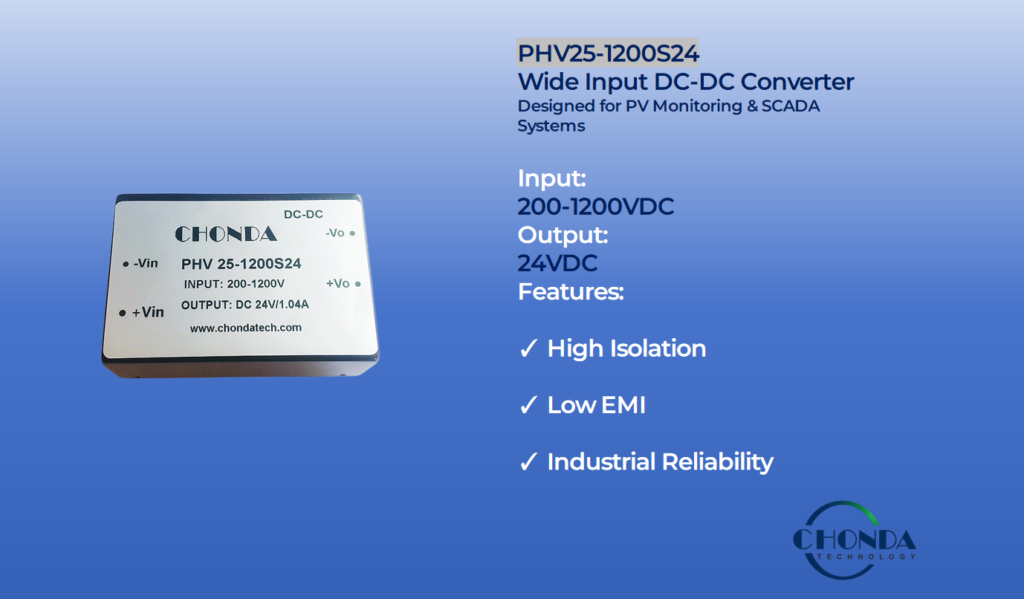
CHONDA PHV25-1200S24 high voltage DC-DC converter module is designed for applications requiring wide input voltage capability, electrical isolation, and stable 24VDC output.
The module supports a wide input voltage range of 200-1200VDC, making it suitable for systems with high voltage batteries, photovoltaic systems, renewable energy sources, and industrial DC buses.
Key features include:
- Wide 200-1200VDC input range
- Regulated 24VDC output
- High electrical isolation
- Low EMI design
- Industrial-grade reliability
- Compact module design
For more information about our high voltage DC-DC converter products, please visit:
High Voltage DC-DC Converter Modules
4.2.Typical Applications
The PHV25-1200S24 can be integrated into various industrial systems, including:
- PV monitoring systems
- Battery energy storage systems (BESS)
- Industrial automation equipment
- High voltage battery applications
- Industrial monitoring and control systems
By providing stable and isolated DC power, the PHV25-1200S24 helps ensure reliable operation of critical electronic components in high voltage environments.
Learn more about power supply considerations for battery monitoring applications in our article Power Supply Design for BESS Monitoring Systems.
4.3.Why Choose CHONDA High Voltage DC-DC Converter Modules?
When selecting a high voltage DC-DC converter module, engineers need a solution that balances electrical performance, reliability, and application requirements.
CHONDA focuses on providing:
- Flexible voltage customization
- Application-oriented power solutions
- Stable industrial performance
- Technical support for integration requirements
Our high voltage DC-DC converter modules are designed to support engineers developing reliable power architectures for demanding industrial environments.
5. Conclusion
Selecting the right high voltage DC-DC converter module is essential for building reliable industrial power systems.
Engineers need to consider multiple factors, including input voltage range, output requirements, isolation performance, EMI characteristics, efficiency, thermal management, and long-term reliability.
A properly designed converter module provides a stable power interface between high voltage DC sources and low voltage electronic systems, supporting applications such as industrial automation, battery energy storage systems, PV monitoring, and railway systems.
CHONDA PHV25-1200S24 high voltage DC-DC converter module provides a wide 200-1200VDC input range with isolated 24VDC output, offering a reliable power solution for demanding industrial environments.
By selecting a suitable high voltage DC-DC converter module, engineers can improve system safety, reliability, and overall performance.
Contact CHONDA for customized high voltage DC-DC converter solutions.
Related Articles
What Is a High Voltage DC-DC Converter? Design Principles and Applications
How to Select a DC-DC Converter for PV Monitoring Applications