We help the world since 2012

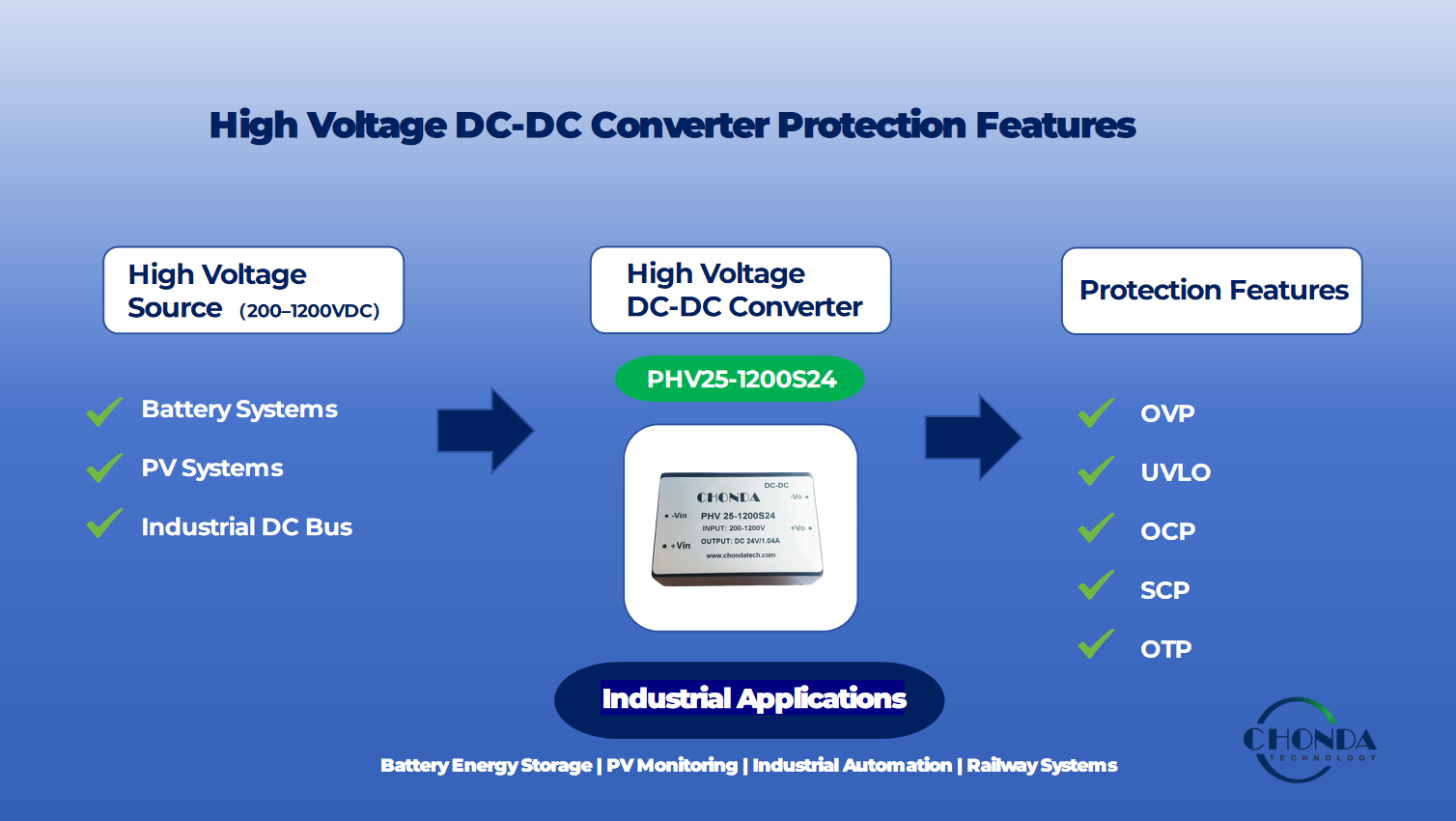
High Voltage DC-DC Converter Protection Features: Essential Functions for Reliable Industrial Systems
High voltage DC-DC converters are widely used in industrial applications such as battery energy storage systems (BESS), photovoltaic monitoring equipment, industrial automation, and railway power systems. In these environments, stable power conversion alone is not enough. Reliable protection functions are equally important to ensure long-term system safety and operational stability.
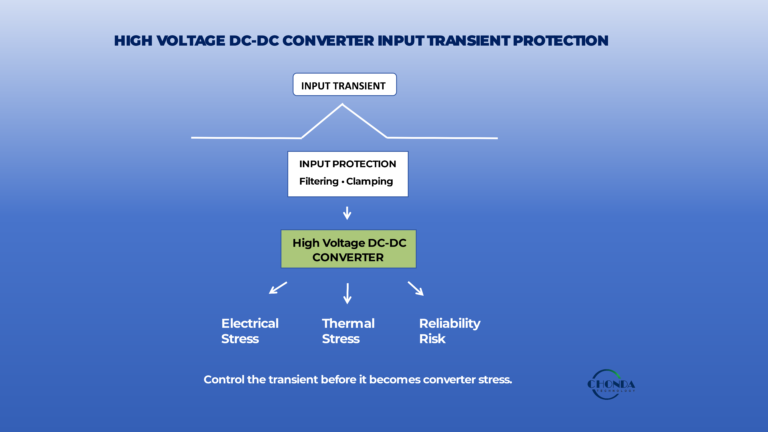
Unexpected electrical faults, including input voltage fluctuations, overload conditions, short circuits, and excessive operating temperatures, can damage both the converter and connected electronic equipment. Without proper protection mechanisms, these faults may lead to system downtime, equipment failure, and increased maintenance costs.
Modern high voltage DC-DC converter modules therefore integrate multiple protection features to detect abnormal operating conditions and automatically protect both the power converter and downstream control systems.
This article explains the essential protection functions commonly found in high voltage DC-DC converters, how they work, and why they are critical for industrial applications requiring reliable long-term operation.
1. Why Protection Features Matter in High Voltage DC-DC Converters
Protection features are essential for maintaining the safe and reliable operation of high voltage DC-DC converters. Industrial power systems are frequently exposed to electrical faults, voltage fluctuations, and harsh operating environments. Without appropriate protection mechanisms, these conditions may reduce system reliability, damage connected equipment, or even create safety risks.
1.1.System Safety
Protection features play a critical role in ensuring the safe operation of high voltage DC-DC converters.
Industrial power systems often operate with input voltages ranging from several hundred volts to over 1000VDC. Under abnormal conditions such as overload, short circuit, or excessive temperature, the converter must respond quickly to prevent equipment damage and potential safety hazards.
Well-designed protection circuits help maintain stable system operation while reducing the risk of electrical failure.
1.2.Equipment Protection
High voltage DC-DC converters are commonly connected to sensitive downstream equipment such as:
- PLC controllers
- Industrial sensors
- Communication modules
- Monitoring systems
- Battery management systems (BMS)
Without adequate protection, electrical faults may propagate through the power system and damage expensive electronic components.
Protection functions isolate abnormal operating conditions before they affect connected equipment, improving overall system reliability and reducing maintenance costs.
1.3.Long-Term Reliability
Protection features also contribute to the long-term reliability of industrial power systems.
By preventing excessive electrical stress, thermal overload, and abnormal operating conditions, protective circuits help extend the service life of both the DC-DC converter and connected electronic devices.
Reliable protection design is especially important for applications that require continuous operation, including:
- Battery Energy Storage Systems (BESS)
- Photovoltaic monitoring systems
- Industrial automation
- Railway power systems
- High-voltage DC distribution networks
A high voltage DC-DC converter with comprehensive protection functions can significantly reduce unexpected downtime while improving overall system availability.
2. Essential Protection Functions
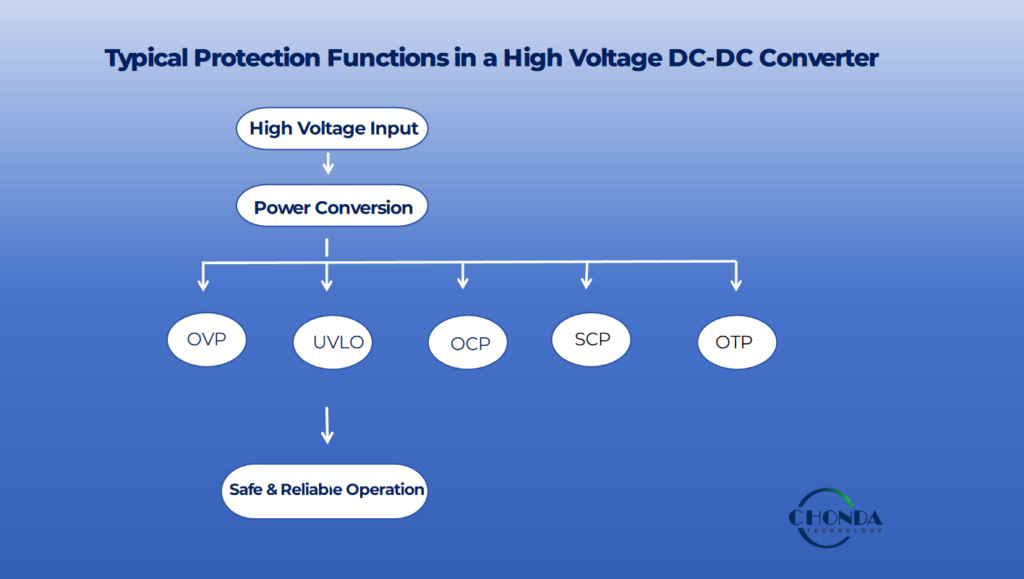
Modern high voltage DC-DC converters integrate multiple protection mechanisms to ensure safe and reliable operation under both normal and abnormal operating conditions. These protection functions continuously monitor critical electrical and thermal parameters, allowing the converter to respond automatically whenever unsafe conditions occur.
The following protection features are commonly implemented in industrial high voltage DC-DC converter modules.
2.1.Over Voltage Protection (OVP)
Over Voltage Protection (OVP) protects the converter and connected equipment when the input or output voltage exceeds the specified operating range.
High voltage DC power systems may experience voltage spikes caused by switching operations, battery charging processes, lightning surges, or unexpected system faults. Excessive voltage can damage semiconductor devices, capacitors, transformers, and downstream electronic circuits.
When an over-voltage condition is detected, the converter automatically limits or shuts down the output to prevent permanent equipment damage.
Typical benefits of OVP include:
- Protection against abnormal voltage spikes
- Improved system safety
- Reduced risk of component failure
- Extended converter service life
2.2.Under Voltage Lockout (UVLO)
Under Voltage Lockout (UVLO) prevents the converter from operating when the input voltage falls below the minimum required level.
Operating a high voltage DC-DC converter with insufficient input voltage may result in unstable switching, poor regulation, excessive current draw, and reduced conversion efficiency.
UVLO continuously monitors the input voltage. If the voltage drops below the predefined threshold, the converter temporarily stops operating until the input voltage returns to a safe level.
Advantages of UVLO include:
- Stable converter startup
- Prevention of abnormal switching behavior
- Improved efficiency
- Enhanced long-term reliability
2.3.Over Current Protection (OCP)
Over Current Protection (OCP) limits the output current when the connected load exceeds the converter’s rated output capability.
Excessive current may occur during equipment startup, unexpected overload conditions, or system faults. Without current limiting, excessive electrical stress may damage switching devices, transformers, or output circuits.
Depending on the converter design, OCP may operate through:
- Current limiting
- Foldback current protection
- Automatic shutdown
- Auto-recovery after fault removal
Proper over current protection helps maintain stable operation while protecting both the converter and connected equipment.
2.4.Short Circuit Protection (SCP)
Short Circuit Protection (SCP) protects the converter when an accidental short circuit occurs at the output terminals.
Short circuits generate extremely high current levels that may quickly damage electronic components if not properly controlled.
When a short circuit is detected, the converter immediately reduces or disconnects the output power to prevent excessive current flow.
Benefits of SCP include:
- Protection against catastrophic failure
- Reduced maintenance costs
- Improved equipment safety
- Faster system recovery after fault removal
Short circuit protection is considered one of the most essential safety features for industrial DC-DC converters operating in high-reliability environments.
2.5.Over Temperature Protection (OTP)
Over Temperature Protection (OTP) monitors the internal operating temperature of the converter and prevents overheating.
During continuous operation or under high ambient temperatures, internal heat may accumulate if cooling conditions become insufficient.
When the internal temperature exceeds the predefined protection threshold, the converter automatically reduces output power or shuts down until the temperature returns to a safe operating level.
Typical advantages include:
- Prevention of thermal damage
- Protection of semiconductor devices
- Improved long-term reliability
- Stable operation under varying environmental conditions
Combined with effective thermal management, OTP helps maintain safe operating temperatures throughout the converter’s service life.
3. How Protection Features Improve Industrial Applications
Protection functions are essential for ensuring stable operation in industrial high voltage power systems. Different applications present different electrical challenges, and comprehensive protection mechanisms help maintain system reliability under varying operating conditions.
The following examples illustrate why protection features are important across several common industrial applications.
3.1.Battery Energy Storage Systems (BESS)
Battery Energy Storage Systems operate with high-voltage DC battery packs that experience continuous charging, discharging, and load variations.
Abnormal conditions such as battery faults, overload events, or unexpected voltage fluctuations may place significant electrical stress on the power supply.
Protection features including OVP, UVLO, OCP, SCP, and OTP help maintain stable converter operation while protecting battery monitoring equipment, communication modules, and control electronics.
Reliable protection improves overall system availability and reduces the risk of unexpected downtime in large-scale energy storage installations.
3.2.PV Monitoring Systems
Photovoltaic monitoring equipment is often installed outdoors where environmental conditions vary significantly throughout the day.
Solar arrays may experience rapid voltage changes caused by weather conditions, shading, startup behavior, or maintenance operations.
High voltage DC-DC converters with comprehensive protection functions help maintain stable power delivery while preventing abnormal voltage and current conditions from affecting monitoring devices.
This improves measurement accuracy, communication stability, and long-term system reliability.
3.3.Industrial Automation
Industrial automation systems rely on continuous operation of PLC controllers, sensors, communication equipment, and industrial control devices.
Unexpected electrical faults may interrupt production processes and result in costly downtime.
Built-in protection mechanisms allow high voltage DC-DC converters to isolate abnormal operating conditions before they affect downstream equipment.
Comprehensive protection therefore supports higher system availability while reducing maintenance costs and improving operational reliability.
3.4.Railway Power Systems
Railway electronic equipment frequently operates in demanding environments where vibration, electrical transients, and wide input voltage variations are common.
Reliable protection functions help maintain stable converter performance during transient operating conditions while protecting sensitive control electronics and communication equipment.
By combining electrical protection with proper isolation, EMI control, and thermal management, high voltage DC-DC converters provide dependable power for long-term railway applications requiring high reliability.
4. CHONDA High Voltage DC-DC Converter Protection Solution
Industrial applications require high voltage DC-DC converter modules that not only deliver stable power conversion but also provide comprehensive protection against abnormal operating conditions.
The PHV25-1200S24 combines a wide 200–1200VDC input range with multiple built-in protection mechanisms to improve system safety and long-term operational reliability.
Typical protection functions include:
- Over Voltage Protection (OVP)
- Under Voltage Lockout (UVLO)
- Over Current Protection (OCP)
- Short Circuit Protection (SCP)
- Over Temperature Protection (OTP)
These protection features help reduce equipment damage caused by abnormal electrical conditions while improving the reliability of industrial systems operating under demanding environments.
4.1.Example: PHV25-1200S24
The PHV25-1200S24 provides a regulated 24VDC / 25W output together with comprehensive protection functions designed for continuous industrial operation.
Its combination of a 200–1200VDC ultra-wide input range, optimized thermal design, electrical isolation, and integrated protection mechanisms makes it suitable for applications including:
- Battery Energy Storage Systems (BESS)
- PV Monitoring Systems
- Industrial Automation Equipment
- Railway Electronics
- High Voltage DC Control Systems
By combining multiple protection features with stable power conversion, the PHV25-1200S24 helps improve system reliability while reducing unexpected downtime in industrial applications.
4.2.Custom Protection Solutions for Industrial Applications
Different industrial projects may require customized protection thresholds, electrical specifications, or mechanical configurations.
CHONDA therefore provides custom high voltage DC-DC converter solutions to support customer-specific industrial applications, including customized input voltage ranges, output specifications, protection strategies, thermal optimization, and mechanical design requirements.
5. Conclusion
High voltage DC-DC converter protection features are essential for ensuring safe, stable, and reliable operation in industrial power systems. Functions such as Over Voltage Protection (OVP), Under Voltage Lockout (UVLO), Over Current Protection (OCP), Short Circuit Protection (SCP), and Over Temperature Protection (OTP) help protect both the converter and connected electronic equipment from abnormal operating conditions.
When selecting a high voltage DC-DC converter, engineers should evaluate protection functions together with electrical isolation, thermal management, EMI performance, and power conversion requirements to achieve reliable long-term system operation.
For engineers looking to better understand converter selection, our article DC-DC Converter Selection Guide: Key Parameters for High Voltage Applications provides a comprehensive overview of the most important design considerations.