We help the world since 2012

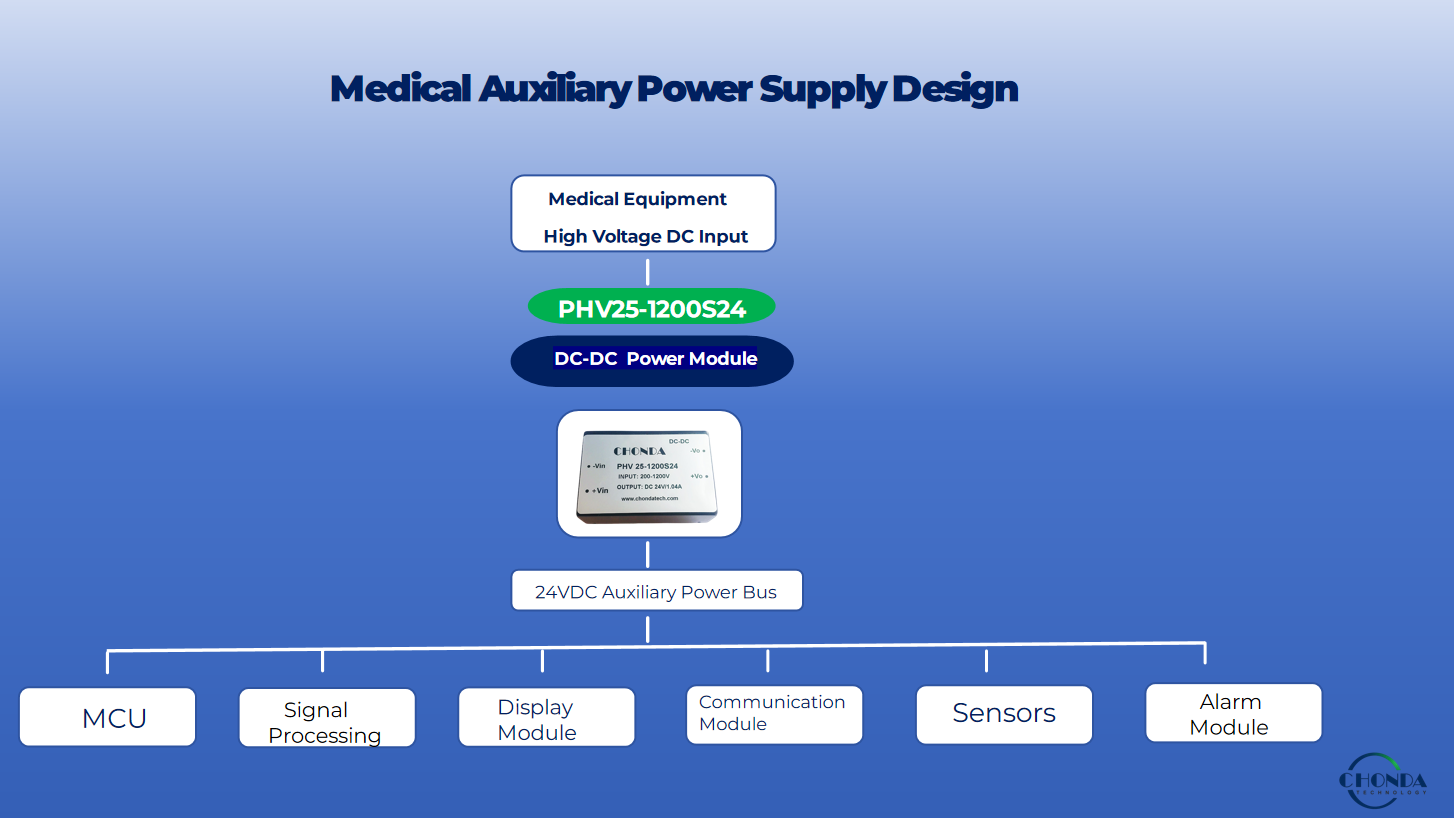
Medical Auxiliary Power Supply Design
Medical equipment relies on far more than its primary power source. Behind every patient monitor, diagnostic instrument, imaging system, and laboratory analyzer, an auxiliary power supply supports the electronic subsystems responsible for control, communication, sensing, data processing, and user interaction.
A well-designed medical auxiliary power supply helps maintain stable system operation, improves electrical safety, reduces electromagnetic interference (EMI), and ensures reliable performance during continuous operation. Because many medical devices operate around the clock, the auxiliary power architecture plays a critical role in overall equipment reliability.
High voltage DC-DC converters are widely used to convert high-voltage DC sources into isolated low-voltage auxiliary power for sensitive medical electronics. Their combination of reinforced isolation, stable output, high efficiency, and long-term reliability makes them suitable for a wide range of medical applications.
This article explains the principles of medical auxiliary power supply design, discusses the key technical requirements for reliable medical power systems, and introduces CHONDA’s isolated high voltage DC-DC converter solutions for modern medical equipment.
1. What Is a Medical Auxiliary Power Supply?
Medical auxiliary power supplies provide regulated low-voltage DC power for the electronic subsystems inside medical equipment. Unlike the primary power source, which delivers the main operating energy to the system, the auxiliary power supply is responsible for supporting controllers, communication circuits, sensors, displays, and other low-power electronics that ensure reliable equipment operation.
A well-designed auxiliary power architecture improves system stability, electrical safety, and long-term reliability while helping sensitive electronic circuits operate independently from the primary high-voltage power source.
1.1.Primary Power vs Auxiliary Power
Medical equipment typically contains both a primary power stage and one or more auxiliary power supplies.
The primary power stage delivers energy to the main system, while the auxiliary power supply generates isolated low-voltage outputs for electronic control circuits. Separating these functions improves system safety and reduces the influence of power fluctuations on sensitive monitoring electronics.
1.2.Typical Auxiliary Power Loads
Medical auxiliary power supplies commonly support a wide range of electronic modules, including:
- Microcontrollers (MCUs)
- Signal processing circuits
- Communication modules
- LCD or touchscreen displays
- Medical sensors
- Alarm circuits
- Human-machine interfaces (HMIs)
Although these subsystems consume relatively low power, they require highly stable voltage and continuous operation to maintain accurate medical measurements and reliable device performance.
1.3.Typical Medical Power Architecture
Modern medical equipment often distributes power through multiple isolated voltage rails. A high voltage DC-DC converter converts the available DC input into isolated auxiliary power, which is then distributed to individual electronic subsystems.
This architecture helps improve electrical isolation, simplifies system integration, reduces electromagnetic interference, and provides reliable low-voltage power for critical medical electronics.
2. Why Auxiliary Power Design Is Critical in Medical Equipment
Medical equipment depends on multiple electronic subsystems working together continuously and reliably. While the primary power stage supplies the overall system, the auxiliary power supply is responsible for delivering clean, regulated, and isolated low-voltage DC power to critical control and monitoring circuits.
Any instability in the auxiliary power architecture may affect signal acquisition, communication performance, controller operation, or user interfaces, ultimately reducing overall equipment reliability.
Typical medical subsystems powered by the auxiliary supply include:
- Microcontrollers (MCUs)
- Signal processing circuits
- Medical sensors
- Communication modules
- LCD or touchscreen displays
- Alarm systems
- Human-machine interfaces (HMIs)
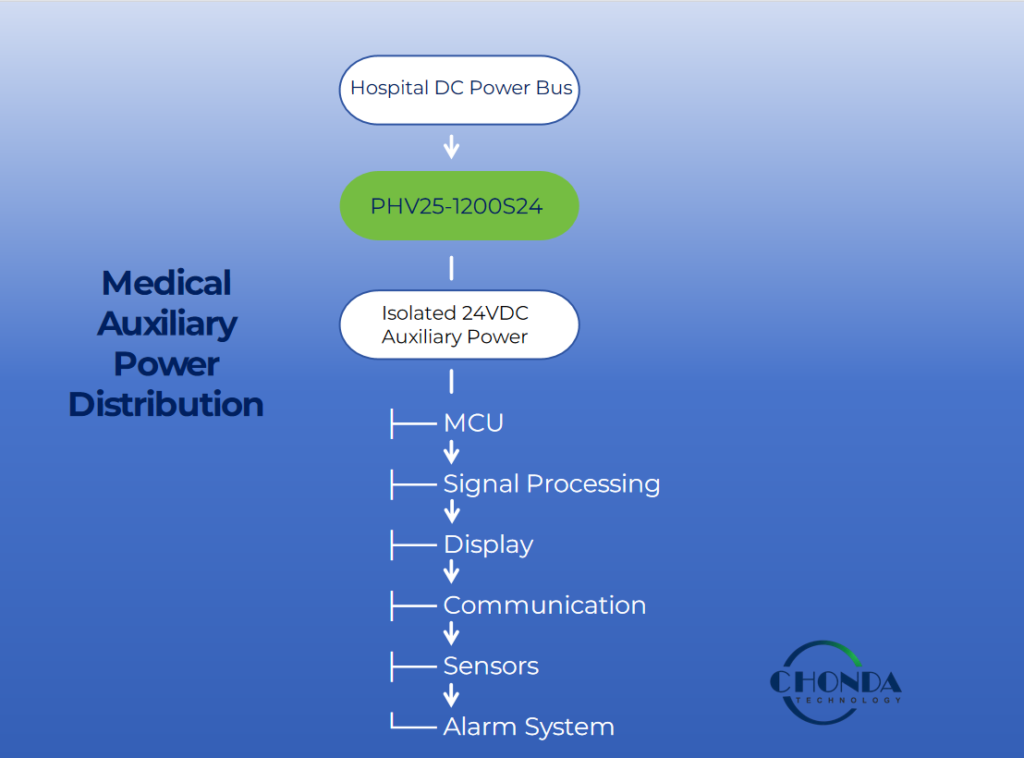
Figure 1. Typical auxiliary power distribution architecture in medical equipment.
As illustrated above, the high voltage DC-DC converter converts the high-voltage DC input into isolated 24VDC auxiliary power, which is then distributed to multiple electronic subsystems throughout the medical device. This architecture improves electrical isolation, enhances system stability, and provides reliable power for continuous medical operation.
A properly designed auxiliary power system also simplifies equipment integration, reduces electromagnetic interference (EMI), and supports long-term reliability in demanding healthcare environments where uninterrupted operation is essential.
3. Key Design Requirements for Medical Auxiliary Power Supplies
Medical auxiliary power supplies must provide stable, isolated power for critical electronic subsystems while meeting the stringent safety and reliability requirements of modern medical equipment. Unlike conventional industrial power supplies, medical applications place greater emphasis on electrical safety, signal integrity, long-term stability, and regulatory compliance.
Whether powering patient monitors, imaging systems, laboratory instruments, or medical communication modules, the auxiliary power supply directly affects overall equipment reliability and measurement accuracy.
The following design considerations are commonly evaluated when selecting a high voltage DC-DC converter for medical auxiliary power applications.
3.1.Reinforced Electrical Isolation
Electrical isolation is one of the most critical requirements in medical auxiliary power supply design. Many medical devices operate in close proximity to patients, making electrical safety a primary concern throughout the entire power architecture.
A high voltage DC-DC converter with reinforced isolation separates the primary high-voltage DC source from sensitive low-voltage electronic circuits, helping reduce electrical hazards while improving overall system protection. Proper isolation also minimizes ground loop interference and protects signal-processing circuits from disturbances originating on the primary power bus.
When selecting a medical auxiliary power converter, engineers typically evaluate:
- Isolation voltage rating
- Creepage and clearance distances
- Leakage current characteristics
- Compliance with applicable medical safety standards
3.2.Low EMI Performance
Medical electronic equipment often contains highly sensitive analog front-end circuits, precision sensors, communication interfaces, and digital signal processors. Excessive conducted or radiated electromagnetic interference (EMI) can affect signal integrity, reduce measurement accuracy, and increase communication errors between medical subsystems.
A well-designed auxiliary power supply should therefore minimize electrical noise through optimized converter topology, PCB layout, filtering, and shielding techniques. Selecting a low EMI high voltage DC-DC converter helps simplify EMC compliance while improving the long-term stability of medical electronic equipment.
3.3.High Reliability for Continuous Operation
Many medical systems operate continuously for long periods without interruption. Patient monitoring equipment, bedside monitoring devices, laboratory analyzers, and hospital communication systems all require reliable auxiliary power to maintain stable operation under varying environmental conditions.
A reliable high voltage DC-DC converter should provide stable output voltage, high conversion efficiency, and comprehensive protection against overload, short circuit, and abnormal input conditions. Long operational lifetime and dependable performance help reduce maintenance requirements while improving overall equipment availability.
3.4.Compact and Efficient Design
Medical equipment designers often face strict limitations on installation space while simultaneously requiring high system performance. A compact auxiliary power supply allows more flexibility for integrating controllers, communication modules, displays, and sensor interfaces within modern medical equipment.
High-efficiency DC-DC converters also reduce internal heat generation, simplifying thermal management and improving long-term component reliability. Compact size, high power density, and efficient operation have therefore become important considerations in modern medical auxiliary power supply design.
4. CHONDA High Voltage DC-DC Converter Solution for Medical Auxiliary Power Supplies
Medical auxiliary power supplies require stable, isolated, and highly reliable DC power to support critical electronic subsystems throughout the lifetime of the equipment. CHONDA’s high voltage DC-DC converter solutions are designed to provide dependable auxiliary power while helping engineers simplify power architecture and improve overall system reliability.
With wide input voltage ranges, reinforced electrical isolation, low EMI characteristics, and long-term operational stability, CHONDA converters are suitable for a broad range of medical electronic applications.
4.1.PHV25-1200S24 for Medical Auxiliary Power Supplies
The PHV25-1200S24 high voltage DC-DC converter is designed for auxiliary power applications requiring reliable isolated power conversion from high-voltage DC sources.
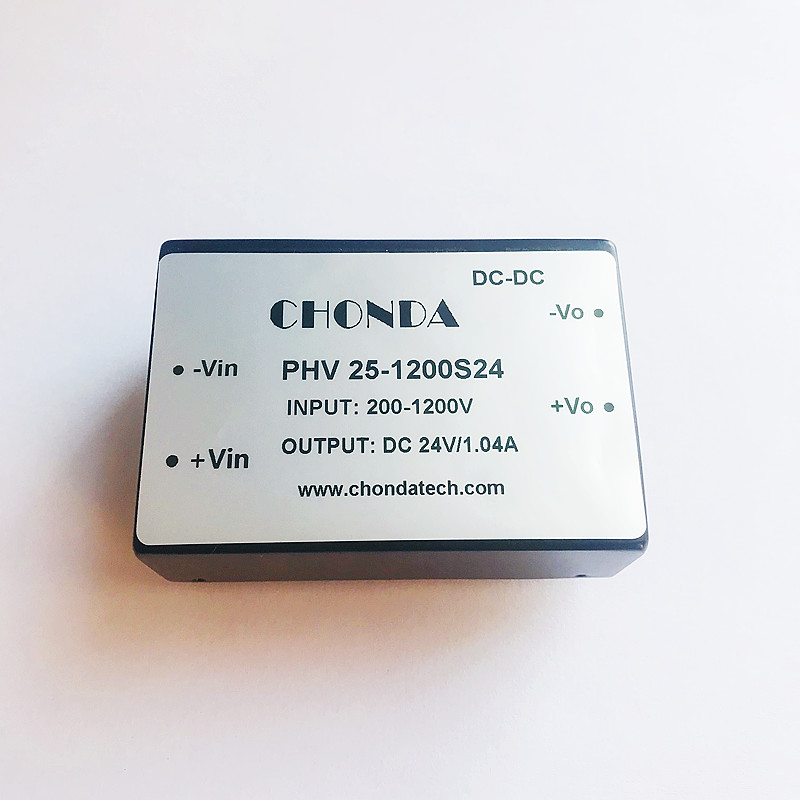
Typical specifications include:
- Input Voltage: 200–1200VDC
- Output Voltage: 24VDC
- Output Power: 25W
- Reinforced Electrical Isolation
- High Conversion Efficiency
- Low EMI Performance
- Integrated Protection Functions
- Industrial-Grade Long-Term Reliability
These characteristics enable engineers to build stable auxiliary power architectures for medical devices while improving electrical safety, simplifying system integration, and reducing maintenance requirements.
4.2.Typical Medical Auxiliary Power Applications
The PHV25-1200S24 can provide isolated auxiliary power for a wide variety of medical electronic equipment, including:
- Patient Monitoring Systems
- Medical Diagnostic Equipment
- Medical Imaging Systems
- Laboratory Instruments
- Medical Communication Modules
- Medical Controllers
- Sensor Interface Modules
- Hospital Electronic Equipment
By supplying stable isolated low-voltage DC power, the converter supports continuous operation of sensitive medical electronics while reducing the influence of electrical disturbances from the primary power source.
4.3.Custom High Voltage DC-DC Converter OEM Solutions
Every medical device has unique electrical, mechanical, and regulatory requirements. CHONDA provides customized high voltage DC-DC converter OEM solutions supporting different input voltage ranges, output voltages, power levels, isolation specifications, and package configurations.
Whether you are developing patient monitoring equipment, laboratory instruments, imaging systems, or other medical electronic products, our engineering team can provide customized auxiliary power solutions tailored to your application requirements.
Learn more about our Custom High Voltage DC-DC Converter OEM solutions to discuss your project with our engineering team.
5. Conclusion
Medical auxiliary power supplies play a fundamental role in ensuring the safe and reliable operation of modern medical equipment. Although they consume relatively low power compared with primary power systems, they support critical electronic subsystems responsible for control, communication, sensing, data processing, and user interaction.
A well-designed auxiliary power supply should provide reinforced electrical isolation, low electromagnetic interference, high efficiency, and long-term operational reliability. Selecting an appropriate high voltage DC-DC converter helps engineers improve system stability, simplify power architecture, and meet the demanding safety requirements of medical applications.
CHONDA’s isolated high voltage DC-DC converter solutions provide dependable auxiliary power for patient monitoring systems, laboratory instruments, medical diagnostic equipment, and other healthcare applications while supporting customized OEM designs for a wide variety of medical electronic devices.
Related Articles
High Voltage DC-DC Converter Applications
High Voltage DC-DC Converter for Medical Equipment
DC-DC Converter for Patient Monitoring Systems
High Voltage DC-DC Converter for Industrial Automation
High Voltage DC-DC Converter for Railway Applications
Custom High Voltage DC-DC Converter OEM
Medical Isolation Power Supply
Low EMI DC-DC Converter for Medical Equipment