We help the world since 2012

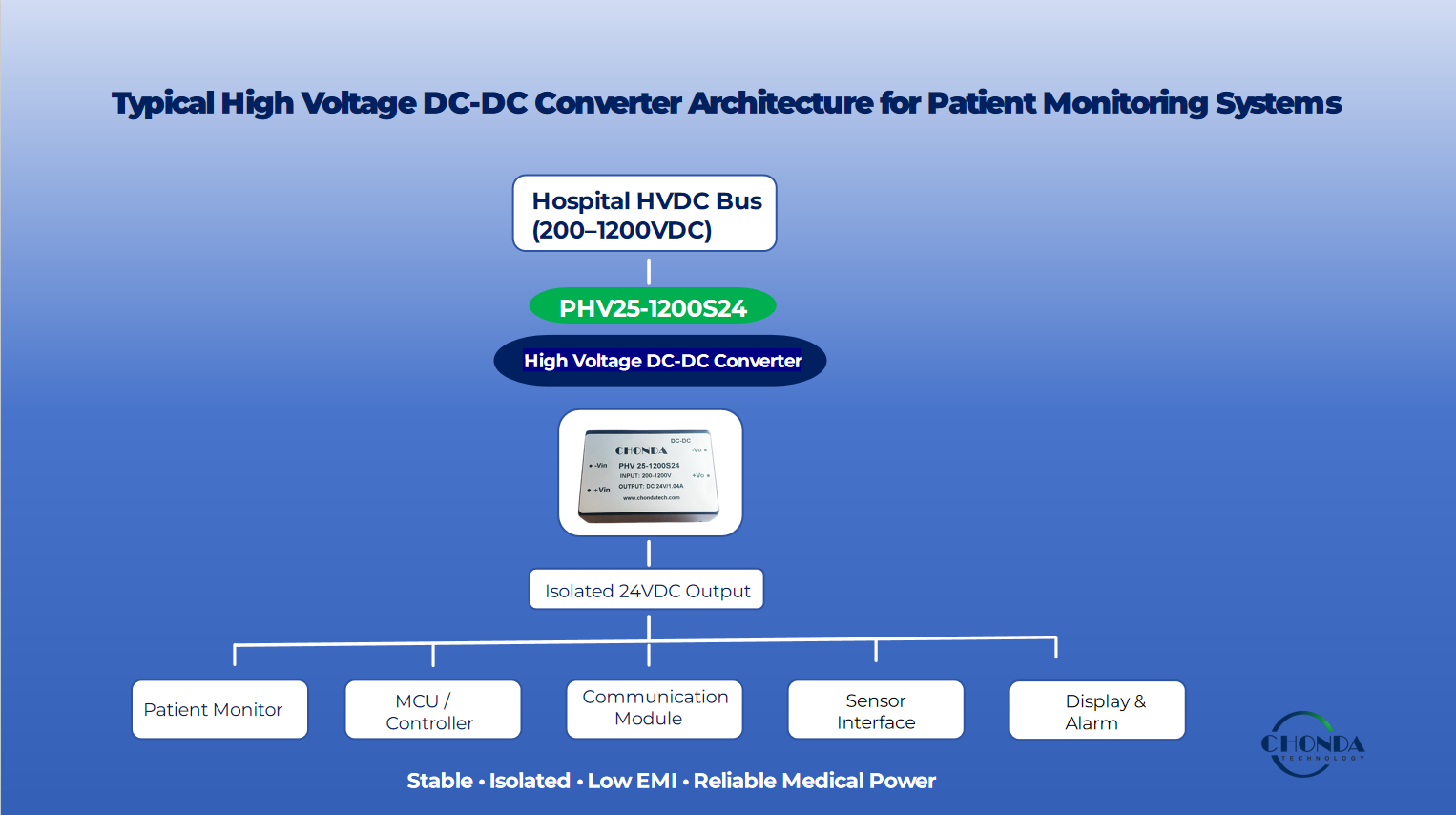
DC-DC Converter for Patient Monitoring Systems
Patient monitoring systems play a critical role in modern healthcare by continuously collecting and displaying vital patient information such as ECG, blood pressure, blood oxygen saturation (SpO₂), respiratory rate, and body temperature.
To ensure continuous and reliable operation, these medical devices require stable auxiliary power for controllers, communication modules, displays, sensors, and monitoring electronics. In many medical environments, the available power source must first be converted into isolated low-voltage DC before it can safely supply sensitive electronic circuits.
A high-quality DC-DC converter provides regulated auxiliary power while improving electrical isolation, reducing electromagnetic interference (EMI), and enhancing overall system reliability. These characteristics are essential for patient monitoring equipment, where stable operation directly affects data accuracy and equipment availability.
This article explains how DC-DC converters support patient monitoring systems, discusses the key design requirements for medical auxiliary power supplies, and introduces CHONDA’s isolated high-voltage DC-DC converter solutions for medical applications.
1. What Is a Patient Monitoring System?
Patient monitoring systems are medical devices designed to continuously measure, process, display, and record a patient’s vital physiological parameters. They are widely used in hospitals, intensive care units (ICUs), operating rooms, emergency departments, and outpatient clinics to support real-time clinical decision-making.
Although patient monitoring systems vary depending on their functions and application scenarios, they generally consist of several core electronic subsystems that require stable and reliable auxiliary power.
1.1.Patient Monitoring Controller
The monitoring controller serves as the central processing unit of the system. It collects physiological data from multiple sensors, performs signal processing and analysis, manages alarm functions, and controls overall system operation.
Stable power is essential to ensure continuous monitoring and accurate data processing.
1.2.Medical Sensors and Data Acquisition
Patient monitoring systems integrate multiple medical sensors to measure vital signs such as ECG, blood pressure, SpO₂, body temperature, and respiration.
These sensors continuously transmit analog or digital signals to the monitoring controller, requiring clean and stable low-voltage power for accurate measurement.
1.3.Communication and Display Modules
Modern patient monitoring systems communicate with hospital information systems, central monitoring stations, and medical networks through various communication interfaces.
Display modules present real-time patient information, alarms, and trend data to healthcare professionals. Reliable auxiliary power helps maintain stable communication, uninterrupted display performance, and continuous system operation.
2. Why DC-DC Converters Are Required in Patient Monitoring Systems
Patient monitoring systems contain numerous sensitive electronic components that require stable, isolated low-voltage DC power for continuous operation. Although the available input power may originate from hospital power systems, medical carts, battery backup systems, or centralized DC power distribution, it cannot be supplied directly to monitoring electronics without proper power conversion.
A DC-DC converter converts the available DC source into regulated auxiliary power while providing electrical isolation, voltage regulation, and protection for critical medical electronics.
Typical equipment powered by the auxiliary supply includes:
- Patient monitoring controllers
- ECG and physiological signal processing circuits
- Medical sensors
- Communication modules
- LCD display modules
- Alarm and notification circuits
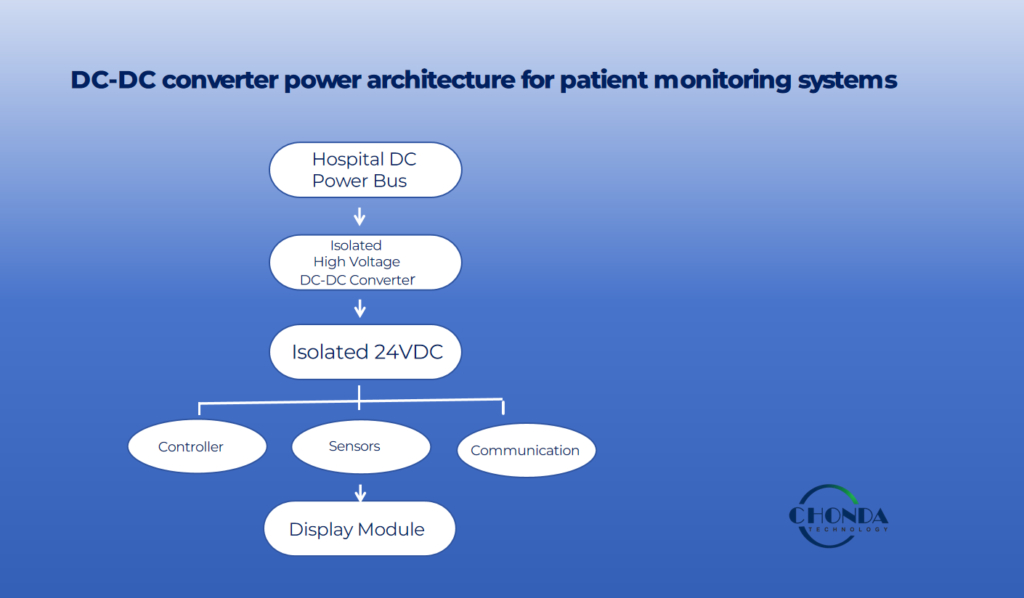
Figure 1. Typical power architecture of a patient monitoring system using an isolated DC-DC converter.
As shown above, the DC-DC converter provides isolated and regulated auxiliary power for multiple electronic subsystems within the patient monitoring device. By separating the input power source from sensitive medical electronics, the converter improves electrical safety, reduces electromagnetic interference (EMI), and helps maintain stable operation during continuous patient monitoring.
Reliable auxiliary power is especially important in medical environments, where uninterrupted monitoring and accurate physiological data are essential for patient safety and clinical decision-making.
3. Key Requirements for DC-DC Converters in Patient Monitoring Systems
Patient monitoring systems operate continuously to collect, process, and display critical physiological information. Their power supplies must provide stable auxiliary power while meeting strict medical safety, electromagnetic compatibility, and reliability requirements. Selecting the appropriate high voltage DC-DC converter helps ensure accurate signal acquisition, dependable long-term operation, and compliance with modern medical equipment standards.
3.1.Medical-Grade Electrical Isolation
Electrical isolation is one of the most important requirements in patient monitoring equipment. Sensitive measurement circuits are often connected directly or indirectly to patients, making isolation essential for protecting both patients and healthcare personnel.
A high voltage DC-DC converter with reinforced isolation separates the high-voltage input bus from the low-voltage electronic circuits, reducing leakage current and improving electrical safety. Isolation also minimizes the influence of ground loops that may affect signal quality in medical monitoring systems.
For medical equipment, reliable isolation contributes to safer operation, improved measurement accuracy, and easier compliance with medical electrical safety standards.
3.2.Low EMI Performance for Accurate Signal Acquisition
Patient monitors continuously process low-level biological signals such as ECG, SpO₂, blood pressure, respiratory rate, and temperature. These signals are extremely sensitive to electrical noise.
A high voltage DC-DC converter with low electromagnetic interference (EMI) helps reduce conducted and radiated emissions that could interfere with analog front-end circuits and communication interfaces.
Lower EMI contributes to:
- More stable physiological measurements
- Improved signal integrity
- Reduced filtering requirements
- Better overall system performance
Selecting a converter designed for low-noise operation is especially important in modern multi-parameter patient monitoring equipment.
3.3.High Reliability for Continuous Patient Monitoring
Unlike many industrial devices that operate intermittently, patient monitoring systems often run continuously for extended periods in hospitals, intensive care units, emergency departments, and operating rooms.
The power supply must maintain stable operation under long service hours without unexpected interruptions.
A reliable high voltage DC-DC converter should provide:
- Stable output voltage
- Long operational lifetime
- High MTBF
- Protection against abnormal operating conditions
Reliable auxiliary power helps ensure uninterrupted monitoring and reduces maintenance requirements throughout the equipment lifecycle.
3.4.High Efficiency for Thermal Management
Patient monitoring devices are typically compact and enclosed within sealed medical housings. Excessive heat may affect electronic components, display modules, and measurement accuracy.
High-efficiency DC-DC converters generate less internal power loss, helping reduce operating temperatures and simplifying thermal management.
The benefits include:
- Lower internal temperature rise
- Longer component lifetime
- Improved overall reliability
- Reduced cooling requirements
Efficient power conversion is particularly valuable in portable and bedside monitoring equipment where space for heat dissipation is limited.
3.5.Compact Design for Medical Equipment Integration
Medical devices continue to become smaller while integrating more monitoring functions and communication capabilities.
A compact high voltage DC-DC converter enables designers to maximize available PCB space without sacrificing electrical performance.
Small package size supports integration into:
- Bedside patient monitors
- Portable monitoring devices
- Multi-parameter monitors
- Diagnostic equipment
- Wearable medical systems
By combining compact dimensions, high isolation, stable output, and low EMI, modern high voltage DC-DC converters help simplify medical equipment design while supporting increasingly sophisticated monitoring functions.
4. CHONDA High Voltage DC-DC Converter Solution for Patient Monitoring Systems
Patient monitoring systems require highly reliable auxiliary power to support controllers, physiological signal acquisition circuits, communication modules, displays, and sensor interfaces.
CHONDA’s high voltage DC-DC converter solutions are designed to provide isolated, regulated, and stable low-voltage DC power for medical electronic equipment while meeting the demanding reliability and safety requirements of continuous patient monitoring.
4.1.PHV25-1200S24 for Patient Monitoring Systems
CHONDA’s PHV25-1200S24 high voltage DC-DC converter is specifically designed for applications requiring reliable isolated auxiliary power from high-voltage DC sources. Its wide input voltage range, reinforced isolation, stable output, and low electromagnetic interference make it well suited for patient monitoring systems and other medical electronic equipment.
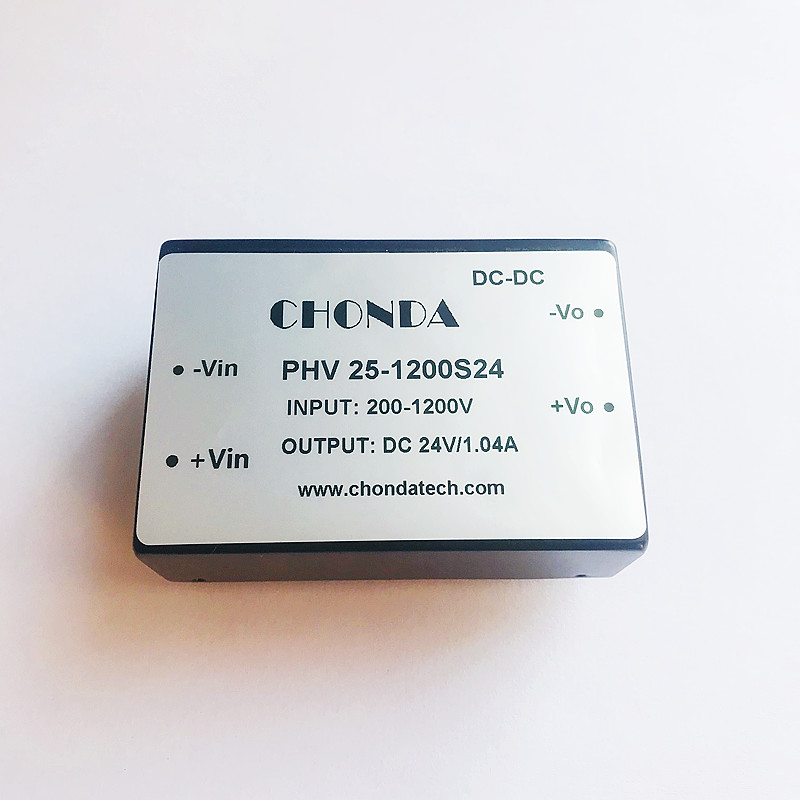
Typical specifications include:
- Input Voltage: 200–1200VDC
- Output Voltage: 24VDC
- Output Power: 25W
- Reinforced Electrical Isolation
- High Conversion Efficiency
- Low EMI Performance
- Integrated Protection Functions
- Long-Term Industrial Reliability
These characteristics help medical equipment manufacturers build systems that require continuous operation, dependable auxiliary power, and enhanced electrical safety.
4.2.Typical Patient Monitoring Applications
The PHV25-1200S24 can provide isolated auxiliary power for a wide range of patient monitoring equipment, including:
- Patient Monitoring Systems
- ECG Monitoring Equipment
- Multi-Parameter Monitors
- Bedside Patient Monitors
- Medical Communication Modules
- Medical Controllers
- Laboratory Diagnostic Equipment
- Sensor Interface Modules
By supplying stable isolated DC power, the converter helps improve system reliability while protecting sensitive electronic circuits from disturbances on the primary power bus.
4.3.Custom High Voltage DC-DC Converter Solutions
Every medical device has unique electrical, mechanical, and regulatory requirements. CHONDA provides customized high voltage DC-DC converter OEM services to support different input voltage ranges, output voltages, power levels, isolation requirements, and package configurations.
Whether your application involves patient monitoring systems, medical diagnostic equipment, or laboratory instruments, our engineering team can provide customized isolated power solutions tailored to your project requirements.
Explore our Custom High Voltage DC-DC Converter OEM solutions to discuss your application with our engineering team.
5. Conclusion
Patient monitoring systems require stable, isolated, and highly reliable auxiliary power to ensure continuous monitoring of critical physiological information. A high-quality DC-DC converter not only provides regulated low-voltage power but also improves electrical safety, minimizes electromagnetic interference, and enhances long-term system reliability.
When selecting a DC-DC converter for patient monitoring equipment, engineers should carefully evaluate isolation performance, EMI characteristics, efficiency, reliability, and mechanical integration to ensure dependable operation in demanding medical environments.
CHONDA provides high voltage DC-DC converter solutions designed to meet the auxiliary power requirements of modern patient monitoring systems while supporting customized OEM projects for a wide range of medical electronic applications.
Related Articles
High Voltage DC-DC Converter Applications

High Voltage DC-DC Converter for Medical Equipment

Medical Auxiliary Power Supply Design

Medical Isolation Power Supply

Low EMI DC-DC Converter for Medical Equipment

Custom High Voltage DC-DC Converter OEM