We help the world since 2012

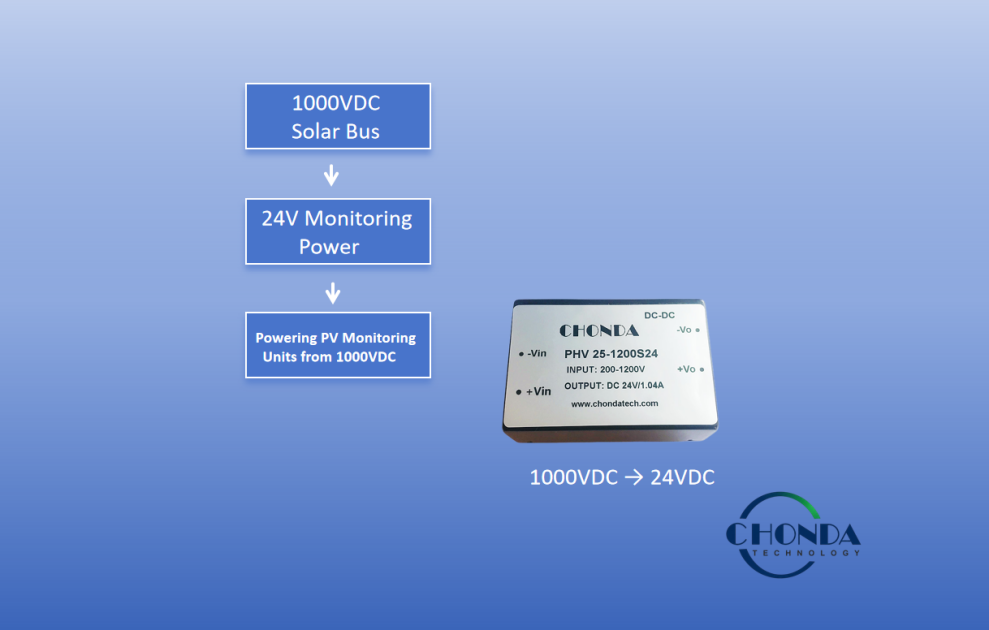
How to Power a PV String Monitoring Unit from a 1000VDC Solar Bus
In utility-scale solar plants, PV string monitoring units are often installed inside combiner boxes where the available DC bus voltage may reach 1000VDC or even 1500VDC. One of the most common design challenges is how to safely power the monitoring electronics from this high-voltage source while maintaining reliability, electrical isolation, and long-term system stability.
This article explains the common approaches used to power PV string monitoring units from a 1000VDC solar bus and discusses the role of isolated high-voltage DC-DC converters in modern monitoring systems.
1. Why Monitoring Units Need a Dedicated Power Supply
PV string monitoring units are responsible for collecting and transmitting critical operating data throughout a solar installation. These devices typically include microcontrollers, communication modules, current measurement circuits, temperature sensors, and data acquisition components.
Although the photovoltaic system may operate at voltages up to 1000VDC, the monitoring electronics themselves usually require low-voltage power rails such as 24VDC, 12VDC, or 5VDC. Directly connecting sensitive electronics to a high-voltage solar bus is neither practical nor safe.
In addition, solar installations are exposed to a wide range of operating conditions. Array voltage can fluctuate due to changes in irradiance, temperature, and system loading. Monitoring equipment must continue operating reliably even when the PV bus voltage varies significantly throughout the day.
A dedicated power supply is therefore required to convert the high-voltage DC bus into a stable low-voltage output suitable for monitoring electronics. This power supply must provide reliable voltage regulation, electrical isolation, and long-term stability in demanding outdoor environments.
Without a properly designed power conversion stage, communication errors, measurement inaccuracies, unexpected shutdowns, and equipment failures can occur, reducing the effectiveness of the entire monitoring system.
PV monitoring systems are commonly installed inside combiner boxes and are responsible for collecting real-time string data. To better understand the overall monitoring architecture, see: PV String Monitoring System Architecture Explained
2. Challenges of Using 1000VDC Directly
At first glance, it may seem convenient to power a PV monitoring unit directly from the available 1000VDC solar bus. However, this approach presents several technical challenges that must be carefully addressed during system design.
2.1 High Voltage Safety Risks
A 1000VDC photovoltaic bus contains enough energy to create serious safety hazards for both equipment and maintenance personnel. Monitoring electronics typically operate at low voltages such as 24VDC, 12VDC, or 5VDC, making direct connection to the PV bus impossible without appropriate power conversion.
Any failure within the power stage could expose sensitive electronics to dangerous voltages, potentially causing equipment damage and system downtime.
2.2 Electrical Isolation Requirements
Electrical isolation is one of the most important design considerations in PV monitoring systems.
Large solar installations often experience ground potential differences, switching transients, and electromagnetic interference generated by inverters and other power conversion equipment. Without proper isolation, these disturbances can affect communication circuits, measurement accuracy, and overall system reliability.
An isolated DC-DC converter creates a protective barrier between the high-voltage photovoltaic system and the low-voltage monitoring electronics, helping maintain stable and safe operation.
2.3 Wide Voltage Variations
The voltage of a solar array is not constant. It changes throughout the day depending on irradiance levels, ambient temperature, and system operating conditions.
For example, a monitoring system designed for a nominal 1000VDC bus may experience significantly different input voltages during startup, partial shading conditions, or seasonal temperature changes.
The power supply must therefore maintain stable output performance across a wide input voltage range to ensure uninterrupted monitoring operation.
2.4 Surge and Lightning Protection
PV installations are frequently deployed in open outdoor environments where lightning activity, switching surges, and transient voltage events can occur.
Although monitoring equipment consumes relatively little power, it remains connected to the same electrical infrastructure as the solar array. Without adequate protection, voltage surges may damage communication interfaces, sensors, and control electronics.
For this reason, many PV monitoring systems utilize isolated high-voltage DC-DC converters together with surge protection measures to improve long-term reliability and reduce maintenance requirements.
Because of these challenges, directly powering monitoring electronics from a 1000VDC solar bus is not practical. A dedicated high-voltage isolated DC-DC converter is typically required to provide safe, stable, and reliable low-voltage power for monitoring equipment.
3. Typical Power Architecture in PV Monitoring Systems
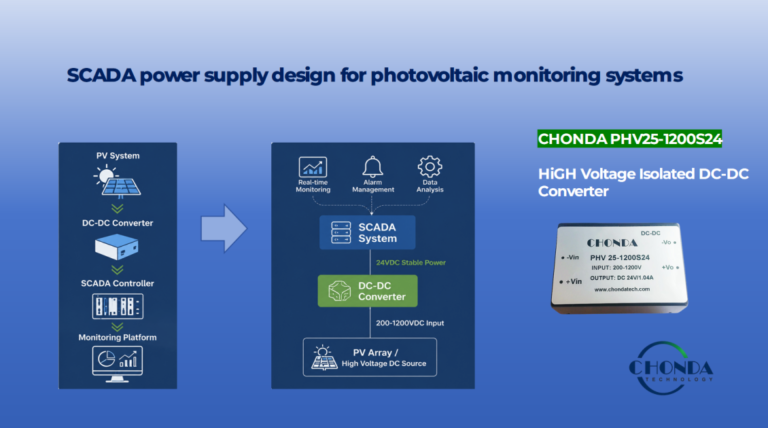
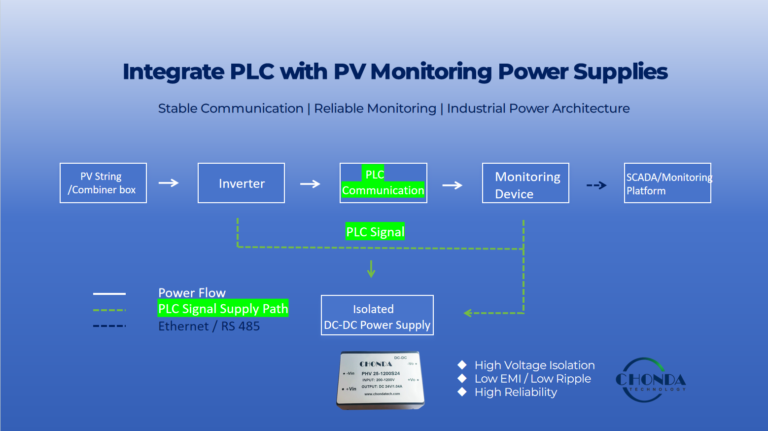
In most utility-scale solar projects, PV string monitoring units are not powered directly from the photovoltaic bus. Instead, a dedicated high-voltage DC-DC converter is used to provide a stable low-voltage supply for the monitoring electronics.
A simplified architecture is shown below:
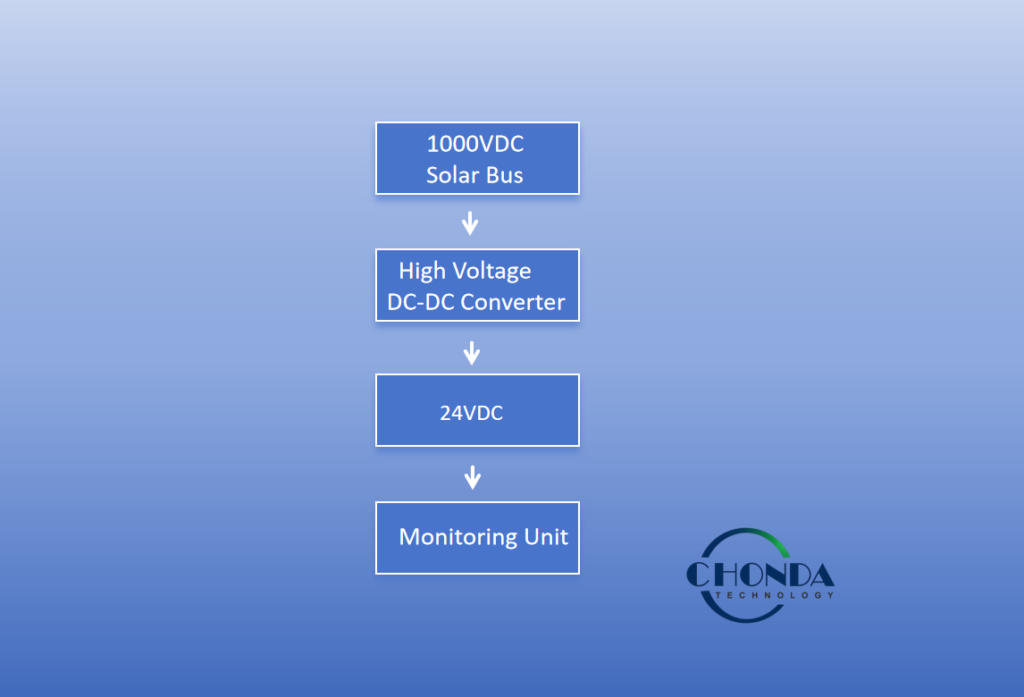
In this architecture, the high-voltage DC-DC converter performs the critical task of converting energy from the 1000VDC solar bus into a regulated 24VDC output.
The 24VDC output is then used to power components such as:
- Monitoring controllers
- Current measurement modules
- Communication boards
- RS485 or Modbus interfaces
- Data acquisition circuits
This approach provides stable voltage regulation, electrical isolation, and improved system reliability, making it the preferred power architecture for modern PV string monitoring systems. This architecture is widely used in modern utility-scale PV monitoring systems.
Learn more about how monitoring systems work: How PV String Monitoring Works in Solar Power Systems
4. Why Isolation Is Important
Electrical isolation is one of the most important design requirements in PV monitoring systems.
Although the monitoring electronics consume relatively little power, they are connected to a photovoltaic system that may operate at voltages up to 1000VDC or even 1500VDC. Without proper isolation, electrical disturbances from the high-voltage side can directly affect sensitive monitoring circuits.
In large solar installations, monitoring equipment may be exposed to:
- Ground potential differences
- Switching transients from inverters
- Electromagnetic interference (EMI)
- Lightning-induced voltage surges
- Electrical noise from long cable runs
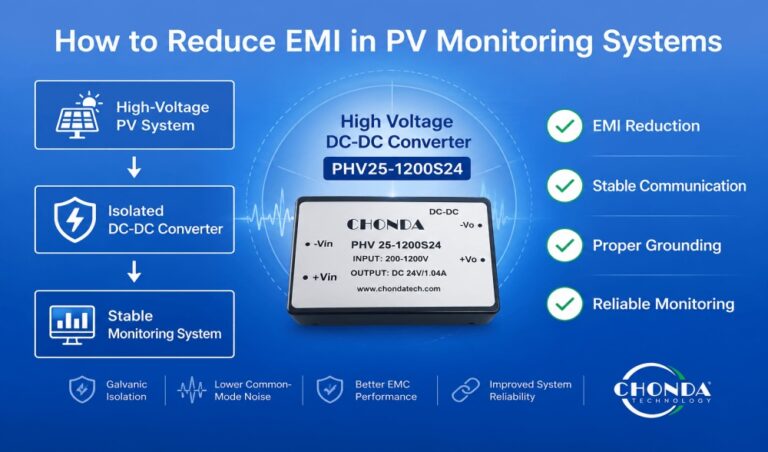
An isolated DC-DC converter creates a galvanic barrier between the high-voltage photovoltaic bus and the low-voltage monitoring electronics. This separation helps prevent unwanted electrical disturbances from propagating through the system.
Isolation provides several important benefits.
4.1 Improved System Safety
Isolation helps protect maintenance personnel and monitoring equipment from hazardous voltages. Even if faults occur on the photovoltaic bus, the low-voltage monitoring circuits remain electrically separated from the high-voltage source.
4.2 Better Communication Reliability
Many PV monitoring systems rely on communication protocols such as RS485, Modbus RTU, Ethernet, or wireless gateways.
Electrical noise and ground loops can negatively affect communication performance. Isolation helps reduce these issues and improves data transmission stability across the monitoring network.
4.3 Protection of Sensitive Electronics
Monitoring controllers, sensors, data acquisition modules, and communication boards are designed for low-voltage operation.
Isolation helps protect these devices from voltage spikes, transient events, and unexpected electrical disturbances that may occur within the solar installation.
4.4 Enhanced Long-Term Reliability
Utility-scale solar farms are expected to operate continuously for many years. By reducing electrical stress on monitoring electronics, isolated power supplies can contribute to longer equipment life and lower maintenance requirements.
For a more detailed discussion of isolation in PV monitoring applications, see:
- How Isolated DC-DC Converters Improve PV Monitoring Reliability
- Why PV Monitoring Systems Need Isolated Power Supplies
5. Recommended DC-DC Converter Specifications
Selecting the right DC-DC converter is critical for ensuring reliable operation of PV monitoring equipment. The converter must not only provide stable low-voltage power, but also withstand the demanding electrical and environmental conditions commonly found in photovoltaic installations.
When evaluating a converter for PV monitoring applications, engineers should consider the following specifications.
5.1 Wide Input Voltage Range
The photovoltaic bus voltage can vary significantly depending on system configuration, irradiance levels, and temperature conditions.
For utility-scale solar projects operating around 1000VDC, a converter with a wide input range helps ensure continuous operation under varying conditions.
Typical requirements may include:
- 200VDC to 1200VDC input range
- Stable operation during voltage fluctuations
- High efficiency across the entire input range
5.2 Regulated Low-Voltage Output
Most monitoring electronics require low-voltage power rails such as 24VDC, 12VDC, or 5VDC.
The converter should provide:
- Stable output voltage
- Low ripple and noise
- Reliable performance under varying load conditions
5.3 High Isolation Voltage
Isolation is essential for protecting monitoring electronics from high-voltage disturbances present in photovoltaic systems.
Engineers often specify:
- 3000VAC isolation or higher
- Reinforced isolation structure
- Compliance with industrial safety requirements
5.4 Industrial Reliability
PV monitoring systems are expected to operate continuously for many years with minimal maintenance.
A suitable converter should offer:
- Wide operating temperature range
- Long service life
- Resistance to vibration and harsh environments
- High MTBF performance
5.5 Example Solution for PV Monitoring Applications
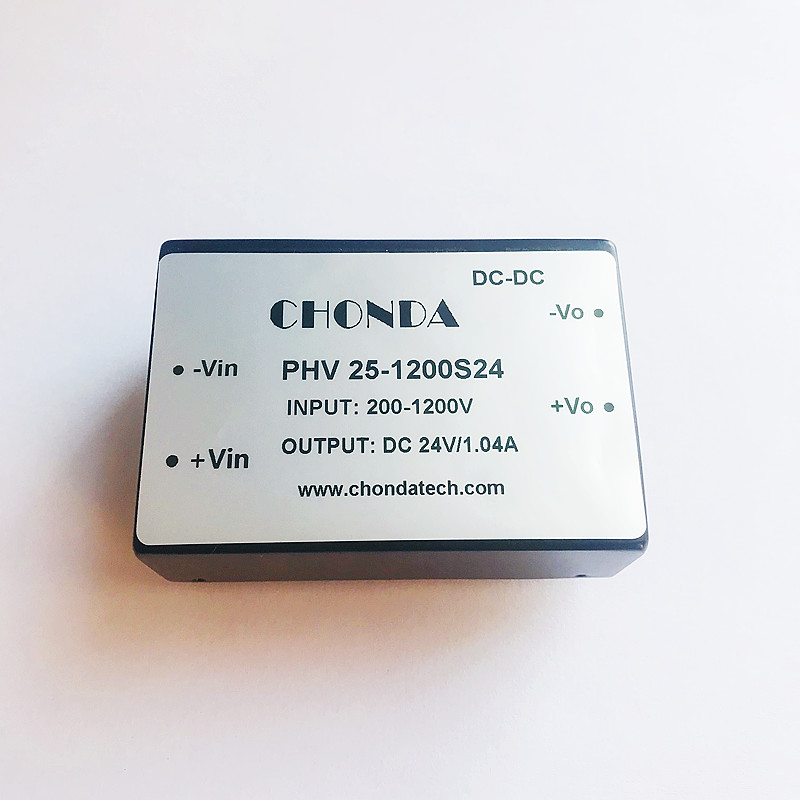
For applications requiring direct operation from high-voltage photovoltaic buses, the PHV Series high-voltage DC-DC converters provide a practical solution.
The PHV Series supports wide input voltage ranges up to 1200VDC and is available in power levels from 5W to 50W, making it suitable for a wide variety of PV monitoring devices, combiner box monitoring systems, communication modules, and data acquisition equipment.
For example, the PHV25-1200S24 converts high-voltage DC input into a regulated 24VDC output while providing electrical isolation between the photovoltaic bus and the monitoring electronics.
By combining wide input capability, isolation protection, and industrial-grade reliability, high-voltage DC-DC converters can help simplify system design and improve the long-term stability of PV monitoring installations.
6. Conclusion
PV monitoring systems operating from 1000VDC solar strings require isolated high-voltage DC-DC converters to provide safe and reliable low-voltage power for monitoring electronics.
A properly designed power architecture helps improve system stability, protects monitoring equipment from high-voltage transients, and supports long-term operation in demanding solar environments.
When selecting a DC-DC converter for PV monitoring applications, engineers should consider input voltage range, isolation voltage, surge immunity, efficiency, and long-term reliability.
For utility-scale solar projects, high-voltage isolated DC-DC converters such as Chonda’s PHV Series provide a practical solution for converting 200-1200VDC inputs into stable 24VDC outputs for combiner box monitoring systems and PV string monitoring units.
🔵 Related Technical Articles
To help you understand PV monitoring systems in more detail, you may explore the following technical articles:
How PV String Monitoring Works in Solar Power Systems
PV String Monitoring System Architecture Explained
How to Select a DC-DC Converter for PV Monitoring Applications