We help the world since 2012

How to Select the Right Input Voltage for PV Monitoring DC-DC Converters
Selecting the correct input voltage range is one of the first decisions when designing a DC-DC power supply for photovoltaic monitoring systems. An input range that is too narrow may lead to converter shutdown or reduced reliability, while an unnecessarily wide range may increase system cost without providing additional benefits.
Because the operating voltage of a PV string changes with temperature, irradiance, and system configuration, engineers should evaluate the actual DC bus voltage rather than relying only on the nominal system voltage. Choosing an appropriate high-voltage DC-DC converter helps ensure stable power delivery to monitoring equipment under all operating conditions.
Why Input Voltage Selection Matters
The input voltage range of a DC-DC converter directly affects the stability and reliability of a PV monitoring system. If the converter cannot operate across the actual voltage range of the photovoltaic DC bus, the monitoring equipment may experience unexpected shutdowns, unstable output, or reduced service life.
Unlike conventional low-voltage power supplies, photovoltaic string voltage is not constant. It varies with environmental conditions such as solar irradiance, module temperature, and system operating status. As a result, the converter should be selected based on the expected operating voltage of the PV system rather than the nominal system voltage alone.
A properly selected input voltage range provides sufficient operating margin, helping the converter maintain stable output under changing field conditions while reducing the risk of power interruptions in monitoring equipment.
Choose the Correct Input Voltage Range for Different PV System Voltages
Selecting the appropriate input voltage range should be based on the actual operating voltage of the photovoltaic string rather than the nominal system voltage. Different PV system designs operate within different voltage windows, and the DC-DC converter should be selected to provide sufficient operating margin under all expected conditions.
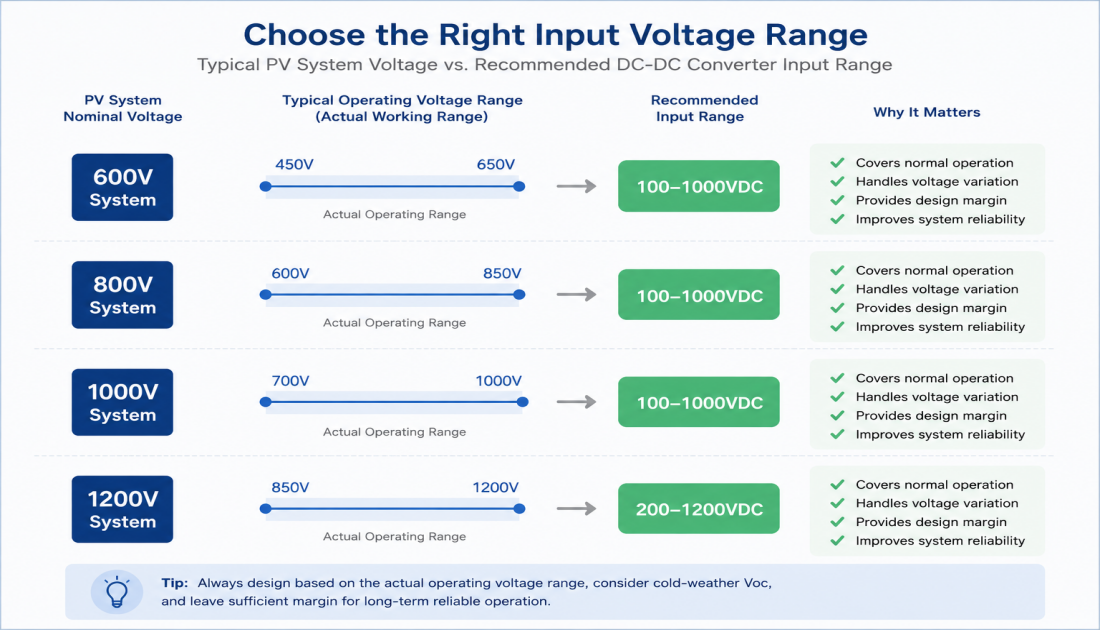
The table below provides a general selection guide for typical photovoltaic monitoring applications.
| Typical PV System | Typical Operating Voltage | Recommended Input Range |
|---|---|---|
| 600V PV System | approximately 450–650VDC | 100–1000VDC |
| 800V PV System | approximately 600–850VDC | 100–1000VDC |
| 1000V PV System | approximately 700–1000VDC | 100–1000VDC |
| 1200V PV System | approximately 850–1200VDC | 200–1200VDC |
When selecting a converter, engineers should consider the highest possible open-circuit voltage (Voc), particularly under low-temperature conditions, rather than relying solely on the nominal system voltage. Providing adequate voltage margin helps prevent converter shutdown caused by temporary voltage increases while maintaining stable operation throughout the system’s operating range.
For most commercial and utility-scale photovoltaic monitoring systems, wide-input high-voltage DC-DC converters provide greater design flexibility and simplify product selection across different PV system configurations.
Common Selection Mistakes
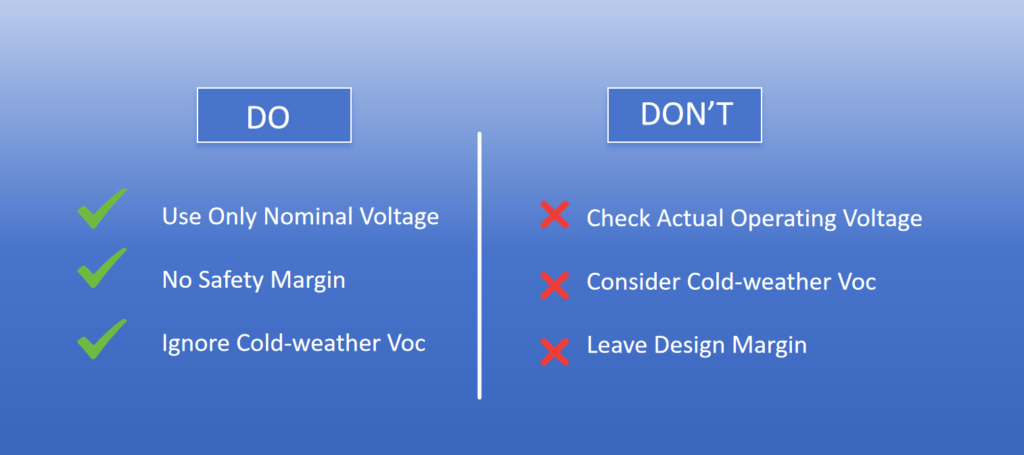
Selecting a high-voltage DC-DC converter based only on the nominal PV system voltage can lead to unexpected operating problems. The following mistakes are commonly seen during system design.
Only Checking the Nominal System Voltage
Many engineers select a converter based only on the system rating, such as “1000VDC PV system.” However, the actual DC bus voltage changes continuously with irradiance, temperature, and operating conditions. The converter should always be selected according to the expected operating voltage range rather than the nominal system voltage.
Ignoring Open-Circuit Voltage in Cold Weather
PV module open-circuit voltage (Voc) increases as temperature decreases. During cold mornings or winter operation, the string voltage may become significantly higher than its normal operating value. If this increase is not considered during converter selection, the input voltage may exceed the converter’s maximum rating.
Leaving No Design Margin
Selecting a converter with an input range that only just matches the expected operating voltage leaves little tolerance for voltage fluctuations. Allowing adequate design margin improves long-term reliability and reduces the risk of unexpected shutdowns caused by temporary voltage changes.
Considering these factors during the design stage helps engineers select a converter that operates reliably under both normal and extreme environmental conditions.
Recommended High Voltage DC-DC Converter
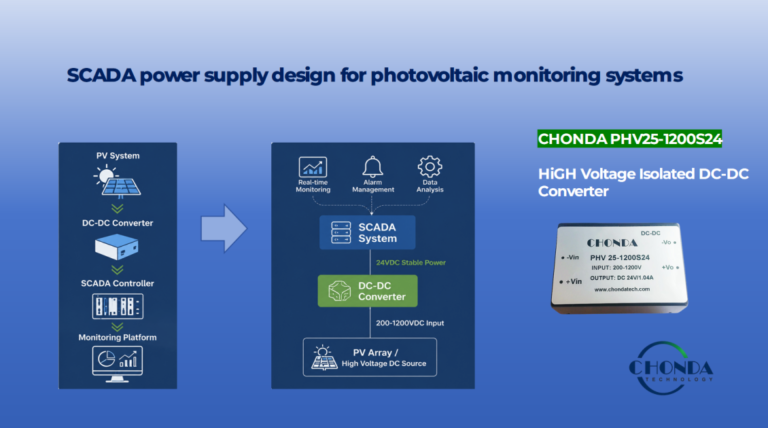
Selecting a converter with an appropriate wide input voltage range simplifies system design and improves long-term reliability in photovoltaic monitoring applications. For projects operating from high-voltage DC buses, engineers should select converters that provide sufficient voltage margin while maintaining stable isolated output under varying operating conditions.
Our High Voltage DC-DC Converter Modules are designed for photovoltaic monitoring systems and other industrial high-voltage applications, offering the following features:
- Wide input ranges of 100–1000VDC and 200–1200VDC
- Reinforced isolation for improved system safety
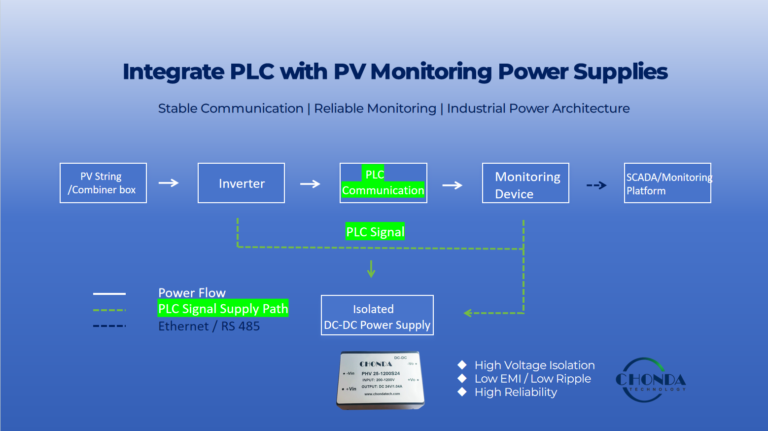
- Stable regulated outputs for monitoring, PLC, and communication equipment
- Compact design with power ratings from 5W to 50W
- Suitable for PV combiner boxes, string monitoring units, SCADA systems, and remote monitoring applications
Explore our High Voltage DC-DC Converter Modules to find the most suitable solution for your photovoltaic monitoring project.
Conclusion
Selecting the correct input voltage range is a fundamental step in designing a reliable PV monitoring power supply. Instead of relying only on the nominal system voltage, engineers should evaluate the actual operating voltage, consider cold-weather open-circuit voltage (Voc), and allow sufficient design margin for long-term reliability.
By choosing an appropriate high-voltage DC-DC converter with a suitable wide input range, photovoltaic monitoring systems can maintain stable operation under varying environmental conditions while reducing the risk of unexpected power interruptions.
🔵 Related Technical Articles