We help the world since 2012

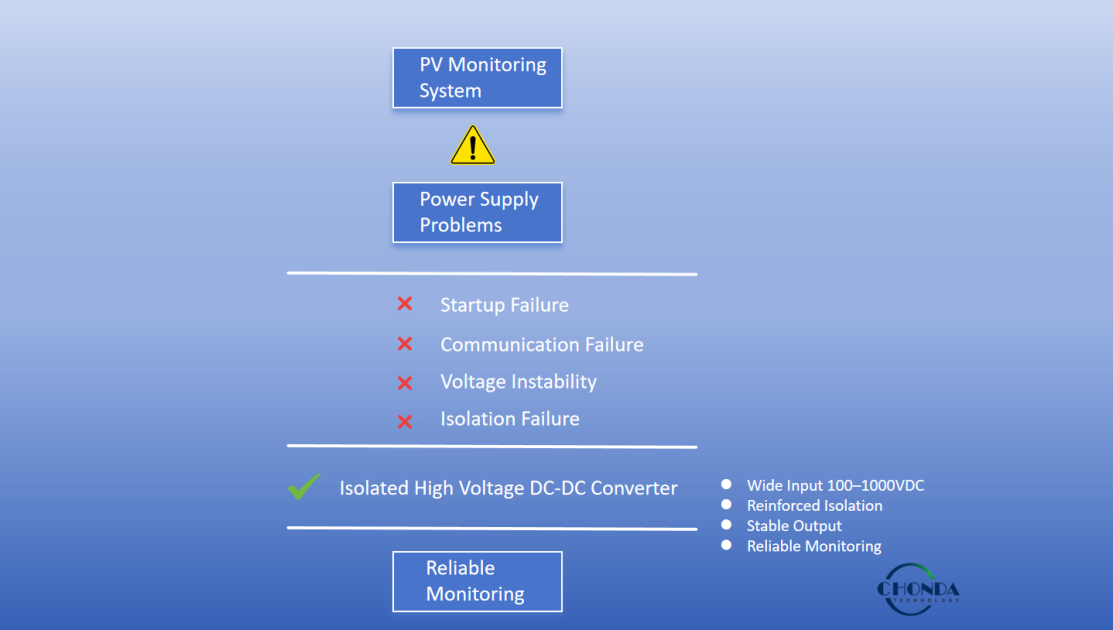
Common Power Supply Problems in PV Monitoring Systems
Power supply issues are one of the most common causes of failures in PV monitoring systems. A monitoring unit may suddenly stop communicating, sensors may report unstable data, or the entire monitoring system may fail to start due to an unreliable auxiliary power supply.
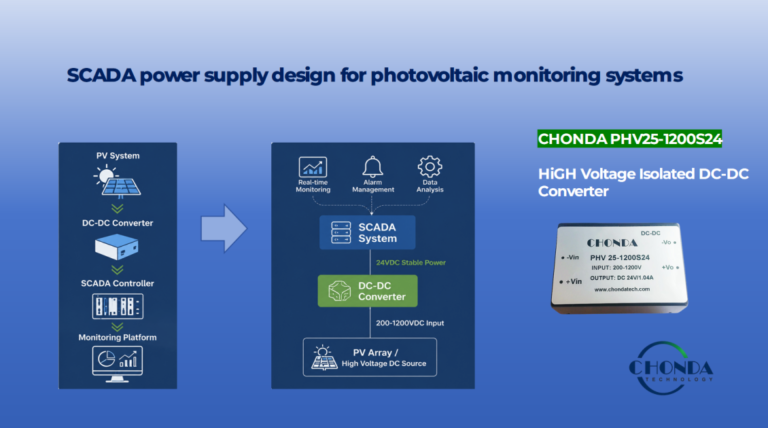
Because most photovoltaic installations operate with high-voltage DC buses of up to 1000VDC, converting this voltage into a stable and isolated low-voltage supply requires a properly designed high-voltage DC-DC converter. Without adequate isolation and voltage regulation, monitoring equipment can suffer from electrical noise, voltage fluctuations, and unexpected downtime.
This article discusses the most common power supply problems found in PV monitoring systems and explains how an isolated high-voltage DC-DC converter helps improve system reliability and long-term performance.
1. Monitoring Unit Cannot Start
One of the most common problems in PV monitoring systems is that the monitoring unit fails to start after installation or unexpectedly shuts down during operation. In many cases, the monitoring electronics are functioning properly, but the auxiliary power supply is unable to provide a stable output voltage.
Several factors may contribute to this issue:
- Insufficient input voltage range for high-voltage PV systems
- Startup failure caused by voltage fluctuations during system operation
- Inadequate isolation between the high-voltage DC bus and low-voltage electronics
- Power supply modules not designed for continuous industrial operation
Using an isolated high-voltage DC-DC converter with a wide input range helps ensure that the monitoring unit receives a stable and regulated low-voltage supply, allowing reliable startup and continuous operation even under varying photovoltaic operating conditions.
2. Communication Failure
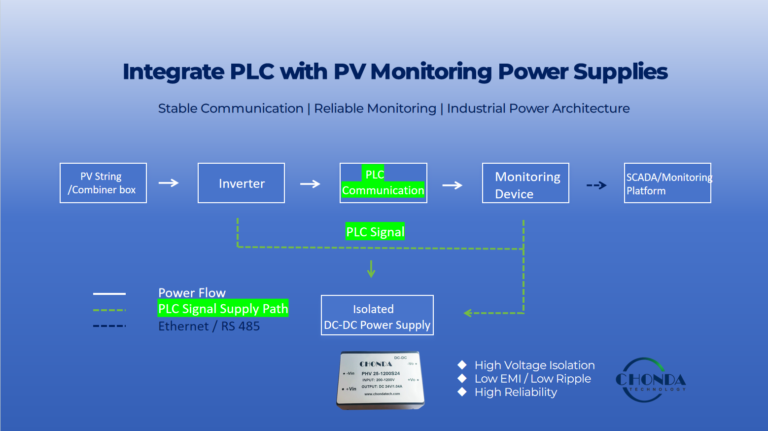
Communication failures are another common issue in PV monitoring systems. The monitoring unit may remain powered on, but data cannot be transmitted correctly to the inverter, gateway, or SCADA system. This can result in missing performance data, delayed fault detection, and reduced system visibility.
Possible causes include:
- Unstable DC power affecting communication modules
- Electrical noise from the high-voltage DC bus
- Insufficient isolation allowing interference to reach low-voltage circuits
- Voltage dips causing communication devices to reset unexpectedly
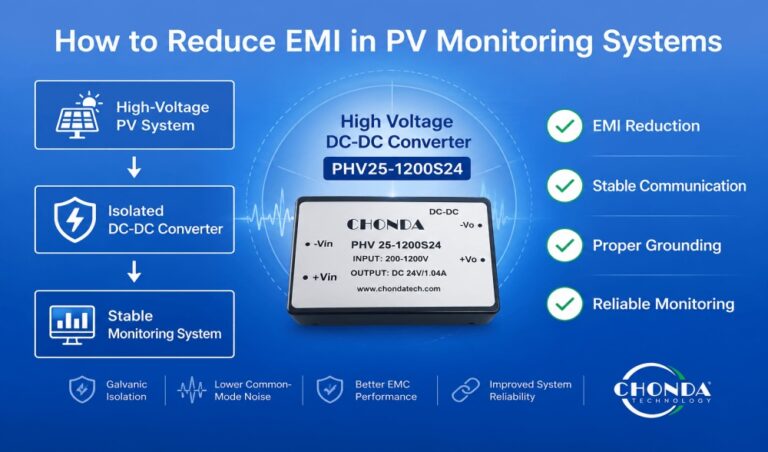
A well-designed isolated high-voltage DC-DC converter provides a stable output voltage while minimizing electrical noise and isolating sensitive communication electronics from the high-voltage photovoltaic system. This helps maintain reliable data transmission and continuous monitoring performance.
3. Voltage Instability
Voltage instability can significantly reduce the reliability of a PV monitoring system. Although the monitoring equipment may continue operating, unstable input or output voltages can lead to inaccurate measurements, unexpected system resets, or intermittent communication problems.
Voltage instability may result from several factors, including:
- Wide fluctuations in the photovoltaic DC bus voltage during changing weather conditions
- Power supplies with poor voltage regulation
- Electrical transients and surge events in outdoor installations
- DC-DC converters not designed for high-voltage photovoltaic applications
An isolated high-voltage DC-DC converter with a wide input range and stable output regulation helps maintain consistent operating voltage even when the PV system experiences varying input conditions. This ensures accurate monitoring data, reliable communication, and continuous operation throughout the life of the photovoltaic installation.
4. Isolation Failure
Isolation failure is one of the most serious power supply issues in PV monitoring systems. Without proper electrical isolation, high-voltage disturbances from the photovoltaic DC bus can reach sensitive monitoring electronics, increasing the risk of equipment damage, communication errors, and unexpected system shutdowns.
Potential consequences of insufficient isolation include:
- Damage to monitoring units caused by high-voltage transients
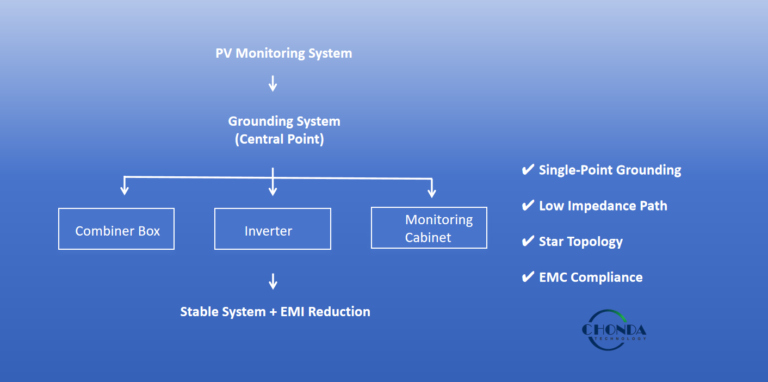
- Ground loop interference affecting communication signals
- Increased electrical noise reducing measurement accuracy
- Reduced long-term reliability of the monitoring system
Using an isolated high-voltage DC-DC converter provides a safe electrical barrier between the high-voltage photovoltaic system and low-voltage monitoring equipment. This not only improves operational safety but also enhances system stability and long-term reliability.
To learn more about the importance of electrical isolation in photovoltaic monitoring applications, please refer to the following articles:
How Isolated DC-DC Converters Improve PV Monitoring Reliability
Why PV Monitoring Systems Need Isolated Power Supplies
5. Recommended Solution
Selecting a reliable isolated high-voltage DC-DC converter is one of the most effective ways to prevent power supply problems in PV monitoring systems. A converter designed specifically for photovoltaic applications helps ensure stable startup, continuous communication, reliable voltage regulation, and long-term system performance.
The PHV Series of high-voltage DC-DC converters is designed for photovoltaic monitoring and industrial high-voltage applications, offering:
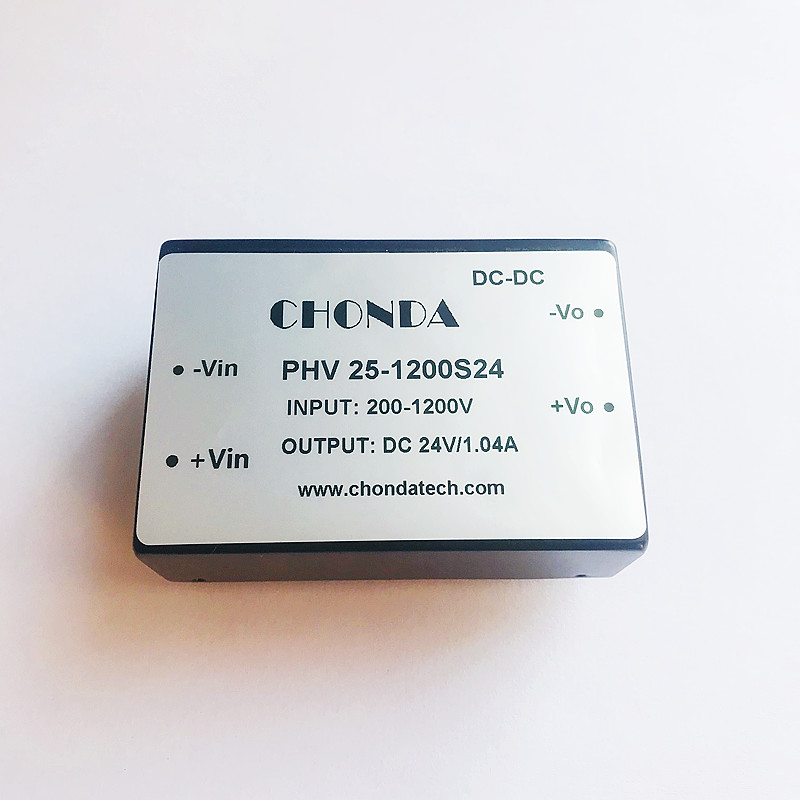
- Wide input voltage range: 100–1000VDC
- Output options: 5VDC, 12VDC, 24VDC, and 48VDC
- Power range: 5W to 50W
- Reinforced electrical isolation
- Compact design for combiner boxes and monitoring equipment
- Custom input and output specifications available upon request
To explore the complete High Voltage DC-DC Modules series for PV monitoring and industrial applications, please visit: High Voltage DC-DC Modules
6. Conclusion
Power supply problems can significantly reduce the reliability of PV monitoring systems, leading to communication failures, unstable operation, and unexpected downtime. Selecting a high-quality isolated high-voltage DC-DC converter with a wide input range and stable output is one of the most effective ways to improve long-term system performance. By addressing common power supply issues during system design, engineers can build more reliable and efficient photovoltaic monitoring solutions.
Related Technical Articles
👉 What Is PV String Monitoring?
👉 PV String Monitoring System Architecture Explained