We help the world since 2012

Power Supply Design for PV Combiner Box Monitoring Systems
Modern photovoltaic (PV) power plants rely heavily on monitoring systems to ensure maximum energy production and rapid fault detection. Among these monitoring solutions, PV string monitoring systems play a critical role by providing real-time visibility into the performance of individual solar strings.
While engineers often focus on sensors, communication networks, and software platforms, the power supply architecture behind the monitoring system is equally important. A stable and reliable power source ensures continuous data collection, accurate measurements, and dependable communication between field devices and supervisory systems.
This article explains how power supplies are used in PV combiner box monitoring systems and discusses key design considerations for selecting the right DC-DC converter solution.
Why Power Supplies Matter in PV Monitoring Systems
A PV monitoring system operates continuously throughout the lifetime of a solar plant. If the monitoring electronics lose power, operators may lose visibility into string performance, fault conditions, and energy production data.
A reliable power supply is therefore essential for:
- Continuous monitoring operation
- Accurate current and voltage measurements
- Stable communication with SCADA systems
- Early fault detection
- Long-term system reliability
In large utility-scale solar installations, even temporary monitoring interruptions can make troubleshooting more difficult and increase maintenance costs.
Typical Power Architecture Inside a Combiner Box
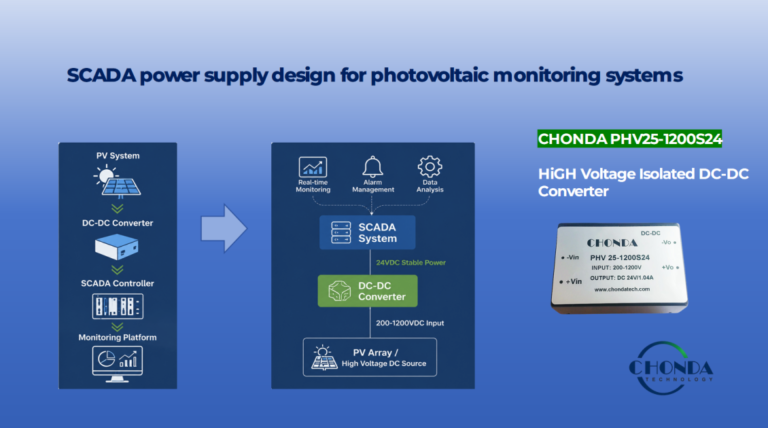
[Insert Figure 1: Typical Power Architecture for PV Monitoring Systems]
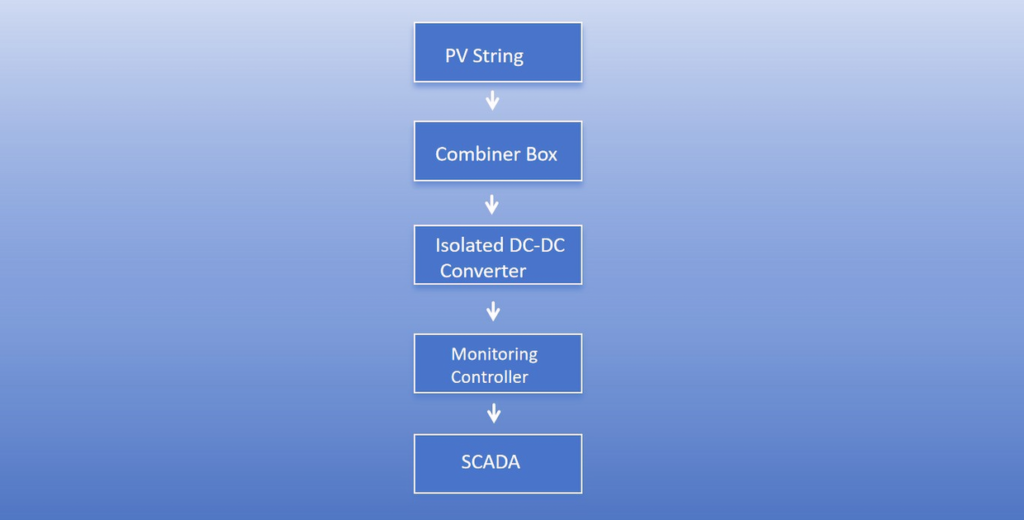
A typical PV monitoring system architecture includes several functional layers.
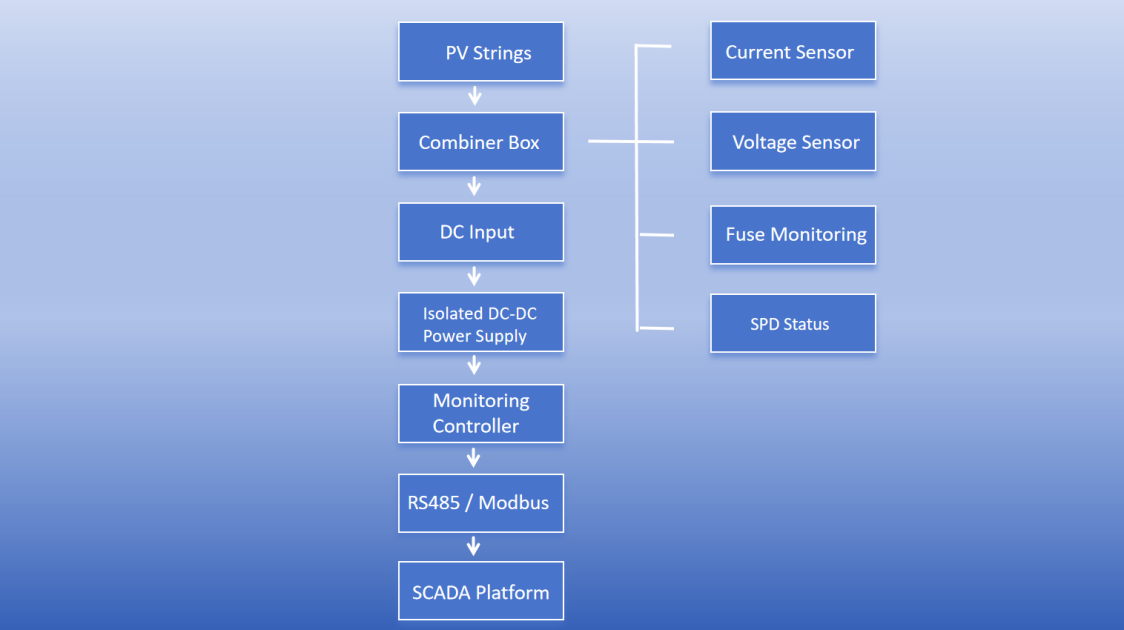
PV strings feed electrical power into the combiner box. Inside the combiner box, monitoring electronics collect operating data and transmit information to higher-level monitoring platforms.
The power architecture can be summarized as follows:
PV String
↓
Combiner Box
↓
Isolated DC-DC Converter
↓
Monitoring Controller
↓
SCADA Platform
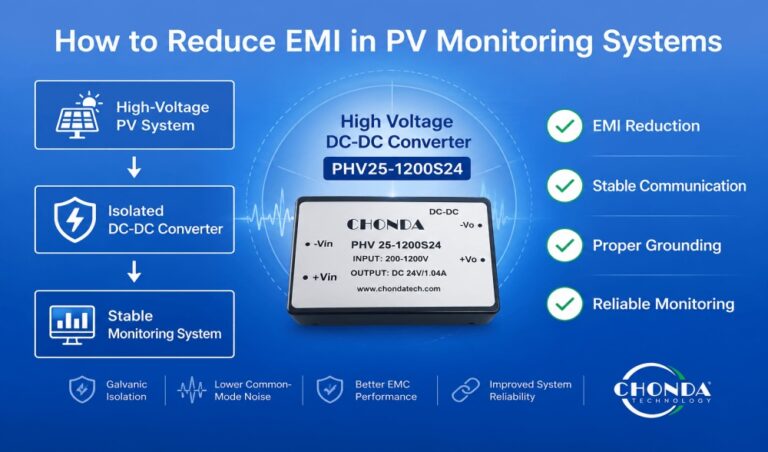
The isolated DC-DC converter acts as the power foundation of the monitoring system by providing stable operating voltages to monitoring electronics and communication devices.
Key Requirements for PV Monitoring Power Supplies
Wide Input Voltage Range
PV installations experience significant voltage variations due to changes in sunlight intensity, temperature, and system configuration.
A suitable DC-DC converter should support a wide input voltage range to ensure stable operation under varying conditions.
Typical PV monitoring applications may require support for:
- 200–1200VDC input
- 600VDC systems
- 1000VDC systems
- 1500VDC systems
Wide-input converters simplify system design and improve deployment flexibility.
High Isolation Voltage
Electrical isolation is critical in photovoltaic systems.
High isolation helps protect:
- Monitoring controllers
- Communication interfaces
- Sensor circuits
- Maintenance personnel
Many industrial PV monitoring systems utilize isolation levels of:
- 3000VAC
- 4000VAC
- Higher depending on application requirements
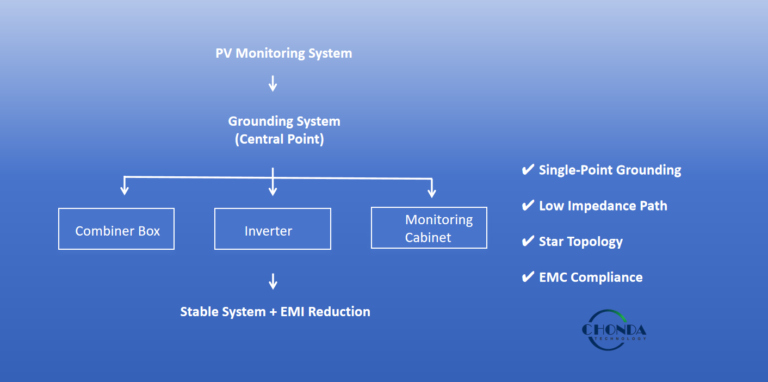
Isolation also helps reduce ground loop problems and improves signal integrity.
Industrial Temperature Performance
PV combiner boxes are typically installed outdoors and exposed to harsh environmental conditions.
Monitoring power supplies should support industrial temperature ranges such as:
- -40°C to +85°C
Reliable operation under extreme temperatures helps prevent unexpected monitoring failures.
EMC and Surge Protection
Outdoor solar installations are exposed to:
- Lightning events
- Switching transients
- Electromagnetic interference
Power modules designed for industrial photovoltaic applications should include strong EMC performance and protection features to maintain system stability.
How Isolated DC-DC Converters Improve Monitoring Reliability
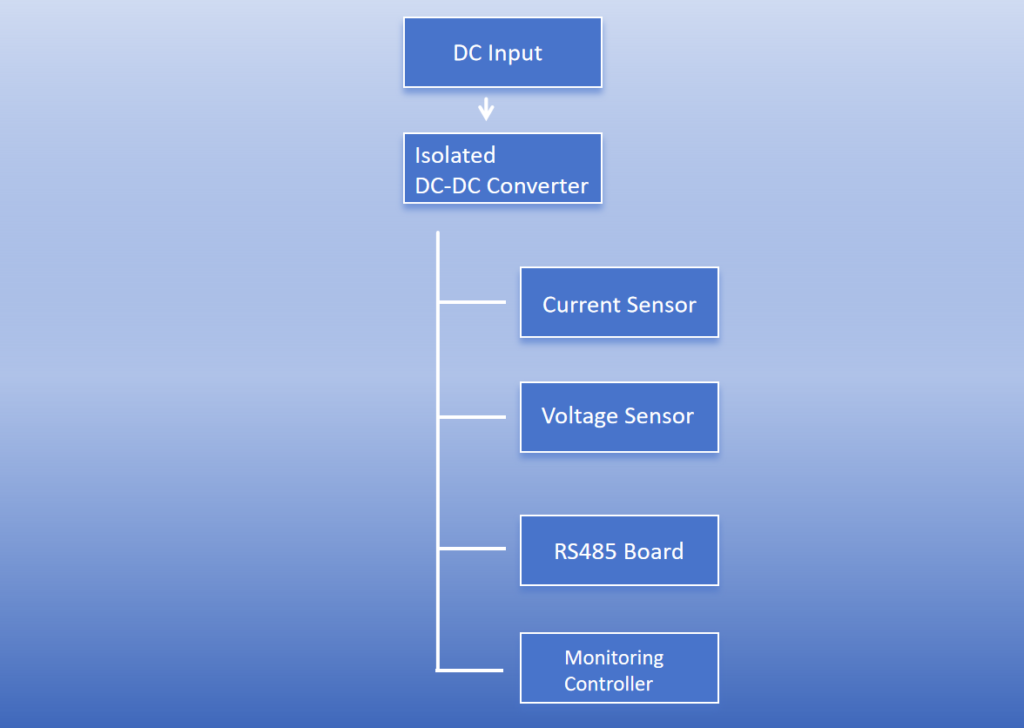
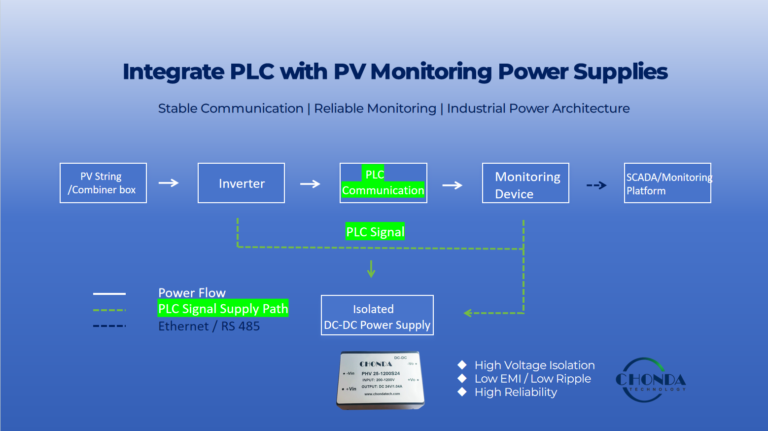
Inside a smart combiner box, the isolated DC-DC converter distributes power to multiple monitoring subsystems.
Typical loads include:
- Current sensors
- Voltage sensors
- RS485 communication boards
- Monitoring controllers
The architecture is typically:
DC Input
↓
Isolated DC-DC Converter
↓
Current Sensor
Voltage Sensor
RS485 Communication Board
Monitoring Controller
Because all monitoring electronics depend on this power source, converter reliability directly impacts monitoring accuracy and communication stability.
A high-quality isolated converter helps ensure long-term system performance and minimizes maintenance requirements.
CHONDA Power Solutions for PV Monitoring Applications
CHONDA provides isolated DC-DC power modules designed specifically for industrial and photovoltaic monitoring applications.
Our solutions support demanding solar monitoring environments and can be integrated into:
- PV string monitoring units
- Smart combiner boxes
- Data loggers
- Monitoring gateways
- Remote monitoring terminals
Key features include:
- Wide input voltage range up to 1200VDC
- Stable 24VDC output
- High isolation protection
- Compact module design
- Industrial temperature capability
- Long operational lifetime
These features make CHONDA power modules suitable for modern photovoltaic monitoring architectures requiring high reliability and low maintenance.
Typical Applications
Isolated DC-DC converters are commonly used in:
PV String Monitoring Systems
Providing reliable operating power for measurement and communication electronics.
Smart Combiner Boxes
Supporting current sensing, voltage monitoring, and fault detection functions.
Solar Data Loggers
Ensuring stable operation of data acquisition equipment.
Monitoring Gateways
Powering communication interfaces that connect field devices to SCADA platforms.
Utility-Scale Solar Plants
Providing long-term reliability in large photovoltaic installations.
Conclusion
Selecting the right power supply architecture is a critical step when designing reliable PV combiner box monitoring systems.
By combining wide-input voltage capability, high isolation protection, industrial-grade reliability, and strong environmental performance, engineers can significantly improve monitoring system stability and long-term operational reliability.
CHONDA’s isolated DC-DC power modules are specifically developed for photovoltaic monitoring and combiner box applications, helping engineers build robust monitoring infrastructures for modern solar power plants.
As PV installations continue to expand worldwide, reliable power conversion solutions will remain a key component of successful monitoring system design.
👉 Explore the full PV monitoring system architecture
👉 Learn about DC-DC power supply design