We help the world since 2012

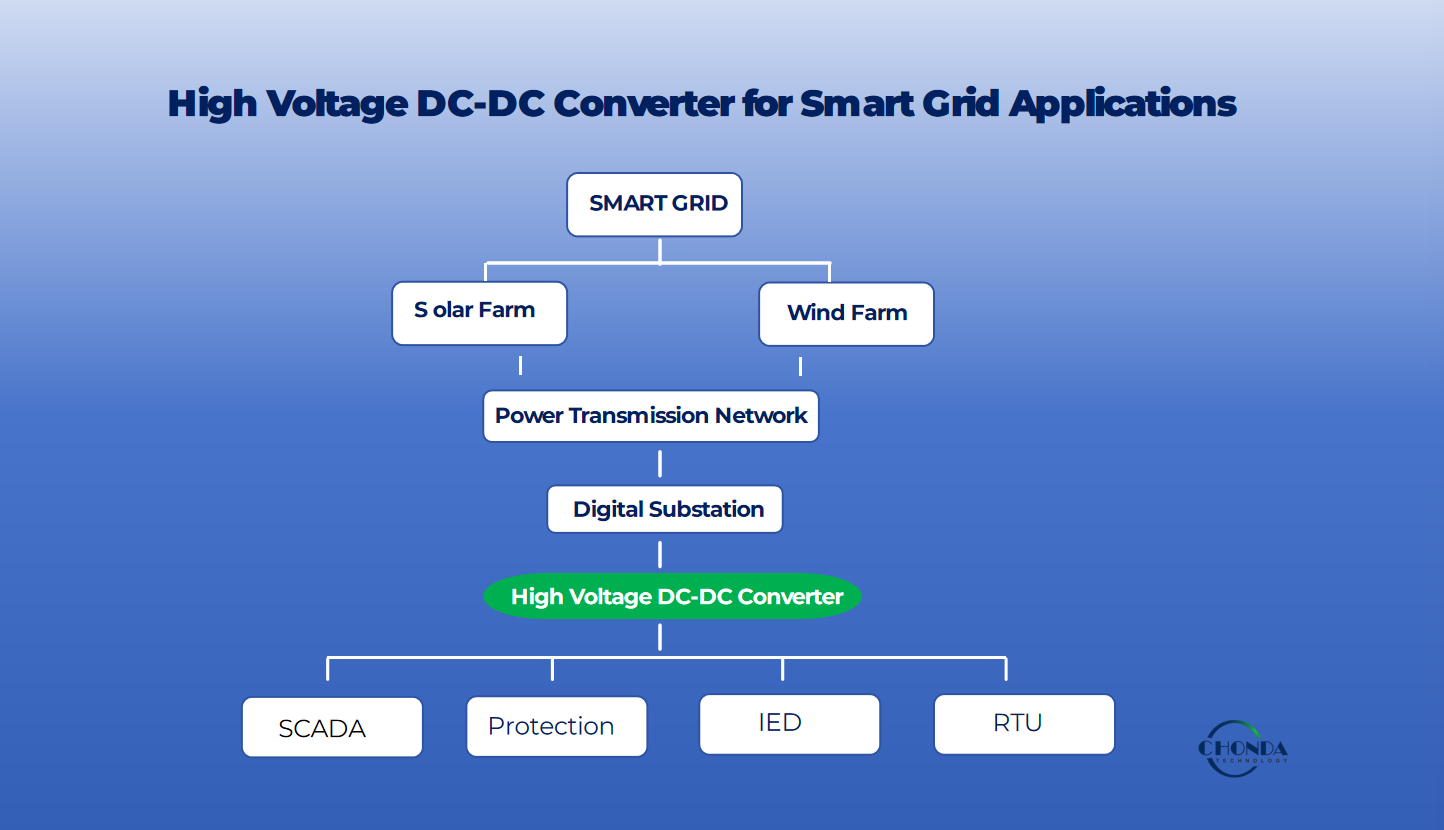
High Voltage DC-DC Converter for Smart Grid Applications
Modern smart grid systems rely on thousands of distributed electronic devices to monitor, control, and protect electrical infrastructure in real time. From substations and renewable energy integration to remote monitoring terminals and intelligent distribution equipment, these systems require highly reliable auxiliary power to keep critical electronics operating continuously.
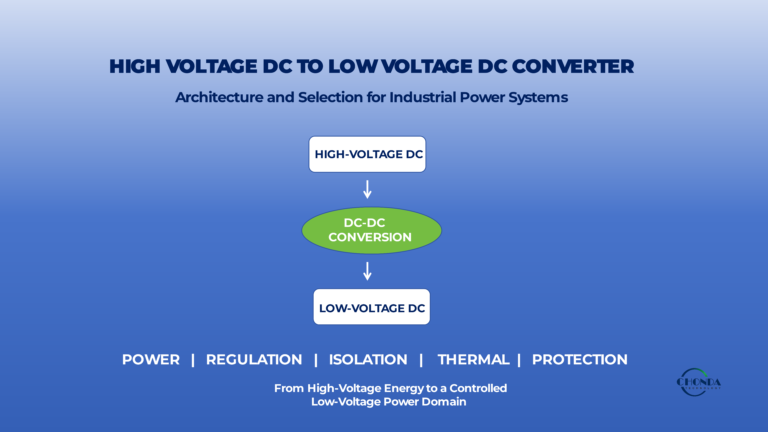
A high voltage DC-DC converter provides isolated low-voltage power directly from high-voltage DC sources, supporting controllers, communication modules, protection relays, sensors, and monitoring equipment throughout the smart grid.
This article explains why auxiliary power design is particularly important in smart grid applications, where high voltage, harsh environments, and long-term reliability place unique demands on isolated DC-DC power supplies.
1. Why Is Auxiliary Power More Challenging in Smart Grid Systems?
Unlike conventional industrial equipment, smart grid systems operate across geographically distributed electrical networks where electronic devices must remain operational under widely changing environmental and electrical conditions. Controllers, protection relays, communication gateways, and monitoring units are often installed in substations, renewable energy stations, distribution cabinets, and outdoor power facilities that cannot tolerate unexpected power interruptions.
Unlike factory automation systems that typically operate within controlled environments, smart grid equipment may experience high-voltage transients, electromagnetic interference, lightning-induced disturbances, temperature extremes, and continuous 24-hour operation throughout the year.
For this reason, auxiliary power in smart grid applications is not simply a low-voltage supply. It becomes a critical part of the system architecture, responsible for maintaining stable operation of protection, communication, monitoring, and control functions even when the primary power network experiences abnormal conditions.
A reliable high voltage DC-DC converter provides isolated auxiliary power that allows these electronic subsystems to continue operating independently from the high-voltage power bus, helping improve overall system stability, electrical safety, and long-term operational reliability.
2. Where Are High Voltage DC-DC Converters Used Inside Smart Grid Equipment?
High voltage DC-DC converters are rarely used in the primary power transmission path of a smart grid. Instead, they are installed within auxiliary power systems to provide isolated low-voltage power for the electronic equipment responsible for monitoring, communication, protection, and intelligent control.
Typical smart grid equipment contains a high-voltage DC bus together with multiple low-voltage electronic subsystems. These subsystems cannot operate directly from the high-voltage source and therefore require an isolated auxiliary power supply.
Common applications include:
- Protection relay systems
- Intelligent electronic devices (IEDs)
- Remote terminal units (RTUs)
- SCADA communication equipment
- Data acquisition modules
- Smart metering systems
- Grid monitoring controllers
- Human-machine interface (HMI) displays
Rather than supplying energy to the electrical load itself, the high voltage DC-DC converter powers the electronic “brain” of the smart grid. Stable auxiliary power allows monitoring, fault detection, communication, and automation functions to continue operating even when the primary power network experiences disturbances.
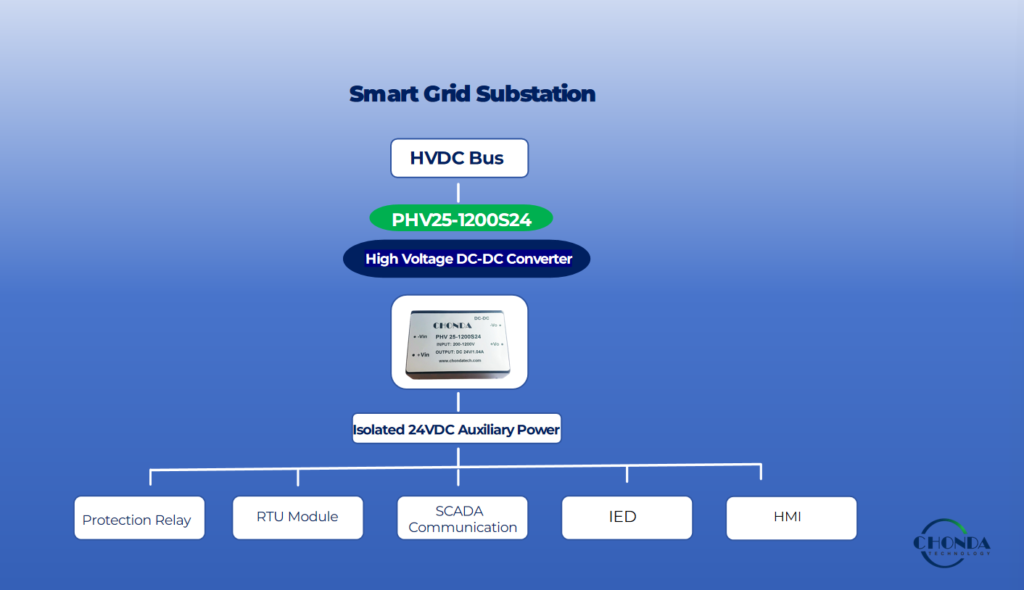
This architecture improves overall grid reliability while supporting the increasing digitalization of modern electrical infrastructure.
3. What Engineering Challenges Do Smart Grid Power Supplies Face?
Smart grid equipment is expected to operate continuously for years while maintaining stable communication, accurate monitoring, and reliable protection. Unlike many industrial control systems, auxiliary power supplies in smart grid applications must remain dependable under a much wider range of operating conditions.
The following engineering challenges are commonly considered when designing auxiliary power for smart grid equipment.
3.1.Maintaining Stable Operation During Grid Disturbances
Power fluctuations, switching operations, and fault conditions may introduce voltage variations on the high-voltage DC bus. The auxiliary power supply must continue delivering stable output to communication and protection electronics without interruption.
3.2.Protecting Sensitive Electronic Equipment
Protection relays, intelligent electronic devices (IEDs), and monitoring controllers contain highly sensitive processors and communication interfaces. Reinforced electrical isolation helps prevent disturbances on the primary power network from affecting these low-voltage electronic systems.
3.3.Supporting Long-Distance Communication Networks
Modern smart grids rely heavily on SCADA systems, remote terminal units (RTUs), Ethernet communication, and industrial communication protocols. Even a temporary loss of auxiliary power may interrupt data transmission or delay fault reporting.
A stable isolated DC-DC converter helps maintain continuous communication between distributed grid equipment.
3.4.Operating Reliably in Harsh Outdoor Environments
Many smart grid installations are deployed in substations, renewable energy facilities, roadside cabinets, or remote utility sites where equipment is exposed to temperature changes, humidity, dust, and vibration.
Auxiliary power supplies must therefore maintain long-term reliability under demanding environmental conditions with minimal maintenance.
3.5.Preparing for Future Smart Grid Expansion
As electrical infrastructure becomes increasingly digital, additional sensors, communication devices, edge computing modules, and remote monitoring functions continue to be integrated into smart grid equipment.
A well-designed auxiliary power architecture provides sufficient capacity and stability to support future system upgrades without requiring major changes to the overall power design.
4. CHONDA High Voltage DC-DC Converter Solution for Smart Grid Applications
Reliable auxiliary power is the foundation of every intelligent power distribution system. Whether the equipment is installed inside a substation, a renewable energy station, or a remote distribution cabinet, the electronic control system can only perform correctly if its auxiliary power remains stable under all operating conditions.
CHONDA develops high voltage DC-DC converter modules specifically for applications where electrical isolation, long-term reliability, and stable auxiliary power are essential. Rather than focusing only on electrical specifications, our solutions are designed to support the continuous operation of communication, monitoring, protection, and automation equipment throughout the entire smart grid infrastructure.
Our converters provide isolated low-voltage auxiliary power directly from high-voltage DC sources, allowing engineers to simplify system architecture while improving operational reliability and electrical safety.
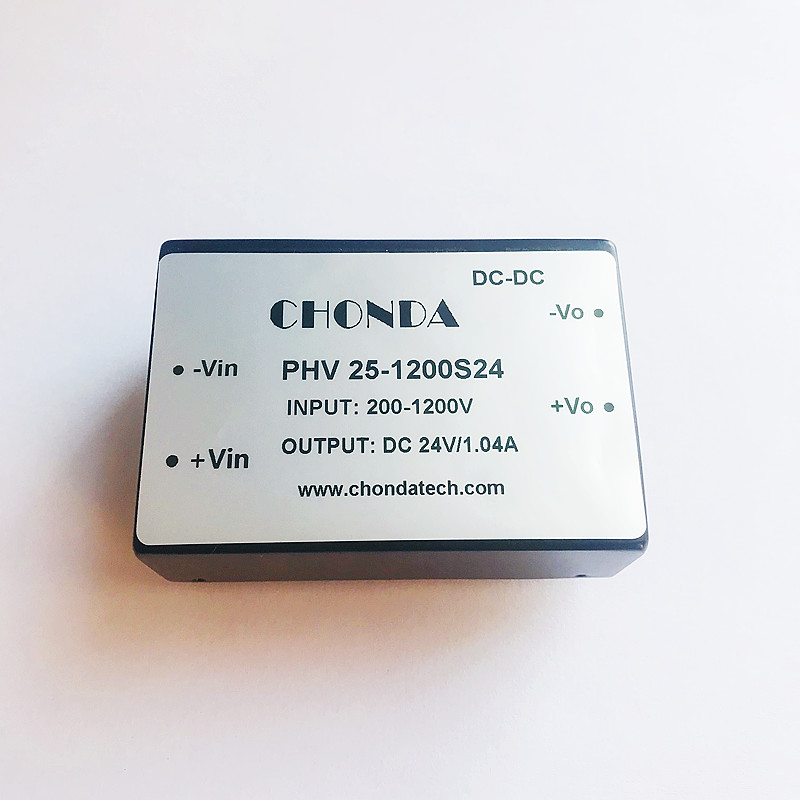
4.1.Why PHV25-1200S24 Is Well Suited for Smart Grid Applications
The PHV25-1200S24 is designed for auxiliary power applications operating directly from high-voltage DC systems. Its wide input voltage range allows the converter to be integrated into different smart grid architectures without requiring additional front-end power conversion.
Reinforced electrical isolation protects low-voltage electronic equipment from disturbances on the primary DC bus, while the regulated 24VDC output supplies stable power for protection relays, intelligent electronic devices (IEDs), communication equipment, SCADA controllers, and monitoring systems.
For utility infrastructure expected to operate continuously over many years, the converter also provides industrial-grade reliability, stable output regulation, and dependable long-term performance.
4.2.Typical Smart Grid Applications
CHONDA high voltage DC-DC converters can be integrated into a wide range of smart grid equipment, including:
- Digital substations
- Protection relay systems
- Intelligent electronic devices (IEDs)
- SCADA communication equipment
- Remote terminal units (RTUs)
- Smart distribution cabinets
- Renewable energy grid integration
- Utility monitoring and automation systems
By supplying isolated auxiliary power for these electronic subsystems, the converter helps maintain continuous communication, accurate monitoring, and dependable system control throughout modern power networks.
4.3.OEM High Voltage DC-DC Converter Solutions for Smart Grid Projects
Smart grid projects often require different electrical architectures depending on regional standards, utility requirements, and equipment configurations.
CHONDA supports OEM customization for high voltage DC-DC converters, including:
- Extended input voltage ranges
- Custom output voltages
- Different output power levels
- Reinforced isolation options
- Mechanical customization
- Connector and wiring configurations
Our engineering team works closely with equipment manufacturers to develop isolated auxiliary power solutions that match specific smart grid system requirements while supporting long-term product reliability.
5. Conclusion
As power systems become increasingly digital and interconnected, smart grid infrastructure depends on stable auxiliary power to support monitoring, communication, protection, and intelligent control functions.
Unlike the primary power conversion stage, the auxiliary power system directly influences the reliability of electronic equipment that keeps the grid operating safely and efficiently. Selecting an isolated high voltage DC-DC converter helps improve electrical safety, maintain continuous system operation, and support long-term infrastructure reliability.
CHONDA provides high voltage DC-DC converter solutions for smart grid applications, helping equipment manufacturers build reliable auxiliary power architectures for substations, intelligent distribution systems, renewable energy integration, and utility automation projects.