We help the world since 2012

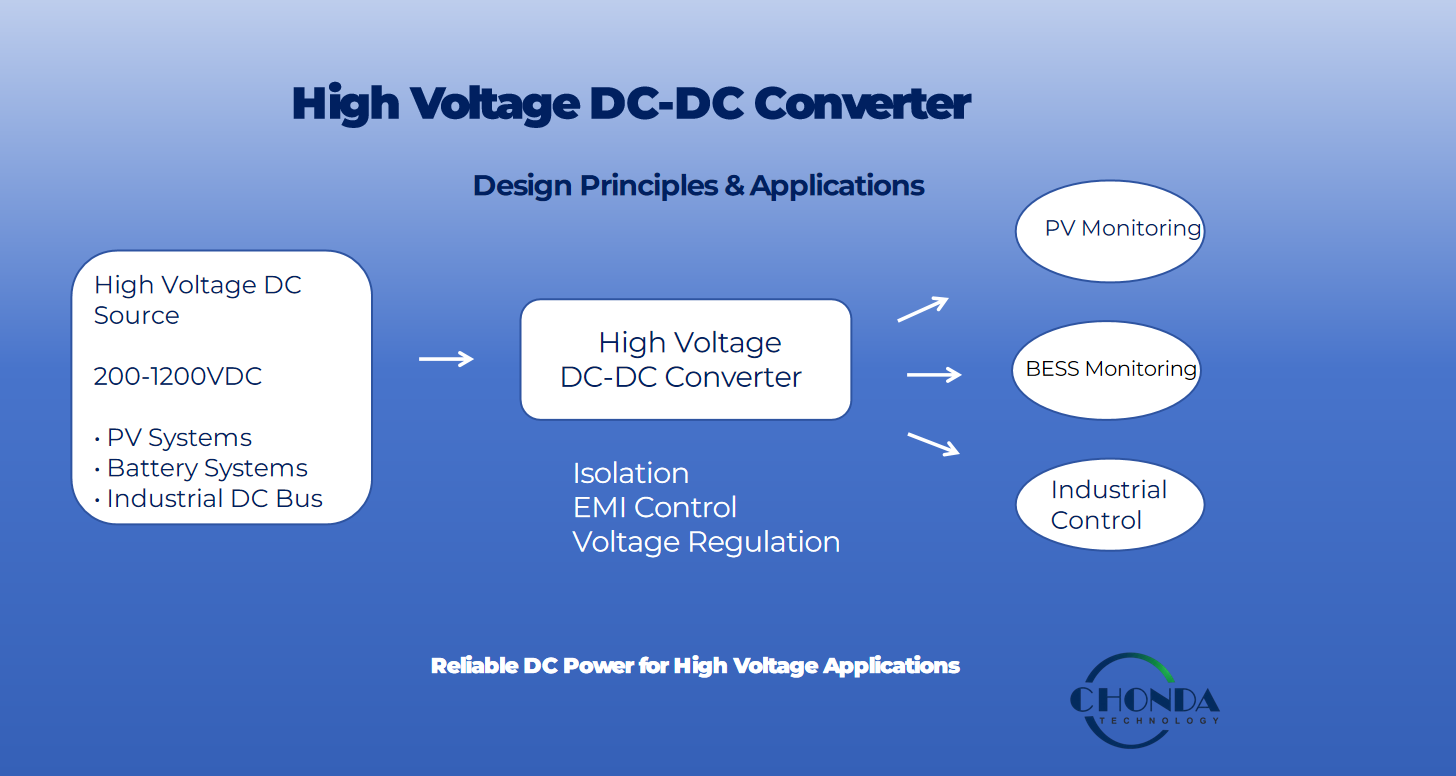
What Is a High Voltage DC-DC Converter? Design Principles and Applications
Modern industrial and energy systems increasingly require power conversion between high voltage DC sources and stable low voltage electronics. From photovoltaic monitoring systems and battery energy storage systems to industrial automation and transportation equipment, reliable DC power conversion is essential.
A high voltage DC-DC converter provides an efficient and isolated solution to convert high DC input voltages into stable output power for control systems, communication devices, and monitoring equipment. This article explains the working principles, key design requirements, and common applications of high voltage DC-DC converters.
1. What Is a High Voltage DC-DC Converter?
A high voltage DC-DC converter is a power conversion device designed to convert a high DC voltage input into a stable and regulated DC output voltage.
Unlike conventional DC-DC converters that operate with low voltage sources, high voltage DC-DC converters are designed to handle significantly higher input voltage levels while maintaining safe, reliable, and efficient power conversion.
In many industrial and energy systems, high voltage DC sources are commonly used to improve system efficiency and reduce transmission losses. However, electronic control units, communication devices, sensors, and monitoring systems often require lower and more stable DC voltages.
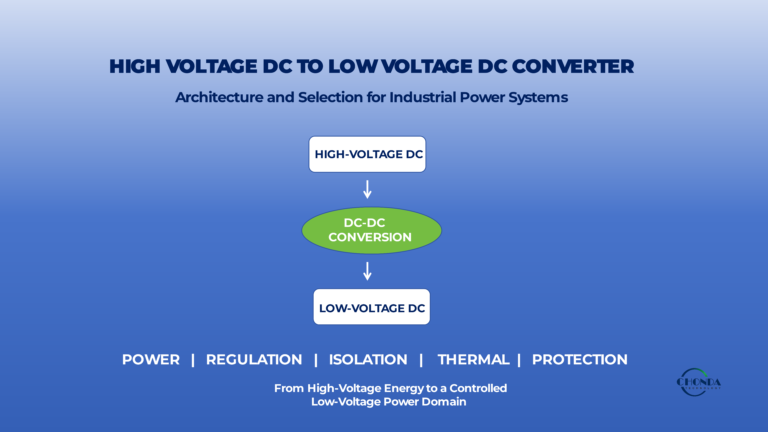
A high voltage DC-DC converter provides the connection between these different voltage levels by stepping down the high DC input voltage and delivering a regulated output suitable for sensitive electronic equipment.
A typical conversion process can be represented as:
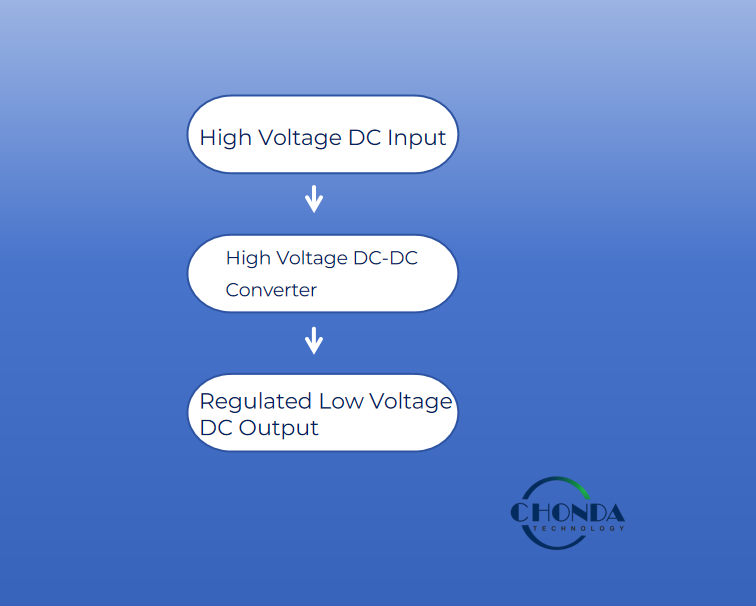
For example, a converter may convert a 200-1200VDC input voltage into a regulated 24VDC output for industrial control, monitoring, and communication applications.
High voltage DC-DC converters are widely used in applications where reliable power conversion and electrical isolation are required, including:
- Photovoltaic monitoring systems
- Battery energy storage systems (BESS)
- Industrial automation equipment
- Transportation and railway systems
- High voltage control and monitoring applications
The key difference between a standard DC-DC converter and a high voltage DC-DC converter is not only the input voltage range, but also the engineering requirements involved, including:
- High voltage insulation design
- Electrical isolation
- Electromagnetic interference (EMI) control
- Long-term operating reliability
These design considerations ensure that the converter can operate safely in demanding industrial environments.
2. How Does a High Voltage DC-DC Converter Work?
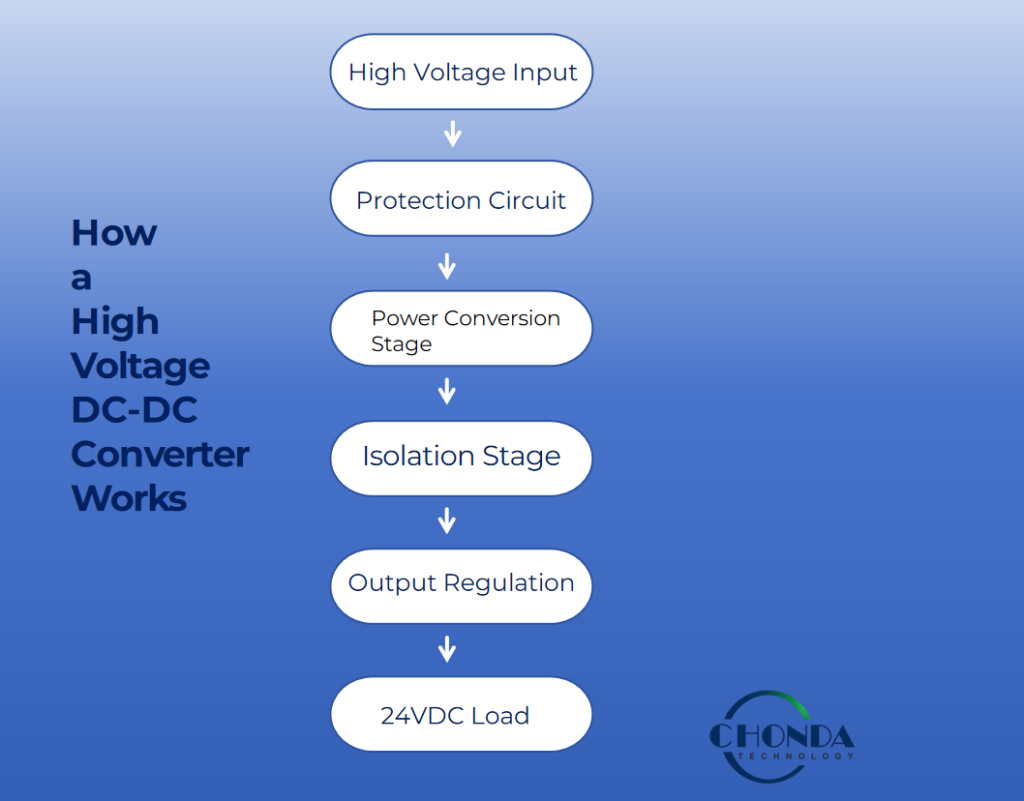
A high voltage DC-DC converter works by processing a high DC voltage input through multiple power conversion stages to provide a safe, stable, and regulated DC output voltage for electronic systems.
Unlike simple voltage reduction circuits, industrial high voltage DC-DC converters require additional protection, isolation, and regulation functions to ensure reliable operation under demanding electrical conditions.
A typical high voltage DC-DC conversion process includes several key stages:
2.1. High Voltage Input
The conversion process begins with a high voltage DC source, which may come from systems such as photovoltaic arrays, battery energy storage systems, or industrial DC buses.
These sources can operate at hundreds or even thousands of volts, requiring careful electrical design to ensure safe operation.
Typical input voltage ranges may include:
- 200VDC–1200VDC
- 100VDC–1000VDC
- Custom high voltage DC ranges for specific applications
2.2. Protection Circuit
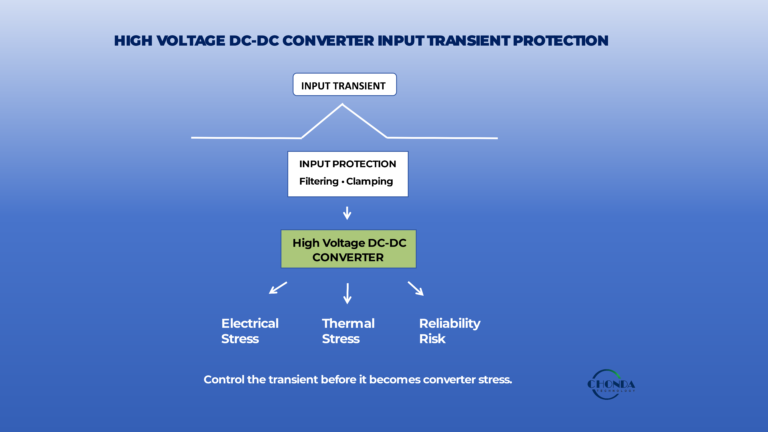
Before power conversion begins, the input stage provides protection against abnormal electrical conditions.
Common protection functions include:
- Over-voltage protection
- Over-current protection
- Surge protection
- Reverse polarity protection
These protection mechanisms help prevent damage caused by voltage spikes, transient events, or unexpected operating conditions.
2.3. Power Conversion Stage
The power conversion stage is the core of the high voltage DC-DC converter.
During this stage, the input DC voltage is converted through high-frequency switching technology into a controlled electrical waveform, which allows efficient energy transfer and voltage conversion.
The design of this stage directly affects:
- Conversion efficiency
- Thermal performance
- Power density
- Long-term reliability
2.4. Isolation Stage
Electrical isolation is one of the most important requirements for high voltage DC-DC converters.
An isolated converter uses isolation components to separate the high voltage input side from the low voltage output side.
This provides:
- Improved user safety
- Protection for sensitive electronics
- Reduced risk of ground-related problems
For industrial monitoring systems, isolation is especially important because controllers, sensors, PLCs, and communication devices often require stable low-voltage power while operating near high-voltage sources.
2.5. Output Regulation
After voltage conversion and isolation, the output regulation stage maintains a stable DC output voltage.
A regulated output helps ensure reliable operation of connected devices such as:
- BMS controllers
- PLC systems
- SCADA equipment
- Industrial sensors
- Communication modules
For example, a high voltage DC-DC converter may convert:
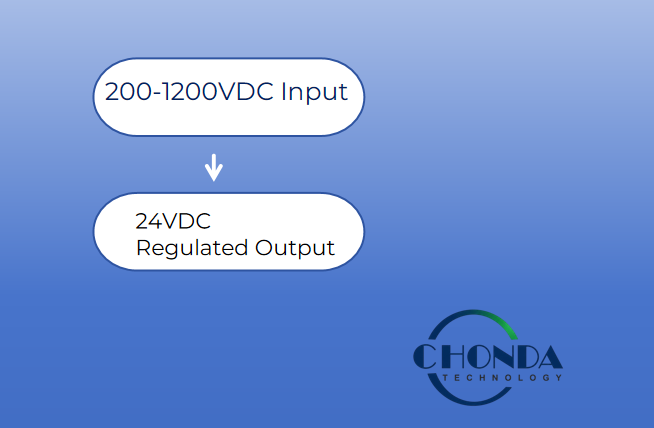
providing stable power for monitoring and control systems.
2.6. Why This Architecture Matters
The performance of a high voltage DC-DC converter depends not only on voltage conversion capability, but also on its ability to maintain:
- Electrical safety
- Stable output voltage
- Low electromagnetic interference (EMI)
- Long-term industrial reliability
These characteristics make high voltage DC-DC converters suitable for applications where continuous monitoring and control are required.
3. Key Design Considerations for High Voltage DC-DC Converters
Designing a high voltage DC-DC converter requires careful consideration of electrical performance, safety, and long-term reliability.
Unlike conventional low-voltage converters, high voltage DC-DC converters operate in environments with higher electrical stress, larger voltage variations, and stricter isolation requirements.
The key design considerations include:
3.1. Wide Input Voltage Range
High voltage DC systems often experience significant voltage variations during normal operation.
For example, photovoltaic systems, battery energy storage systems, and industrial DC buses may operate under different voltage conditions depending on:
- Load changes
- Charging and discharging cycles
- Environmental conditions
- System operating modes
A high voltage DC-DC converter with a wide input voltage range can maintain stable output performance under changing input conditions.
Typical industrial applications may require input ranges such as:
- 100-1000VDC
- 200-1200VDC
- Custom high voltage DC ranges
A wider input capability improves system flexibility and reduces the need for additional voltage conversion stages.
3.2. High Isolation Capability
Isolation is one of the most critical requirements for high voltage DC-DC converters.
The converter must provide sufficient electrical separation between the high voltage input side and the low voltage output side.
High isolation helps to:
- Protect connected electronic equipment
- Improve system safety
- Reduce ground-related interference
- Support reliable operation in industrial environments
Applications such as PV monitoring systems, BESS monitoring systems, and industrial automation often require isolated power conversion because control devices operate close to high voltage energy sources.
3.3. Low Electromagnetic Interference (EMI)
High voltage DC-DC converters typically use high-frequency switching technology to achieve efficient power conversion.
However, switching operation may generate electromagnetic noise that can affect:
- Communication systems
- PLC networks
- Sensor signals
- Monitoring equipment
Therefore, effective EMI design is essential.
Important factors include:
- Optimized switching design
- Filtering circuits
- PCB layout optimization
- Noise reduction techniques
Low EMI performance helps maintain stable communication and accurate monitoring data.
3.4. Stable Output Regulation
Monitoring and control systems require a reliable DC power supply with stable output voltage.
Voltage fluctuations may cause:
- Controller resets
- Communication interruptions
- Sensor errors
- System downtime
A well-designed high voltage DC-DC converter provides regulated DC output to ensure stable operation of connected devices, including:
- BMS
- PLC
- SCADA systems
- Industrial controllers
For many industrial applications, 24VDC is a common output voltage because it is widely used in control and monitoring equipment.
3.5. Long-Term Industrial Reliability
High voltage DC-DC converters are often installed in demanding environments where continuous operation is required.
Long-term reliability depends on:
- Thermal management
- Component selection
- Protection design
- Mechanical construction
- Environmental adaptability
For applications such as solar energy systems, battery storage, and industrial automation, the power supply is expected to operate reliably for many years with minimal maintenance.
3.6.Design Principles at a Glance
A reliable high voltage DC-DC converter should provide:
✓ Wide input voltage capability for variable DC sources
✓ High isolation between high voltage and low voltage circuits
✓ Low EMI performance for sensitive control systems
✓ Stable regulated output for monitoring devices
✓ Long-term reliability in industrial environments
These design principles are essential for powering modern monitoring and control systems in applications such as photovoltaic systems, battery energy storage systems, and industrial automation.
4. Applications of High Voltage DC-DC Converters
High voltage DC-DC converters are widely used in modern energy systems and industrial applications where high-voltage DC sources need to be converted into stable low-voltage DC power.
By providing voltage conversion, electrical isolation, and regulated output, these converters enable reliable operation of monitoring systems, control equipment, and communication devices in demanding environments.
Common applications include:
4.1. PV Monitoring Systems
Photovoltaic systems typically operate with high DC voltages generated from solar arrays.
Monitoring equipment such as:
- String monitoring devices
- Combiner box controllers
- Data acquisition systems
- PLC and communication modules
often require stable low-voltage DC power while operating near high-voltage solar sources.
A high voltage DC-DC converter provides a reliable power interface by converting high PV DC voltage into regulated output voltage, such as 24VDC, for monitoring and control devices.
Key requirements include:
- Wide input voltage capability
- High electrical isolation
- Low EMI performance
- Stable output voltage
These features help maintain accurate monitoring data and reliable operation of photovoltaic systems.
4.2. BESS Monitoring Systems
Battery Energy Storage Systems (BESS) use high-voltage battery packs to store and manage electrical energy.
Within a BESS architecture, monitoring and control devices such as:
- Battery Management Systems (BMS)
- Energy Management Systems (EMS)
- Controllers
- Sensors
- Communication modules
require dependable low-voltage power supplies.
High voltage DC-DC converters enable safe power conversion between the high-voltage battery side and sensitive monitoring electronics.
Important design considerations include:
- Isolation between battery voltage and control circuits
- Stable 24VDC power output
- Protection against electrical transients
- Long-term reliability
This makes isolated high voltage DC-DC converters an important component in modern energy storage systems.
4.3. Industrial Automation Systems
Industrial automation environments often include high-voltage DC buses, motor control systems, and distributed control equipment.
Monitoring and control devices may require independent low-voltage power sources to ensure reliable operation.
High voltage DC-DC converters are used to power:
- PLC systems
- Industrial controllers
- Sensors
- Communication interfaces
Their advantages include:
- Compact power conversion
- Electrical isolation
- Noise reduction
- Reliable operation in harsh environments
These characteristics make them suitable for factory automation, robotics, and industrial control applications.
4.4. Railway and Transportation Systems
Railway and transportation systems often operate with high-voltage DC power sources.
Control, monitoring, and communication systems require stable low-voltage power despite variations in the main DC supply.
High voltage DC-DC converters are commonly used to provide power for:
- Control systems
- Monitoring equipment
- Communication devices
- Auxiliary electronics
In these applications, reliability, isolation capability, and resistance to electrical interference are critical.
4.5. Energy Storage and Renewable Energy Infrastructure
As renewable energy systems continue to expand, high voltage DC architectures are becoming increasingly common.
Applications such as:
- Solar energy systems
- Battery storage systems
- DC microgrids
- Energy management platforms
require efficient and reliable power conversion solutions.
High voltage DC-DC converters support these systems by providing:
- Efficient voltage conversion
- Safe electrical isolation
- Stable power delivery
- Improved system reliability
They help connect high-voltage energy sources with low-voltage monitoring and control networks.
High voltage DC-DC converters provide the essential power conversion interface between high-voltage DC sources and low-voltage electronic systems. By delivering stable output voltage, electrical isolation, and reliable operation, these converters support critical monitoring and control functions across renewable energy, battery storage, industrial automation, and transportation applications.
5. CHONDA High Voltage DC-DC Converter Solution
For applications requiring reliable power conversion from high voltage DC sources to low voltage control and monitoring systems, CHONDA provides high voltage DC-DC converter solutions designed for industrial and energy applications.
Our high voltage DC-DC converter modules are developed to address key engineering requirements, including wide input voltage capability, electrical isolation, low electromagnetic interference (EMI), and stable output performance.
One example is the CHONDA PHV25-1200S24, a high voltage isolated DC-DC converter designed for systems requiring conversion from high DC input voltages to a regulated 24VDC output.
5.1.PHV25-1200S24 High Voltage DC-DC Converter
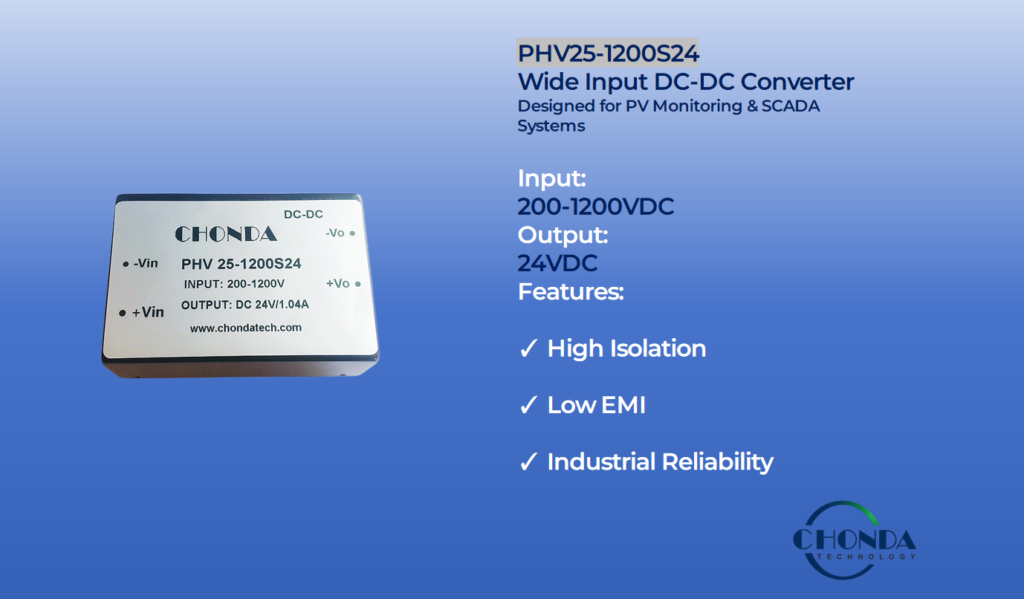
The PHV25-1200S24 is designed for applications where high voltage DC sources need to supply reliable power to monitoring, communication, and control equipment.
Key features include:
✓ Wide Input Voltage Range
Supports 200-1200VDC input, making it suitable for high voltage DC systems with variable operating conditions.
✓ 24VDC Regulated Output
Provides stable 24VDC power for industrial controllers, monitoring devices, PLC systems, and communication modules.
✓ High Electrical Isolation
Provides isolation between the high voltage input side and low voltage output side to improve system safety and protect sensitive electronics.
✓ Low EMI Performance
Designed to reduce electromagnetic interference and support reliable operation of communication and monitoring systems.
✓ Industrial Reliability
Suitable for demanding environments requiring continuous and stable power conversion.
5.2.Typical Applications
The PHV25-1200S24 can be used in applications including:
- PV monitoring systems
- Battery energy storage system (BESS) monitoring
- Industrial automation equipment
- High voltage DC control systems
- Remote monitoring and communication systems
By converting high voltage DC input into stable 24VDC power, the PHV series helps connect energy systems with reliable low-voltage electronic control architectures.
5.3.Why Choose CHONDA High Voltage DC-DC Converter Solutions?
When designing high voltage systems, engineers need more than voltage conversion.
A reliable DC-DC converter must provide:
- Safe operation under high voltage conditions
- Stable power for sensitive electronics
- Protection against electrical interference
- Long-term reliability in industrial environments
CHONDA high voltage DC-DC converter modules are designed to support these requirements and provide dependable power solutions for modern energy and industrial applications.
6. Conclusion
High voltage DC-DC converters play an important role in modern energy and industrial systems by providing reliable power conversion between high-voltage DC sources and low-voltage electronic devices.
From photovoltaic monitoring systems and battery energy storage systems to industrial automation and transportation applications, these converters enable stable operation of monitoring, communication, and control equipment.
When selecting a high voltage DC-DC converter, engineers should consider key factors including wide input voltage capability, electrical isolation, EMI performance, output stability, and long-term reliability.
CHONDA provides high voltage DC-DC converter solutions designed for demanding industrial applications. The PHV25-1200S24 offers a 200-1200VDC input range with regulated 24VDC output, high isolation, and reliable performance for high voltage monitoring and control systems.
By combining robust power conversion technology with application-focused design, CHONDA supports reliable power solutions for the next generation of energy and industrial systems.
Related Articles
Power Supply Design for BESS Monitoring Systems
SCADA Power Supply Design for PV Monitoring Systems
How to Integrate PLC with PV Monitoring Power Supplies
How to Select a DC-DC Converter for PV Monitoring Applications
How to Select a High Voltage DC-DC Converter Module for Industrial Applications