We help the world since 2012

How Isolated DC-DC Converters Improve PV Monitoring Reliability
Modern photovoltaic power plants rely heavily on monitoring systems to ensure efficient operation, maximize energy production, and quickly identify faults.
A typical PV monitoring system collects real-time data from solar strings, combiner boxes, monitoring controllers, and SCADA platforms. To maintain stable operation, all monitoring electronics require a reliable auxiliary power source.
This is where isolated DC-DC converters play a critical role.
By providing stable and isolated power for sensors, communication devices, and monitoring controllers, isolated DC-DC converters help improve the reliability of PV monitoring systems, especially in demanding outdoor environments.
Why PV Monitoring Systems Need Stable Auxiliary Power
A PV string monitoring system consists of several electronic devices that operate continuously throughout the life of a solar plant.
Typical powered devices include:
- Current sensors
- Voltage sampling circuits
- Monitoring controllers
- Data loggers
- RS485 communication modules
- Remote monitoring gateways
Although these devices consume relatively little power, they require highly stable voltage to ensure accurate data acquisition and reliable communication.
Any interruption in the auxiliary power system may result in missing monitoring data, communication failures, or incorrect fault reporting.
Challenges in Solar Monitoring Applications
Unlike indoor industrial systems, PV monitoring equipment operates in harsh outdoor environments.
Engineers often face challenges such as:
- High DC bus voltages
- Electrical noise from power conversion equipment
- Ground potential differences
- Lightning-induced surge events
- Extreme temperatures
- Long communication cable distances
These conditions can affect monitoring accuracy and reduce overall system reliability.
For this reason, power isolation is often required inside monitoring equipment.
Why Isolation Matters
Isolation is one of the most important design considerations in PV monitoring systems.
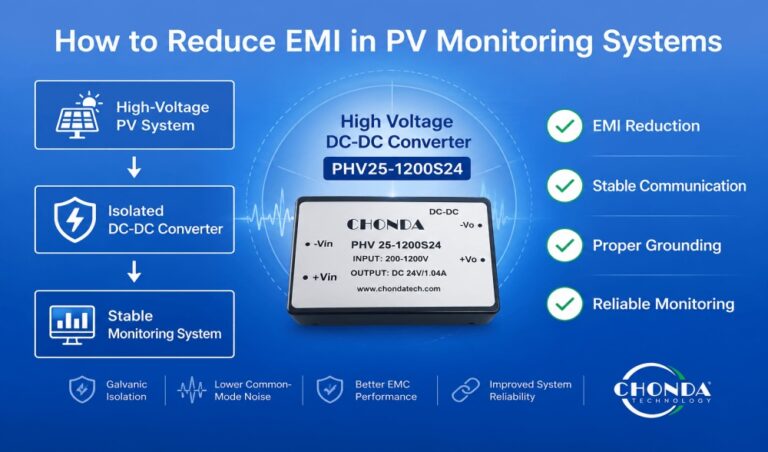
An isolated DC-DC converter separates the input power source from the output electronics through a transformer-based isolation barrier.
This isolation helps:
- Protect monitoring electronics from high-voltage transients
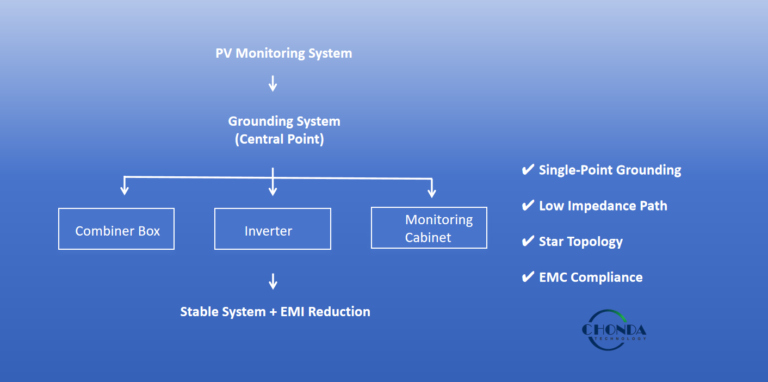
- Reduce ground loop problems
- Improve signal integrity
- Increase system safety
- Enhance long-term reliability
In utility-scale solar plants, isolation is commonly used to protect monitoring controllers, communication boards, and sensor circuits from electrical disturbances.
Typical Power Architecture in a PV Monitoring System
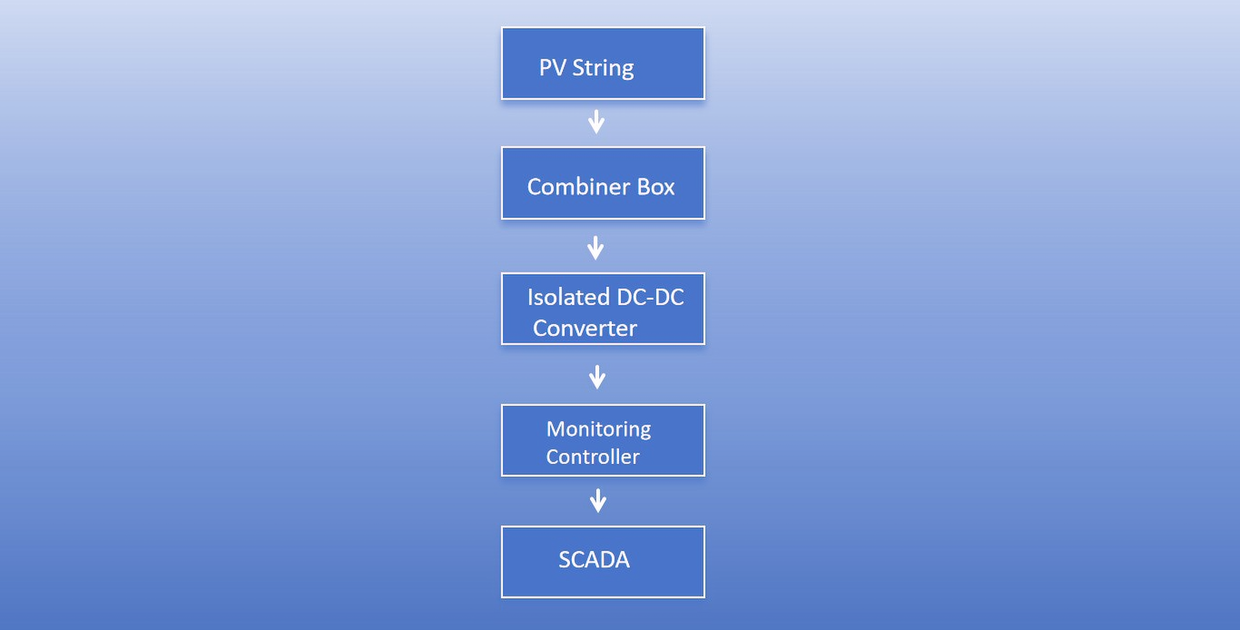
A simplified PV monitoring power architecture typically follows this structure:
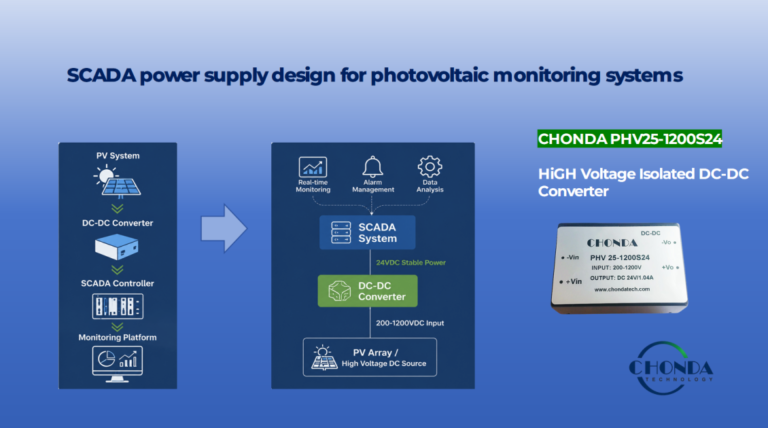
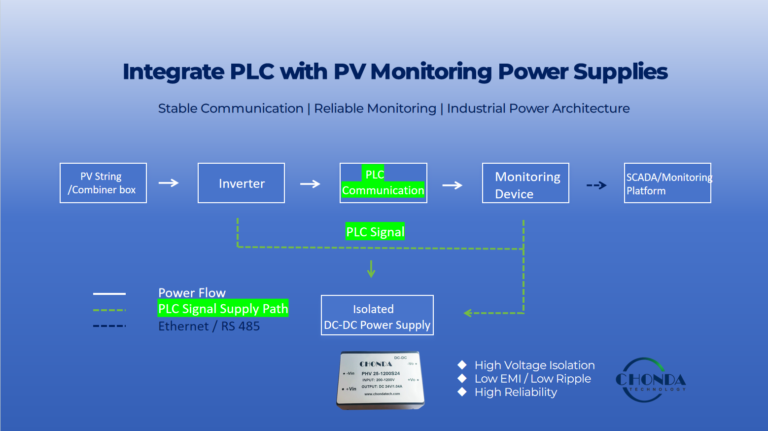
PV String → Combiner Box → Isolated DC-DC Converter → Monitoring Controller → SCADA Platform
In this architecture, the isolated DC-DC converter serves as the bridge between the high-voltage PV environment and the low-voltage monitoring electronics.
Without stable power conversion, the monitoring controller cannot reliably collect or transmit operational data.
Power Distribution Inside a Smart Combiner Box
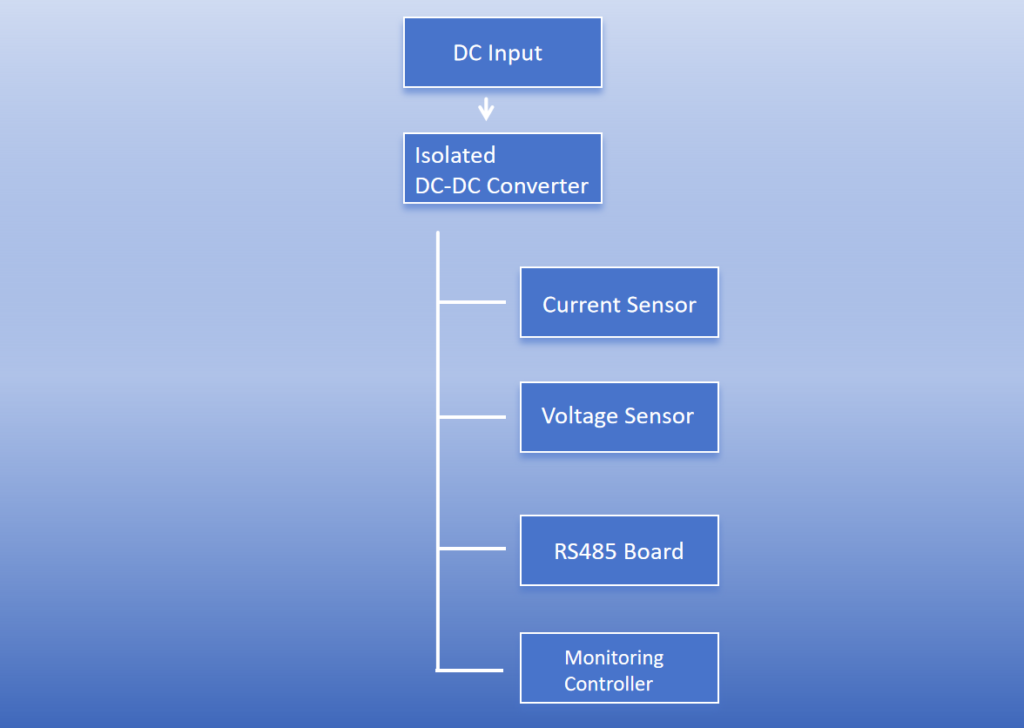
A modern smart combiner box typically contains not only protection devices and monitoring electronics but also an isolated power subsystem.
The DC-DC converter provides operating voltage for:
- Current sensors
- Voltage sampling circuits
- Monitoring controllers
- RS485 communication interfaces
Without a reliable power supply, monitoring data may become unstable or unavailable, particularly during harsh environmental conditions.
Inside a monitored combiner box, current and voltage measurements are collected before data is transmitted to the monitoring controller.
Key monitoring functions include:
- String current measurement
- DC voltage monitoring
- Fuse status monitoring
- Surge protection monitoring
- Fault detection and alarm reporting
Combiner box monitoring serves as the foundation of most utility-scale PV string monitoring systems.
Example: Powering Monitoring Electronics with Isolated DC-DC Converters
In many solar projects, isolated DC-DC converters are used to supply power for monitoring electronics installed inside combiner boxes and monitoring gateways.
A typical application may involve converting a high-voltage DC bus into a regulated 24VDC output used by:
- Monitoring controllers
- Communication modules
- Sensor interfaces
- Remote telemetry equipment
Reliable power conversion helps maintain stable monitoring performance even when PV operating conditions fluctuate.
What Engineers Should Consider When Selecting a DC-DC Converter
When designing PV monitoring equipment, engineers should evaluate several key converter characteristics:
Wide Input Voltage Range
PV systems often operate at 600VDC, 1000VDC, or 1500VDC. A wide input range helps accommodate varying operating conditions.
High Isolation Voltage
High isolation voltage improves system safety and protects sensitive electronics from high-voltage disturbances.
Industrial Reliability
Outdoor monitoring equipment requires long service life, high reliability, and resistance to environmental stress.
EMC Performance
Good EMC design helps reduce electrical noise and improve communication stability.
Protection Features
Engineers should consider:
- Input overvoltage protection
- Output short-circuit protection
- Overtemperature protection
- Surge immunity
CHONDA Power Solutions for PV Monitoring Applications
CHONDA provides isolated DC-DC power modules designed for industrial and renewable energy applications.
Our solutions are commonly used in:
- PV String Monitoring Systems
- Smart Combiner Boxes
- SCADA Monitoring Equipment
- Solar Data Loggers
- Remote Monitoring Gateways
Available options include high-voltage input DC-DC converters supporting 600VDC, 1000VDC, and 1500VDC photovoltaic systems.
These modules are designed to provide reliable auxiliary power for monitoring electronics operating in demanding solar environments.
Conclusion
Reliable monitoring is essential for maintaining the performance and availability of modern photovoltaic power plants.
While sensors, communication networks, and SCADA platforms receive most of the attention, the supporting power architecture is equally important.
Selecting an isolated DC-DC converter with wide input range, high isolation voltage, and industrial-grade protection can significantly improve monitoring reliability and long-term system stability.
As PV installations continue to grow in size, reliable power solutions have become an essential part of modern PV monitoring architectures.
For more information about industrial power solutions used in PV monitoring applications, explore our PV String Monitoring Power Supply Solutions page.
🔵 Related Power Supply Applications in PV Monitoring
Isolated DC-DC converters are widely used in PV monitoring systems:
👉 PV Monitoring System Architecture
Understand where power modules are used in the system.
👉 Power Design for Smart Combiner Boxes
Learn how DC-DC power is integrated into combiner box monitoring systems.
👉 PV String Monitoring Basics
Review how monitoring data is generated at string level.