Category High Voltage DC-DC Hub

Technical resources and application guides about high voltage DC-DC converters, isolated DC-DC power modules, wide input voltage solutions, and industrial applications including PV monitoring, BESS, automation, and custom power systems.

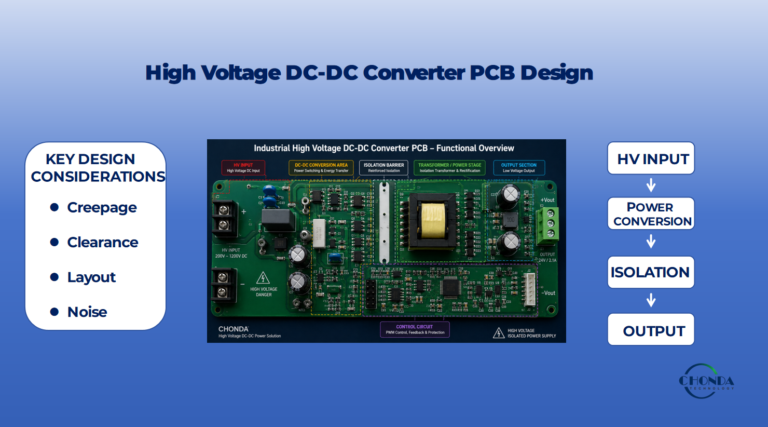
High Voltage DC-DC Converter PCB Design Considerations

High Voltage DC-DC Converter PCB Design Considerations

Designing a PCB for a high voltage DC-DC converter requires more than simply connecting the input, output, and control circuits. At higher DC input voltages, PCB layout directly affects electrical safety, insulation reliability, electromagnetic noise, signal integrity, and long-term system…

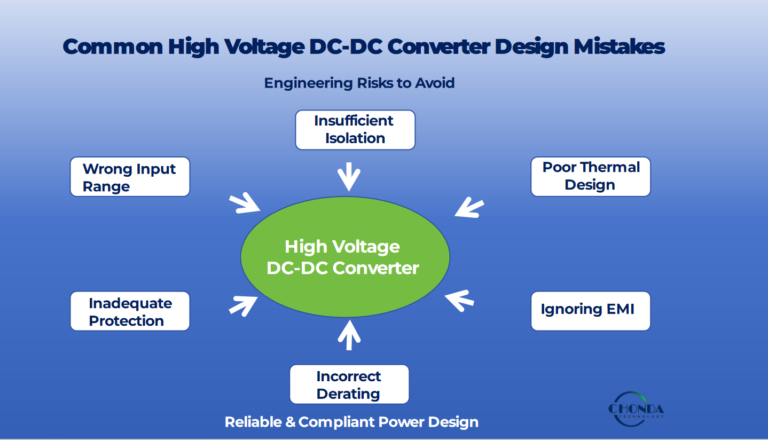
**ALT:** Common high voltage DC-DC converter design mistakes and engineering risks

Common High Voltage DC-DC Converter Design Mistakes

Designing a high voltage DC-DC converter requires more than selecting a suitable input voltage, output voltage, and power rating. A converter may meet its basic electrical specifications during laboratory testing and still experience reliability, thermal, EMI, protection, or EMC problems…

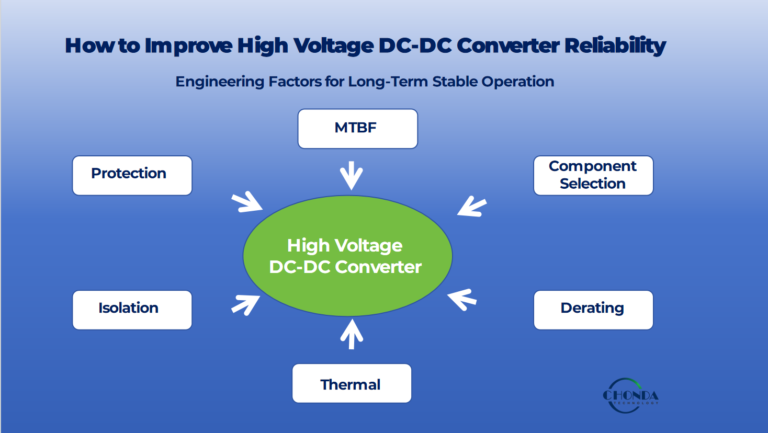
High voltage DC-DC converter reliability factors including MTBF, component selection, derating, thermal management, isolation, and protection

How to Improve High Voltage DC-DC Converter Reliability

High voltage DC-DC converters are often required to operate continuously under demanding electrical, thermal, and environmental conditions. For industrial automation, railway systems, telecommunications, renewable energy, battery energy storage, and other critical applications, converter reliability is not determined by a single…

Wide Input DC-DC Converter Engineering Design Guide

Wide Input DC-DC Converter Design Guide

A DC-DC converter does not always operate from a perfectly stable DC source. In real-world systems, the input voltage may vary because of battery discharge, power distribution changes, load transients, startup conditions, regeneration, or other disturbances. A wide input DC-DC…