We help the world since 2012

What’s a Robot?
At its core, a robot is an automated machine designed to execute specific tasks, often autonomously or semi-autonomously. Robots can be simple devices programmed for repetitive tasks or complex systems capable of learning and adapting to their surroundings. These machines are integral to industries such as manufacturing, healthcare, agriculture, and space exploration. But what makes robots so versatile, and how do they function across such diverse applications?
The Basic Components of a Robot
Robots typically have several key components that enable them to perform their tasks:
- Sensors: To gather data from the environment, such as light, temperature, or motion.
- Controllers: The “brain” of the robot, processing sensor data and issuing commands.
- Actuators: These execute the robot’s actions, such as moving its arms, wheels, or other parts.
- Power Supply: This is the energy source, which can be batteries, solar panels, or even electrical grids.
Without a reliable power supply, none of the robot’s components would function properly. This is where DC-DC converters come into play.
The Role of DC-DC Converters in Robotics
DC-DC converters are essential for ensuring that robots function efficiently by adjusting the power input to match the voltage and current needs of different components. Robots, especially mobile ones, often use batteries or other DC power sources, but each part of the robot may require different voltage levels.
For example:
- Motors that move a robot’s arms or wheels may require higher voltages.
- Sensors and control systems, on the other hand, may need lower, more stable voltages to function without electrical noise or damage.
DC-DC converters bridge the gap between the power supply and the components, converting a battery’s voltage (say 24V) to the necessary 5V for sensors or 12V for motors. Without this conversion, the robot could suffer performance issues or even permanent damage.
Types of Robots and Their Power Needs
Robots come in many forms, each with unique power requirements:
- Industrial Robots: These are often stationary and perform repetitive tasks like welding, painting, or assembling parts. They may be plugged into an external power source but still require DC-DC converters to regulate power for their controllers, sensors, and actuators.
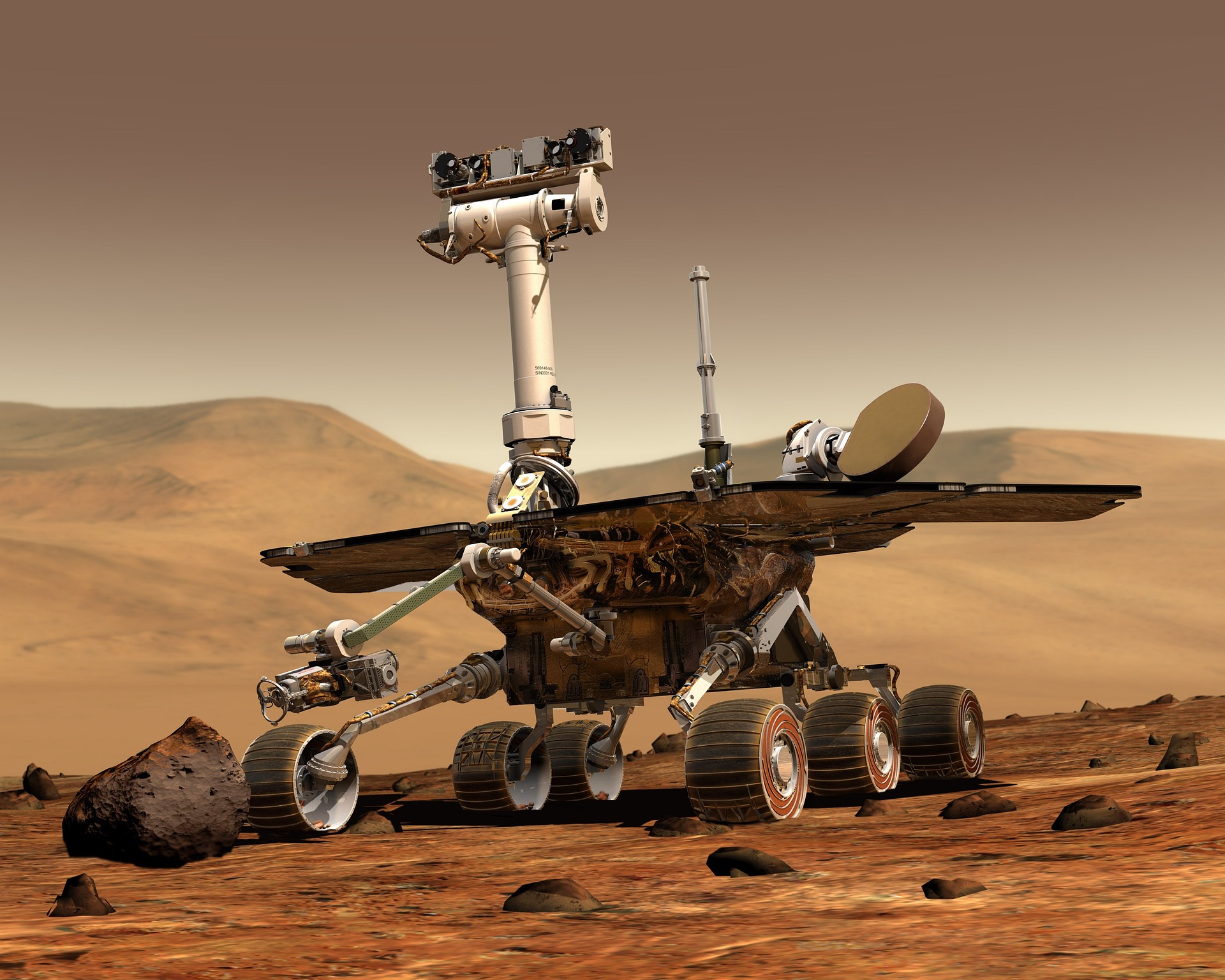
- Mobile Robots: These robots move autonomously in environments like warehouses or on Mars! Powered by batteries, mobile robots heavily rely on DC-DC converters to efficiently manage power as they cannot afford downtime for charging. Converters also play a crucial role in extending battery life by optimizing voltage levels.
- Collaborative Robots (Cobots): Designed to work alongside humans, cobots need precise control systems to ensure safety and reliability. Their controllers and actuators require stable power, which is facilitated by high-quality DC-DC converters.
Why Power Management Matters in Robots
In modern robotics, power efficiency is crucial for extending operational time and enhancing performance. DC-DC converters are an essential part of a robot’s power management system, helping reduce power loss during conversion and ensuring that energy is used efficiently across all components. This is especially important in mobile robots, which rely on limited battery power for extended periods.
By optimizing power distribution through DC-DC converters, robotics manufacturers can achieve longer battery life, improved performance, and reduced wear and tear on components. This leads to cost savings in both energy consumption and maintenance.
Future of Robotics and DC-DC Conversion
As robotics technology continues to advance, power management solutions like DC-DC converters will remain critical. The demand for more intelligent, autonomous systems means robots will require increasingly sophisticated power regulation. Innovations in DC-DC converter technology, such as higher efficiency rates, smaller form factors, and integration into smarter power systems, will be key to meeting these demands.
Whether it’s robots working in factories or autonomous drones exploring new planets, DC-DC converters ensure these machines run smoothly and efficiently, enabling them to perform their duties without interruption.